
The only industry that still offered jobs for thousands of locals in Botoșani county is starting to collapse. One of the largest textile factories in the lohn system lays off more than 360 employees, and other factories in the field are following suit
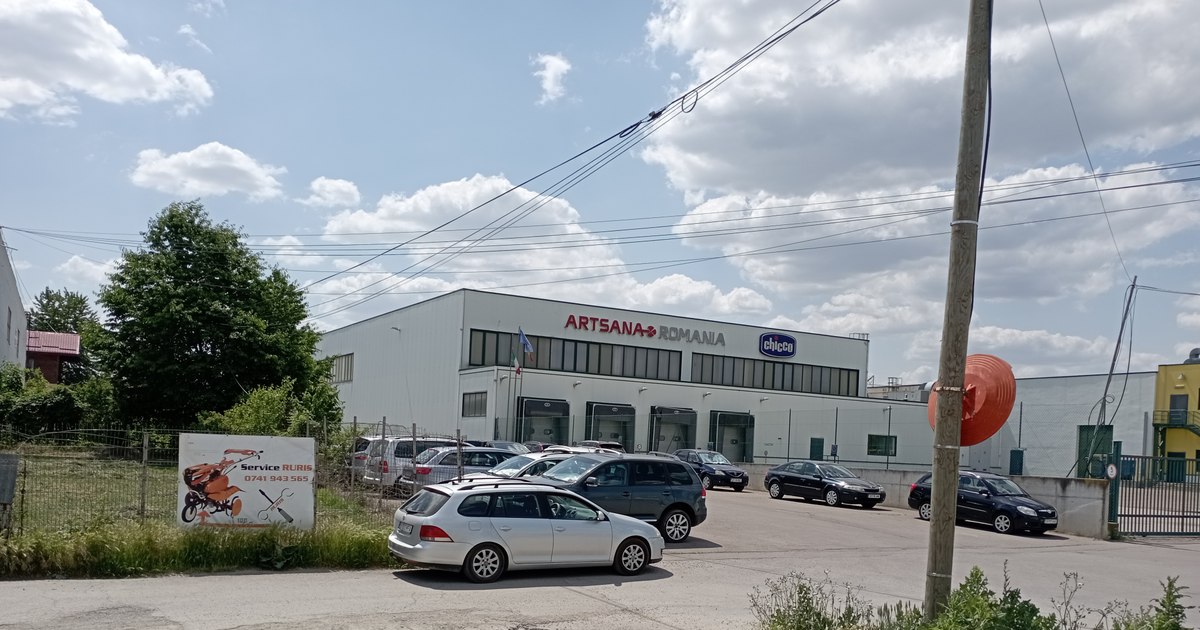
Artsana Botoșani plans to fire more than 360 employees PHOTO Cosmin Zamfirache
In Botoșani county, in the 90s, the industry collapsed. The industrial area filled with factories from the communist era became, with few exceptions, an abandoned ruin in the early 2000s. For a city rebuilt during the years of communism to serve precisely this powerful industrial area, it was a real social drama.
The only survivor of the Botošan industry, however, was the textile industry. As former employees from the communist years say, it was a real “queen of Romanian light industry”, with tens of thousands of employees and extraordinary performances including massive exports.
“She was the queen of the Romanian light industry”
“The textile industry from Botoşani was the queen of the Romanian light industry. Those who brought him fame were the very workers who worked in the production halls. The best textile workers in Romania learned their trade in Botoşani”, says Vasile Chiru, trade unionist and former employee of a garment factory in Botoșani.
The textile industry continued both with a series of factories with Romanian capital, but especially with foreign capital brought by investors, especially from Italy. This industry survived mainly because of the lohn system. That is, they manufactured under the label of giants of the global fashion industry. In Botoșani, the factories worked for Armani, Prada, Louis Vuitton or Massimo Dutti.
For a poor county like Botoșani, the clothing factories represented a chance for a job and an honest bread for thousands of locals. In 2018, for example, there were 12 garment factories working in the lohn system.
To these was added the factory of a French giant, with over 1,000 employees in Botoșani. However, the lohn system began to collapse, and a real social drama is already foreshadowing in Botoșani.
Hundreds of people fired in a single month
From the years 2018-2019, the really serious problems began for the “queen of the Romanian light industry”. More specifically, large garment factories that worked in lohn style began to close. It is about Jatex, a well-known factory in Botoșani, but also the oldest and largest clothing factory in Romania, Rapsodia Conf. The last mentioned worked for the giants of the fashion industry worldwide.
The factory that operated exactly in the old location from the communist period closed, and a supermarket was built in its place. If for a while the decline of the textile industry under the lohn regime seemed to be, at worst, stagnating, since the beginning of this year things seem to have taken a dramatic turn.
In March, For Mens, a powerful French company fired dozens of employees of the factory in Botoşani. “We received notification from SC Formens SRL in which we were informed about the intention to fire a number of 96 people”said Anca Apăvăloaie, director of AJOFM Botoșani.
Just two months apart, earlier this week, another Lohn-based clothing company, Artsana, which works for Chicco, announced plans to lay off more than 360 employees. At the same time, layoff notices also came from another factory in Dorohoi, with a similar profile.
The dismissal of the Artsana employees would be the biggest collective dismissal in the last decade in Botoșani.
“We received a notification informing us that the company decided on the collective dismissal procedure for a number of 364 employees with active employment contracts. We will proceed to meetings with Artsana employees, to inform them about the dismissal procedure, but also about their future status, as a person who no longer has an active individual employment contract, as well as the importance of accessing the services that AJOFM grants them”specified Anca Apăvăloaie.
“I am a widow….I urgently need to find a solution”
Given that more than 5,000 employees work in the garment factories using the lohn system, i.e. almost 10% of the official number of employees in Botoșani county, the more frequent layoffs and the prospect of the total collapse of the lohn opens the way for a social drama, under the conditions in which Botoșani is one of the poorest in Romania.
Only among the hundreds of employees laid off at Artsana are widows, single income earners and dependent children, but also families with installments or dependent children in college. “I am a widow….I urgently need to find a solution. I have no other income. I have two children, but luckily they are grown up and working. But what do I do? I keep asking myself, I can't concentrate on anything anymore”, says a factory employee.
Others wonder how they will cope with ever-higher rates or prices. “It is a tragedy for us. It seems so small, but for us it is a tragedy. We have installments, children in school. There are people who have no other income. In other factories there are single mothers, who if they lose even that bit of money, they remain starving.” says another textile artist from Artsana.
“I do what others have done, go outside. In Botoșani, apart from clothing, there is nothing else. Or at the state, budgeted…but who is lucky. We do not. We did vocational training, others high school, in clothing, that's what we know. Abroad, I have no other solution. I have children”, adds another female employee, scared that she will be fired.
The experienced Botoșani entrepreneurs, as well as representatives of the Chamber of Commerce, say that, indeed, a social drama is foreshadowing in Botoșani. First of all, for the employees who will remain on the roads, without many employment options in the country, but also for the Romanian state, which will remain without the taxes paid by the respective factories.
“Unfortunately, no one thought what would happen after these factories relocate. What do we do with the employees in Botoșani. Because it is a very difficult situation, serious I could say. We have to see what the implications are. What does it mean for this industry to disintegrate in half a year. There are 5,000 people working in these factories. All taxes, all that money no longer comes to the state budget. Instead, the state will have to pay compensation for all those left without a job”says Valeriu Iftime, president of the Chamber of Commerce, but also an important Botošan entrepreneur.
“If we want to have a European salary, it will never be lohn”
Valeriu Iftime says that the collapse of lohn is natural, including in Botoșani, where it survived for more than two decades. And this in the conditions where, say the representatives of the Chamber of Commerce, the minimum wage has increased, as has the price of raw materials. Under these conditions, the lohn is no longer advantageous in Romania. Factories are relocated to even poorer areas with even lower wages.
“The Lohn is looking for cheap labor, that's actually the essence of working in the Lohn. We were a market for this system. But we are only there for a very short time, because on our European path, the increase of the minimum wage in the economy does just that, to raise the level of manpower. If we want to have a European salary, there will never be lohn in Europe. And it is clear that they are all relocating to Tunisia, Morocco, Albania,” specifies Valeriu Iftime.
Moreover, the reason for the layoffs at Artsana was the very increase in production costs.
“The company reasons this collective layoff as due to the reduction of orders and the decrease of production volumes, the increase in production costs and the average increase in the costs of raw materials and materials”stated the head of AJOFM Botoșani.
