
The Minister of Agriculture, Florin Barbu, announced on Thursday, April 3, 2025, that it was approved in the Government meeting the continuation of the program to support the vegetable production in protected spaces. Moreover, the program was approved for the next three years, which represents a novelty. There are a number of other changes.
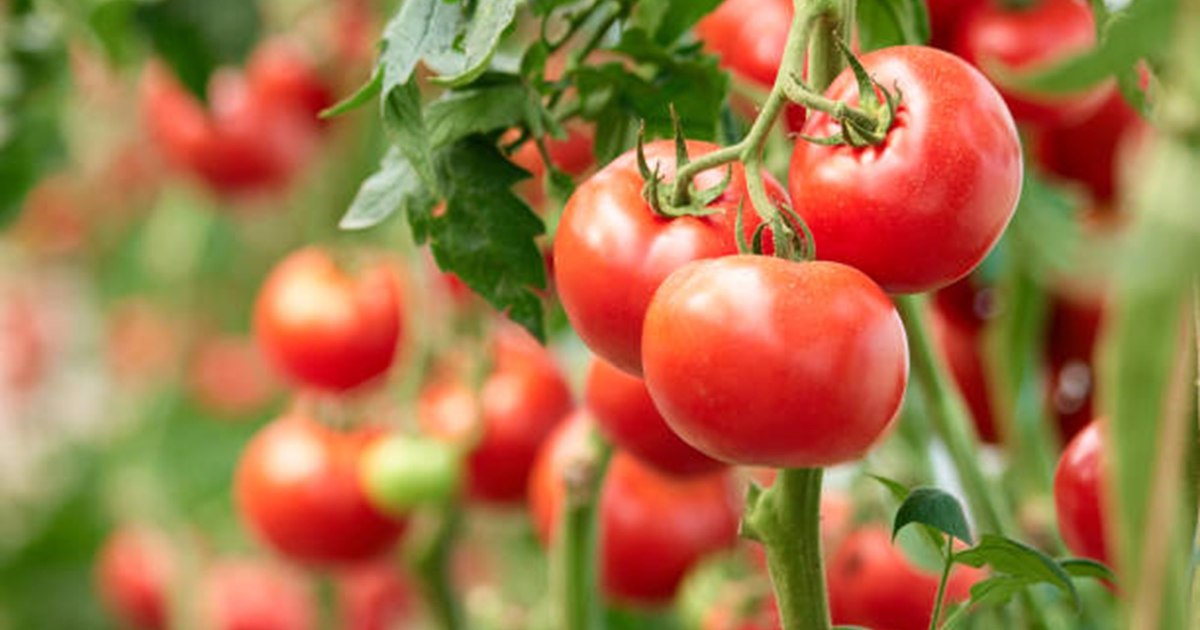
The program “Tomata” 2025 was approved photo: Istock
Minister Florin Barbu stated, in a Facebook post, after the end of the government meeting, that the program for supporting the production of vegetables grown in protected spaces, known as the “Tomata” program, will continue.
“Premiere! The vegetable program in protected spaces was approved for the next 3 years! I approved in the Government the development of this program for the period 2025 – 2027, to give our farmers more predictability in business development ”, said the minister, in a message posted on Facebook.
“For each 1,000 sqm cultivated, the producers of tomatoes, peppers, cucumbers, eggplant, cabbage, beans, salad, spinach and green onion will receive 1,500 euros, no matter how large the cultivated area is. The budget for this year is over 342 million lei.
Our farmers have shown that they have the ability to produce Romanian vegetables in the off -season through this program. In order to support them, I decided that the deadline for submitting applications for this year would be May 30, 2025, including “the minister wrote.
“If we have 1,000 square meters we have to cultivate tomatoes.”
The changes that appear in the approved form for 2025 have been, many of them, announced since last autumn. Thus, the most important is related to the surface for which the support is granted, which is no longer limited to 1,000 square meters/beneficiary. The condition is, says the representative of the Union we save the Romanian peasant, Ion Păunel, for the minimum area of 1,000 square meters to opt for tomatoes. For larger surfaces, the cultivation of other vegetables is allowed, and the possibilities are multiple.
“If we have 1,000 square meters, we must compulsory cultivate tomatoes. If we have between 1,000 and 3,000 sqm – minimum 1,000 sqm tomatoes. Between 3,000 and 5,000, minimum 2,000 sqm tomatoes, between 5,000 and 7,000 – minimum 3,000 sqm tomatoes, between 7,000 and 9,000, minimum 4,000 sqm tomatoes, and between 9,000 and 10,000 sqm, 5,000 sqm tomatoes, in this case it reaches 50%-50%. And those who hold over 10,000 square meters, ie over one hectare of solariums, will have the obligation to cultivate at least 60 areas of solariums. We give an example: if we have 3 hectares of solariums, we are obliged to put only 60 areas ”, explained the consultant Ion Păunel, the representative of the Union we save the Romanian peasant.
They can be cultivated, apart from tomatoes: peppers, donuts, capia, hot peppers (new in the program), cabbage (also included this year), beans, eggplants, cucumbers, green onions and salad.
“T.These types of vegetables can be grown by farmers in any proportion or percentage, but they must respect what I said earlier. We have 3,000 square meters of solariums, we have to put 1,000 with tomatoes, and in the other 2,000, we can put any of the vegetables recognized in the program, in what proportions we want ”, Păunel said.
Budget allocated for 4,600 hectares
The novelty related to the possibility that the farmers may register in the program with any area greater than 1,000 square meters was both appreciated and criticized during the period when the document stood in transparency. Many farmers are afraid that the holders of large greenhouses will be entered in the program, but the amount is limited by the maximum amount that they can access in three fiscal years. The budget allocated in the program to support the cultivation of vegetables in protected spaces is for 4,600 hectares, equivalent budget, says Ion Păunel, with the one allocated for Tomata I of 2024.
“Farmers, since it appears in the Official Gazette – could happen tonight or tomorrow, because it has passed the government meeting – they must go to the town hall, just like last year, to obtain the registration certificate. After the certificate, they have the opportunity to go to the county agricultural department to complete the application for registration, but they can do this by post, by courier, or on the institution’s e-mail. Usually, here is a praise, the town halls in Olt County have centralized, even if it is not their obligation, but they centralized these requests ”, Păunel said.
The program will be carried out this year through the agricultural directions, as in the past years (it was a discussion for taking this task by APIA).
An important clarification that the consultant makes is the one regarding the correct and complete completion of the farm treatment register.
“The county agricultural directions, weekly, send to the County Phytosanitary Authority the number of beneficiaries registered, and they, at any time, can make a unexpected visit for taking the farms from the farms. In a maximum of 15 days, if the samples have been worked, the farmer receives an answer, and the results are sent to the Agricultural Directorate. If any of us exceed the limits of pesticides, insecticides and so on, the overruns are automatically announced to the Agricultural Directorate, enter the national alert system and farmers can bear the consequences of the law. One of them is pecuniary, the fine, but they can also be excluded from the program ”he reported pagon.
The fact that the program was approved for the period 2025-2027 is also a plus, considers the consultant, and is related to another condition that is required for farmers, namely not to exceed a ceiling of 50,000 euros/farm support by Minimis, from various support programs (the ceiling was increased from 25,000 euros), in three fiscal years.
The schedule of the program
Farmers interested in support for cultivating vegetables in protected spaces can be entered in the program until the end of May.
After registration, if they have the cultures set up, they can also submit the request for visit to the field. “In a maximum of seven days, the representatives of the Agricultural Directorate and those of APIA move on the spot, I see if the culture is set up and if the surface is the farmers declared. After receiving the visit, depending on the stage of the crops, each farmer has the opportunity to start issuing invoices or files in the trader For marketing. explained the consultant.
Because the vegetable growers who have modernized their solariums have come to produce throughout the year, there is a proposal from the vegetables that for the period October 15, 2025 – February 2026, the Ministry of Agriculture will, possibly, finance another support program, for vegetables that are not included in the “Tomata” program.
