
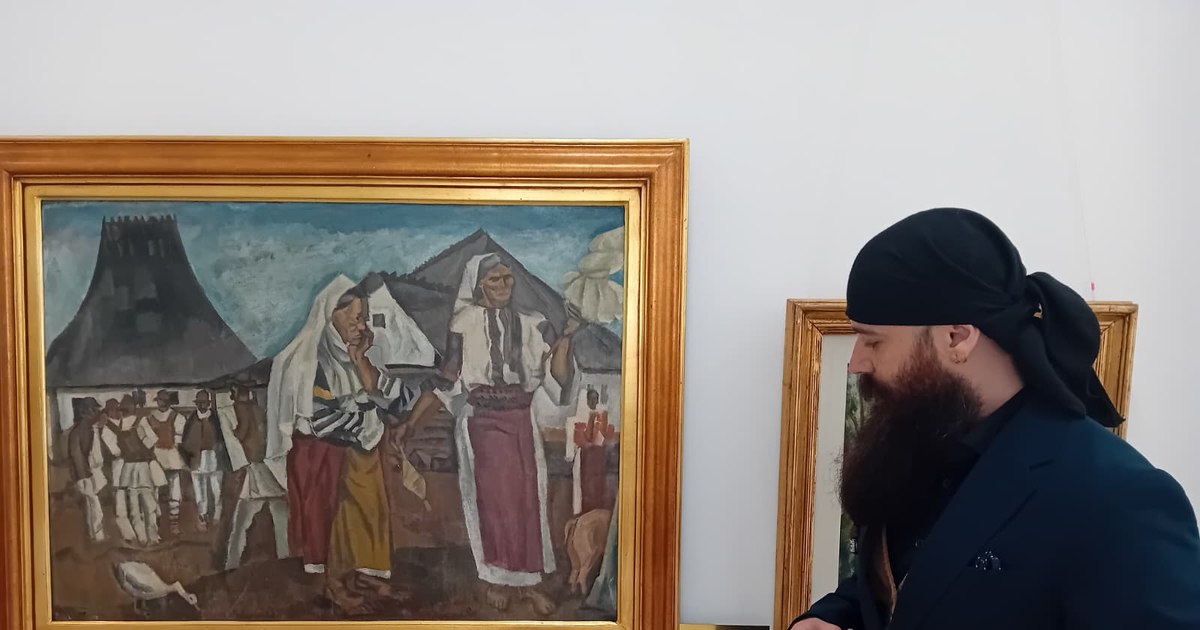
At the Art Museum in Constanța, but also at the “Dinu and Sevasta Vintilă” Museum in Topalu, you can admire several paintings and graphics made by Iosif Iser, the artist in love with Dobrogea, among which we mention several landscapes, including one from France, “Portrait of a Spanish Woman”, but also the famous composition “Tătăroaice”.
What is their story and how they came into the museum’s possession, we learn from Anatolie-Iulian Leu, graphic artist and painting restoration expert at the Constanța Art Museum.
“Weekend The truth“: Which works of Iosif Iser exist in the permanent exhibition of the Constanța Art Museum?
Anatolie-Iulian Leu: Iosif Iser is represented in the permanent exhibition of the Constanța Art Museum by five oil works, four on the first floor of the former school building and one in the new building, on the floor dedicated to donations, namely a portrait of a Spaniard from the collection of Cella Serghi. Of course, our warehouses also house other works by the artist, somewhat more in number than those in the basic exhibition, both paintings on canvas and cardboard, as well as graphic works on paper. We own landscapes, portraits, compositions, illustrations, genre scenes of the author. According to the archivist Alexandru Magiru, we have 35 paintings and sketches at the museum in the city of Constanța and seven at the section in Topalu.
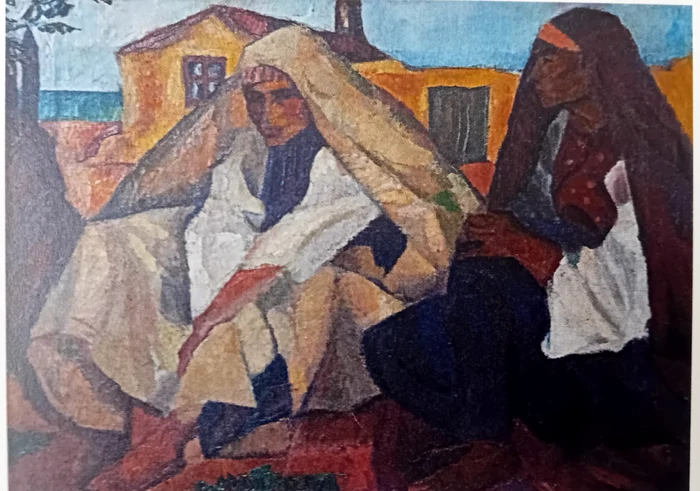
What was the first painting by Iosif Iser in the Constanța Art Museum?
Starting in May, exactly 65 years ago, when the institution was inaugurated, visitors could admire Iser’s talent through a single work, as was the case with other established artists in our museum. The painting came from the RSR Art Museum and is part of a batch of about 120 works that the Dobrogea Regional Art Museum, as it was called in the first phase, had in its custody. The same lot became the property of our museum in 1966. The painting to which I have referred has recently been re-included in the core exhibition. It was executed in the oil on canvas technique, it is classified Thesaur and is called “Tătăroaice”.
The hidden composition
Have you ever restored a work by Iosif Iser?
I haven’t had the chance yet, and there are paintings with slightly more severe problems on my waiting list for now. I have instead noticed many interesting things by analyzing, in detail, hundreds of heritage pieces over the last few months, with the aim of producing somewhat more detailed conservation sheets. One of these interesting things is on a landscape in Spain signed by Iosif Iser from the main exhibition, a painting acquired by the museum six decades ago from the Virgil Vasilescu collection: the left edge reveals that there is another composition, probably a marine, below what we see with the naked eye. We see a multitude of shades that arouse our curiosity through well-defined and chromatically varied touches.
Unfortunately, I don’t think the museum will be able to take x-rays in the facility any time soon, and infrared reflectography is not very penetrating for such consistent color film as the present one. Perhaps one day we will still find out what lies beneath such paintings, finally rediscovering compositions that perhaps only the artist saw, but his critical eye decided, sometimes unfairly, to deprive us of another beautiful work.
School from Balcic
How does a specialist see the artist Iser?
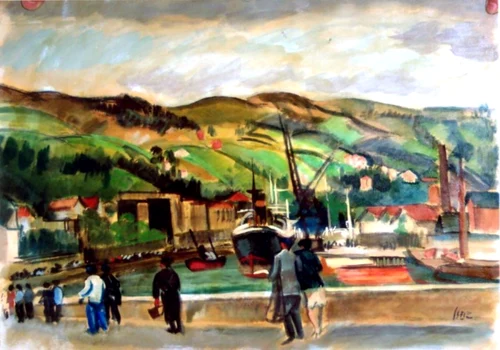
Iser was a complex artist, studying both in France and Germany, he participated in exhibitions in many countries in Europe and even had one in New York. Towards the end of his life he became a member of the Romanian Academy. The painter traveled quite a lot, and destiny brought him to our Dobrogean lands and of course to Balchik, painting, in addition to the charming landscapes of the Black Sea coast, numerous portraits, especially of Tatars. Balcic was discovered almost simultaneously by a handful of painters, including Iser. Ion Frunzetti also mentioned Iser when he mentioned the discovery of “poor Dobrogea”.
The history of the “Saints Peter and Paul” Cathedral, the first church built after 1877. The painted holy faces resembled the maids on the seashore
Another theme that preoccupied the painter, a theme that also preoccupied other artists such as Corneliu Baba, is that of harlequins. Our museum has a painting with such a theme signed by Iser, but also a harlequin by master Baba. Iser was a highly rated and appreciated painter during his lifetime.
He was also a great authority on the art world of his time. I read in the book “The Decade of Fall”, written by Mihai Pelin, about the lives of artists from the 40s, that Iser would have confessed to Krikor Zambaccian that he considered himself the best Romanian painter. Personally, from the humble position of a mere artist and by no means an art critic, I wouldn’t place it that high. However, the testimonies of many contemporaries confirm that he was a highly regarded artist and still is today.
Satirical graphics, always current
What do you like most about Iosif Iser’s art and why?
Excluding reproductions from specialized catalogs, I saw most of his creation “live” at an exhibition organized by the National Art Museum of Romania in 2021, an exhibition called “Iser’s Travels”. The exhibition was mainly dedicated to his landscapes. I remember being impressed by the diversity of his works, so his research. I liked the atmosphere in them, but also the exhibition as a whole. However, beyond the said exhibition, I would say that I like his graphics, especially the caricatures and satirical graphics he did for the press.
Camil Ressu, the artist who shocked the “liberal-takista clique” with a single painting: “all the mouths penciled in red greeted it with a wet grin of impertinence”
What do you like about Iosif Iser’s graphics?
I imagine that those illustrations that were reproduced in the newspapers of the time, sensitive drawings sometimes by subject, but also by the nature of the materials they are composed of, whether we are talking about originals or reproductions, for various reasons have been lost in some of the cases, which is sad. Of those that have survived, they are either in private collections or kept most of the time in museum warehouses for preservation reasons. Looking objectively, in addition to the relative inaccessibility, it is possible that the restorer in me is also sensitized by thinking about the fragility of the respective pieces, which could be an additional reason for them to attract me.
When art makes you smile in hard times
Apart from this more technical part, can you tell us something about the content or the aesthetic side of these works?
I think that visual art in general, not only in Romania, but everywhere, needs a little humor from time to time. It’s nice to take a break from the daily challenges or even from the sometimes overwhelming depth of art and then smile through it, or why not, enjoy a work that contains both depth and humor. The satires, caricatures, illustrations of artists like Iser, Petrescu-Găină, Tonitza or Șirato teach us that we can smile even in difficult moments. If artists, sensitive by definition, could smile and make those around them smile, even in troubled times like world wars, I conclude that we can learn unsuspectedly important things from them.
