
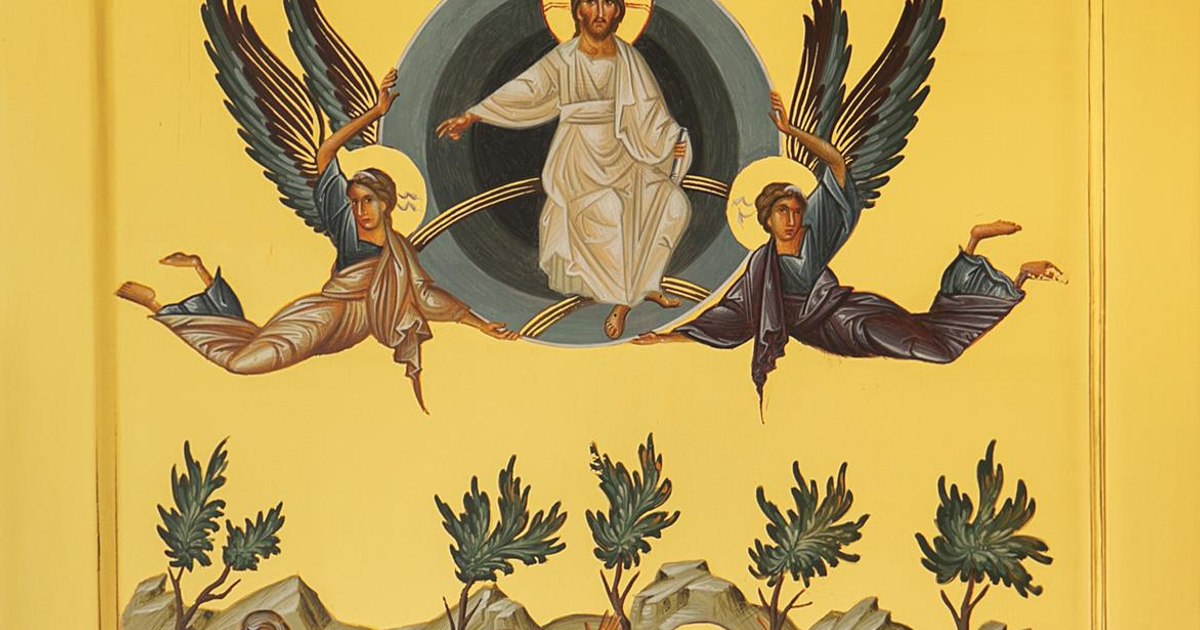
Orthodox Christians celebrate Thursday, May 21, Ascension Day, one of the most important religious holidays in the Orthodox calendar, celebrated 40 days after Easter. On the same day, the Saints Constantine and Elena are also celebrated, and over 1.5 million Romanians celebrate their name day.
The Feast of the Ascension of the Lord, popularly known as Ispas, is linked to both religious traditions and numerous folk customs preserved for hundreds of years in Romania. Heroes’ Day is also marked on Thursday, when memorial services are held in all churches in the country for those who gave their lives for faith and country.
What does the Ascension mean?
According to Christian tradition, after the Resurrection, Jesus Christ appeared to the apostles for 40 days, and then ascended to heaven from the Mount of Olives, near Jerusalem.
Since the 4th century, the feast has been celebrated in both East and West, always on a Thursday. The faithful greet each other on this day with the formulas “Christ is Risen!” ANDi “True SA Exalted One!”.
The place where Jesus Christ is said to have ascended to heaven is on the Mount of Olives, where the Chapel of the Ascension still exists today, a place considered holy by both Christians and Muslims.
When the Ascension eggs are dyed red
The Ascension of the Lord is the last opportunity of the year to dye red eggs (you can dye red eggs from the week before the Resurrection of the Lord until the Ascension). According to the tradition preserved to this day in many areas of the country, the eggs are painted on the very morning of the holiday or on its eve, unlike the Resurrection, when most Orthodox Christians do it on Maundy Thursday. In the Christian tradition, the red egg symbolizes the blood shed by Jesus Christ on the cross, which is why we use red eggs from the Resurrection to the Ascension, as a sign of the victory of life over death.
Ispas traditions and customs
In popular tradition, the celebration is also known as Ispas, after the name of a shepherd who legend says witnessed the Ascension of the Lord.
In many areas of the country, people wear walnut leaves around their waists because it is said that Jesus also had such leaves when he ascended to heaven. Also, there is a custom for people to touch themselves with linden to be safe from diseases and evils all year round.
The flowers open the cycle of Easter holidays, which ends with the Ascension of the Lord. Why is the holiday also called “Parliness Sunday”
On this day medicinal plants such as leustean, paltinum or hazel are sanctified. Thursday is also the last day you can fry eggs until next Easter.
Memorials are also made for the dead on Ispas. In some regions, graves are decorated with paltin branches, and people share warm bread, cheese, green onions and brandy.
Another popular tradition says that those who die on the day of Ispas go directly to Heaven and do not go through the Last Judgment.
Ascension of the Lord – the day when the bells toll for the heroes of the nation
In Romania, Heroes’ Day is also celebrated on Ascension Day. The decision was taken by the Holy Synod of the Romanian Orthodox Church since 1920 and reconfirmed by subsequent synod decisions.
Special services and commemorative ceremonies are organized in all churches, cathedrals, monasteries and cemeteries of heroes. At 12:00, bells will be rung throughout the country in memory of those who died for Romania, and public institutions will observe a moment of silence.
The National Cathedral in Bucharest is dedicated to the Ascension of God and to Saint Andrew the Apostle, the protector of Romania.
Saints Constantine and Helena, protectors of Christianity
Also on May 21, the Orthodox Church celebrates the Holy Emperors Constantine and Elena, considered one of the most important saints of Christianity.
Emperor Constantine the Great is known for issuing the Edict of Milan in 313, through which Christianity became a permitted religion in the Roman Empire. He also declared Sunday the official day of rest and supported the building of several churches.
His mother, Elena, is associated in Christian tradition with the discovery of the Holy Cross in Jerusalem.
Numerous churches in Romania are dedicated to Saints Constantine and Elena, among the most famous being the Patriarchal Cathedral in Bucharest.
Over 1.5 million Romanians celebrate their name day
According to the data of the General Directorate for the Records of Persons, 1,514,907 Romanians bear the names Constantin, Elena or their derivatives.
The most common female names are Elena, Lenuta and Constanța, and the most popular for males are Constantin, Costel and Costică. Frequent derivatives include Constantina, Eleonora, Ela, Tina, Costache or Tinel.
