
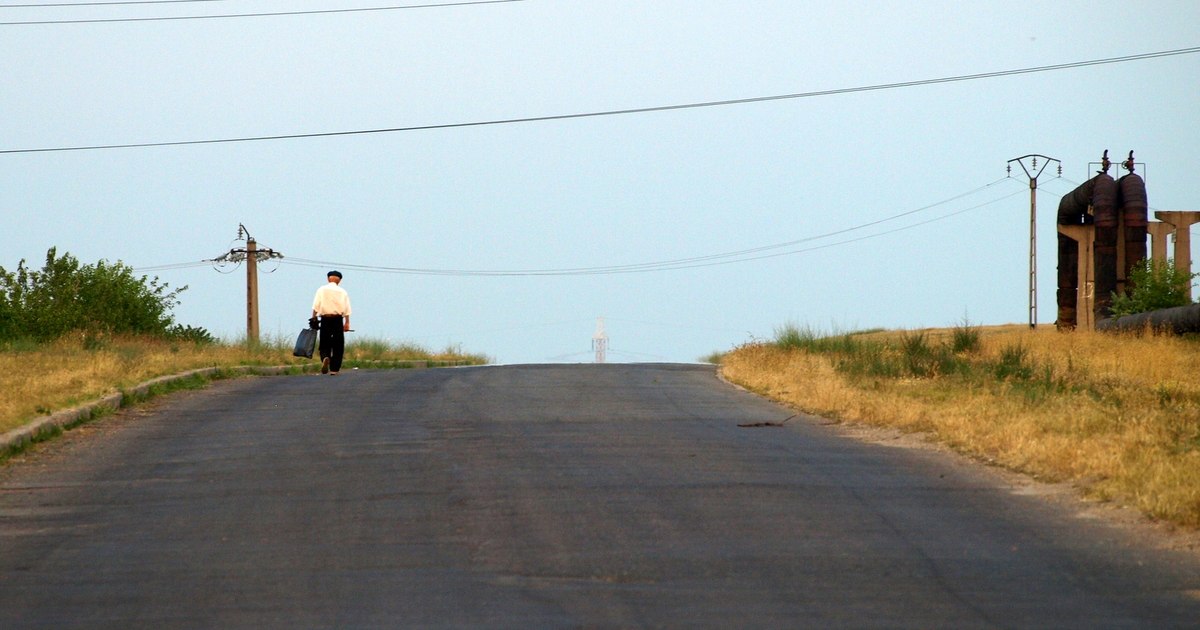
Many Romanians reported on the areas they would prefer, at most, for trips, but not to settle there. Relief and economy play an important role in their preferences: the sun-scorched lands, but also poor economic development were among the arguments invoked.
Romania lost more than one million residents of the resident population in a decade, according to the 2021 Census, and the country’s population continued to decrease in the following years, currently reaching less than 19 million inhabitants, according to data from the Worldometer statistics platform.
Many areas have become increasingly desolate
The demographic decline strongly affected communities in the southwest of Romania (Banatul Montan and Mehedinți), in Dobrogea and the Bărăganu Plain, in the south of the country (the Oltenia plain area) and in the Apuseni Mountains. Instead, the population grew in the metropolitan areas around the big cities of Bucharest, Cluj-Napoca, Timișoara, Constanța, Iași, Craiova and in county seat cities like Alba Iulia, Vaslui or Bistrița.
Big cities remained attractive to Romanians due to economic stability and opportunities, while many cities with fewer than 30,000 inhabitants, with declining industry after 1990, continued to suffer from depopulation. Many former industrial and mining towns, as well as towns once dependent on large enterprises, lost residents at an accelerated rate as jobs disappeared and young people chose to leave for the big cities or out of the country.
The same phenomenon has affected many communes with villages isolated or far from main roads and railways, where labor migration and population aging have left behind increasingly vulnerable communities, with schools, services and local economies difficult to sustain. The poorly developed local economy and lack of opportunities are among the reasons why some areas in Romania are considered places where Romanians would not want to live, say many of those invited to the Reddit platform to talk about them.
Relief and climate, considered by Romanians
But another important criterion invoked by the Romanians who say they would not settle in areas other than those they are used to is related to the climate and relief. For many inhabitants of the mountain areas, moving to the plains would be a challenge difficult to accept, so regions like Bărăganul, the Danube Plain or even the Banat are excluded from their preferences.
An illustrative example of such choices comes from the 1930s and tells the story of the Moti from Apuseni, who preferred the rough and needy life in the mountains, even after they were proposed to be relocated to the plains of Banat, on more fruitful lands. Many of them did not resist, however, and returned to their native lands.
“After two months they fled from the fertile plains of the Banat and happily returned home to the mountains, to poverty. What have you done to me, the lost? the people asked the authorities angrily. The state gives you land and you do this? Everywhere, the dead gave the same answer, invariably, as if they had been asked: Gentlemen, we cannot stay in the plains, because we are drying up. We are taught to live in the shade firs“, pointed out the writer Geo Bogza.
Lowland villages, avoided due to drought, sun and blizzards
Some Romanians reported that they could not live in areas like Bărăganul, Teleorman, Giurgiu or the south of Oltenia, because of the climate.
“The place where I would never live is Bărăganul. Endless plain, few towns, little population, blizzards in winter, scorching heat in summer, the wilderness of Romania. Another area where I would never live would be the extreme south of the country, i.e. the counties of Călărași, Giurgiu, Teleorman and the south of Olt, Dolj and Mehedinți counties. Otherwise, I think I could live anywhere in Romania”says a Romanian.
Someone else adds climate and other shortcomings, economic and social.
“I wouldn’t live in the strip of plains from Brăila to Drobeta, and further to Reșita, Petroșani, Deva. I certainly wouldn’t live in Argeș-Dâmbovița-Prahova in the plains. And not even in Bărăgan, I would get depressed because of the cold in winter, the heat wave in summer and the monotonous landscape. And the lack of specific activities for 2026. And because you don’t see “new faces”, and the world is very old. Exceptions in this whole area could be Bucharest and Craiova”, he states.
Another Romanian tells that he grew up in Teleorman county, but would never return here.
“It’s like living in “Morometi”. It’s not for everyone, but for those who find “Grunts” funny, the experience is authentic. Teleorman comes from Turkish, “Deli Orman”, meaning “Mad Forest”. But from a county almost entirely covered with forest in the 18th century, it remained with less than 2 percent forest”, add this one.
The bridge over the Danube, the desperate salvation of the city of Calafat. The mega-investment from the forgotten port
Someone else noted the summers in the Danube, plain villages.
“I wouldn’t stay in the south, close to Bulgaria. I went to Giurgiu-Ruse in the middle of summer and it looks like a terrible area – stifling heat in that whole plain area, extreme poverty, only old people.” recalls a netizen.
Some Romanians point to the Dobrogea area farther from the coast, because it seems “sad” and “deserted” to them.
“The only areas in Romania that seemed desolate to me were Bărăganul and the beginning of Dobrogea, until you reached the sea. I was going by train to the Black Sea and, as it traveled at 20 km/h, plus stops at the stations, I had a lot of time to analyze the area”. says someone else.
Several people say that they could not live in places without mountain relief.
“All my life I have lived among the mountains (Madrid and Hunedoara). The idea of the plain worries me. Otherwise, I am very comfortable in Transylvania and I would not leave here”, says a netizen.
For another Romanian woman, the proximity to the mountains provides a sense of security.
“On the other hand, when I see endless stretches of plains, it gives me a slight feeling of anxiety, something important is constantly missing from the landscape”she adds.
Other Romanians, however, claim that they are satisfied just to see the mountains, but not to live at their foot.
Small towns, avoided by those who don’t want to be known by everyone
Some Romanians say that they would not live in small towns, because they find them socially suffocating.
“I couldn’t permanently stay in a small town, big enough for people to hang around and think they are superior to those in the village, but small enough for people to (re)acquaint themselves with everyone. It’s not a “green space” like in the country, but you also don’t have anything to do like in a bigger city, and the residents’ favorite activity is gossiping.” adds a Romanian.
And other Romanians show why they could not get used to small and very small towns and the countryside.
“I love the big urban environment, with good and bad, even though I’m very young. Strictly as a geographical area of the country, I would never live in southern Muntenia, Teleorman, Giurgiu and Bărăgan. I don’t think they have a huge potential for development and attracting tourists”someone else notes.
A Romanian says that he is not impressed by the coastal area.
“I would hate it enough to live in the resorts by the sea. In the summer there would be no tourists and in the other seasons it would be deserted.” he states.
Someone else says that he lived in Bucharest, but he couldn’t stand the crowds.
“It was destroying me mentally. It was rush hour any time of the day”he recalls.
Someone else says they wouldn’t live in the capital because of the pollution. Not even Cluj was spared Romanians’ complaints.
“I could have said directly that I wouldn’t live in any place in the south of Romania, but I discovered another breed of Romanians, nobles. After years of living in the capital, where everyone does their own thing, I discovered the nobility in Cluj: you can’t stand their arrogance, that’s why even the Hungarians in the city are bothered by “southerners” and “immigrants”. I also flirted with Brașov and, likewise, there: many nobles, many boyars, others with illness, when in fact most of them have ancestors from elsewhere, such as the area of Moldova, from where Ceaușescu brought workers. Sibiu is almost identical to Cluj and Brașov”, write this one down.
The highways accelerated the development of Sibiu. The transformations of the strategic city for transport in Romania
Areas considered too poor to be sought by Romanians
Someone else claims that they would not move to Tulcea, Teleorman or Vaslui, because of the economy.
A local from Mehedinți says that he grew up in a village on the banks of the Danube, but he would never return to live in his native places.
“The village is almost deserted now. There’s not much to do there.”
The Szeklerland is also nominated by the Romanians as a less welcoming place, because, some of them say, they do not know the Hungarian language.
“I’ve been to the Covasna area many times and I rarely met a person who didn’t speak Romanian. In Harghita I traveled less often than in Covasna, but even there everyone spoke to me in Romanian. There are still people there who don’t speak Romanian or speak it badly, but you can’t say that they are completely linguistically isolated”says someone else.
Some Romanians say that they would not settle in any big city in Romania.
“If I could, I’d leave any urban jungle in a second. A dehumanizing zoo in terms of population density.”
Bucharest and Cluj-Napoca seem too suffocated to some Romanians. Someone else says they wouldn’t live somewhere with no sewer and cell phone signal.
“I wouldn’t live and set foot anywhere in the south, apart from Bucharest”, adds another netizen.
A Romanian writes that he would avoid the Banat and, in general, everything west of Sibiu and Mureș.
“I would never live in Bucharest. I was born, raised and live in Bucharest”, states another.
