
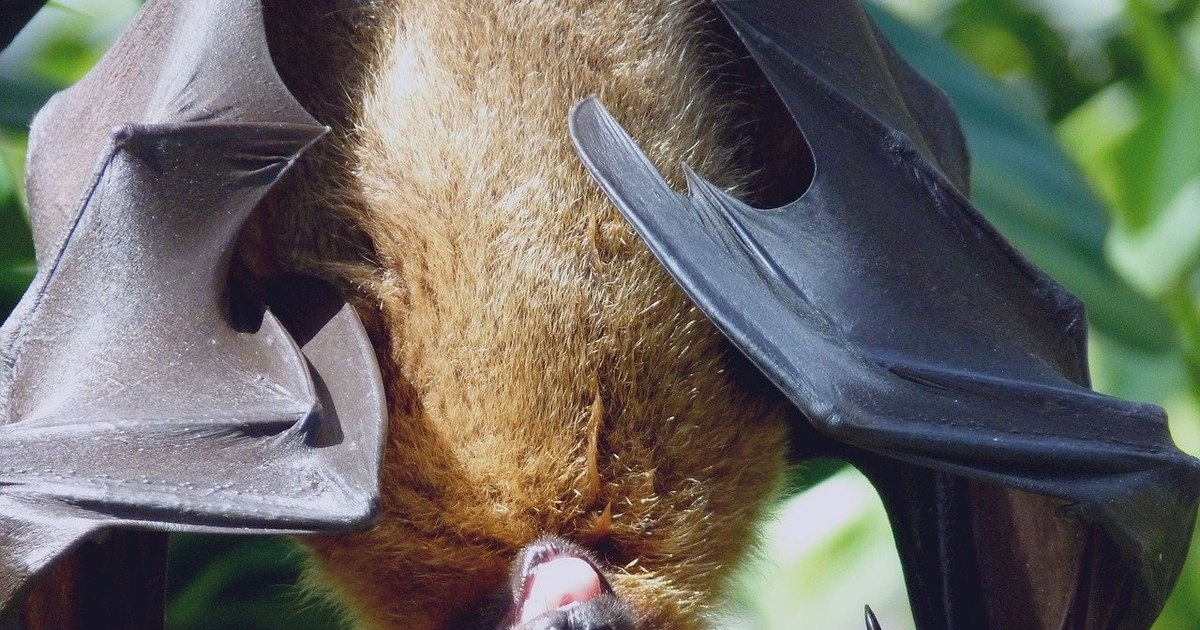
An 11-year-old boy died after contracting rabies from contact with a bat, with no bite marks or visible injuries to his family. The case, considered extremely rare, was made public as a warning about the hard-to-detect risks of exposure to rabies.
The case was recorded in northern Ontario in the summer of 2024 and was later documented in a medical report drawing attention to how a seemingly mundane contact with a sick animal can turn into a lethal infection.
On the night of the incident, the 11-year-old boy woke up suddenly after a bat landed on his face, covering his nose and mouth. A removed the animal by hand and his father caught it and later released it outside. At that time, the parents did not worry, because the boy had no traces of blood, no visible injuries and no pain, so they did not consider an emergency medical evaluation necessary.
The problem only appeared approximately 19 days later, when the child’s condition began to change, at first the symptoms were subtle and started with a discomfort that is hard to define. Unfortunately, these quickly worsened, turning into a severe neurological condition with tingling and numbness on one side of the face, to which were added episodes of vomiting.
Because there was no clear history of a bite, doctors initially considered other more common diagnoses that could have caused such symptoms, but as the disease began to progress rapidly, they concluded that it was rabies.
Unfortunately, by that time, the infection was already established in the nervous system, which reduced the therapeutic options. The child was hospitalized and cared for in intensive care, but, in the case of symptomatic rabies, the treatment can no longer stop the evolution of the disease, so his condition continued to deteriorate, and after more than two weeks the doctors had to stop life support. The boy died in the hospital, his parents being by his side until the last moment.
The case was made public even at the request of the family, in the hope that it will help to avoid similar situations.
In this context, the doctors involved in this case point out that the main danger in such situations is the fact that the infection can go completely unnoticed, some bites, such as those of bats, are sometimes so small that they leave no visible marks on the skin.
“It was important for us and the family to take this opportunity to learn something from this case to help us raise awareness and understanding of rabies infection and its risks.” said Dr. Brian Hummel, specialist in pediatric infectious diseases involved in the case, emphasizing that the presentation to a control immediately after contact with a wild animal is essential.
He emphasized that the lack of a visible wound does not preclude exposure and noted that any direct contact with a bat, especially in the face area, should be treated as a medical emergency, with immediate post-exposure evaluation and prophylaxis.
The case, published in the Canadian Medical Association Journal and picked up by the DailyMail, marks the first case of locally acquired rabies in Ontario since 1967 and one of very few recorded in Canada.
Although human infections are rare, experts note that bats remain a known source of the virus, being implicated in the majority of rabies deaths in the United States, for example, even though only a small proportion of bats carry rabies.
In 2009, the only case of rabies infection from a bat was recorded in Romania. It is about a man from Braşov, a patient of the Pneumophthisiology Hospital in Sânpetru, who was bitten on the finger by a rabid bat.
Another case was recorded in 2025, in Iasi, where a 69-year-old woman was scratched by a bat found in the balcony of her home.
