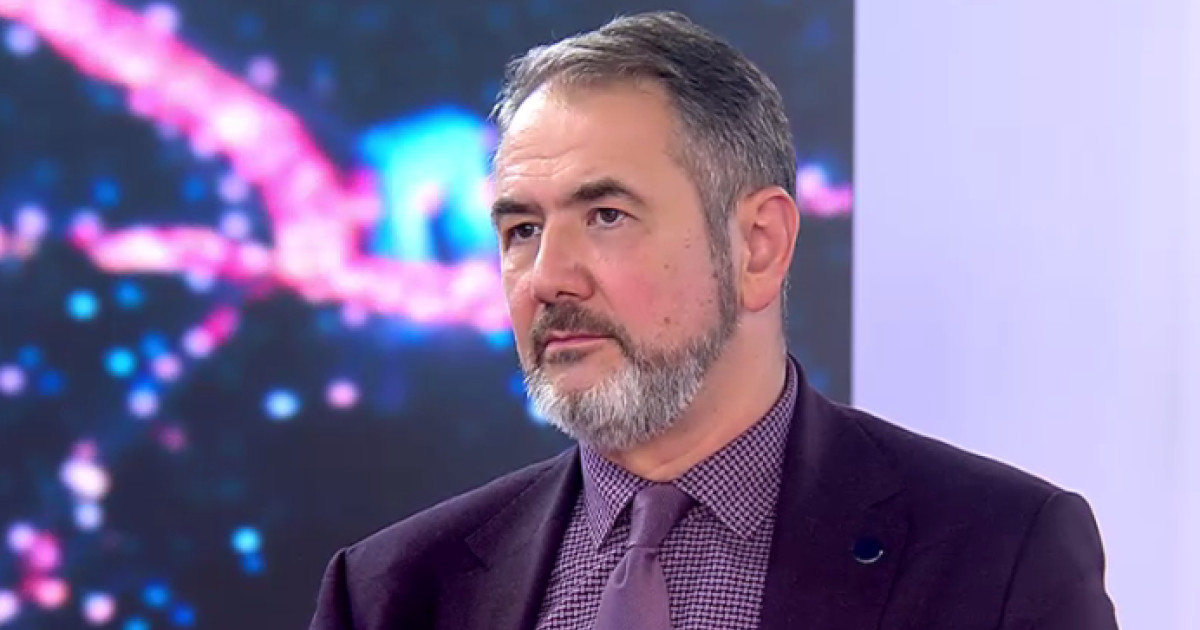
The Minister of Education Sorin Costreie expressed concern that the age of violence among young people is decreasing, after the case of the 13-year-old boy who attacked a teacher and a colleague with a knife in a school in Bistrita. The minister spoke on Digi24’s “In front of you” show and an initiative and a campaign focused on protecting teachers and students, which would restore confidence in the teaching staff.
Premeditated gesture, determined by radicalization
Asked about the case of violence in Bistrita, the Minister of Education says that the gesture was premeditated and praised the prompt intervention of the security guard and the sports teacher.
“The case is terrible and I was blown away, so to speak. When I found out, I immediately called and talked to the school director, the inspector and the mayor. The target was not the teacher and it was not that classmate who was injured either. The target was another child from the 6th grade (…), a Roma child.”
Read also: Measures after the attacks in the schools in Bistrita and Pitesti: Tougher sanctions, strengthening of security, rapid reaction mechanism
The Minister of Education calls for a greater number of guards in schools, after the attacks in Bistrita and Pitesti: “Let them go to key places”
Minister Costreie also brought up the case in Timiș, in which several 15-year-old teenagers killed their colleague, after planning the crime for a month.
“It’s a little different here because we’re talking about radicalization. I still haven’t had time to discuss and ask for data from the SRI, because it’s required. I want to understand the context, but the big surprise is that we’re talking about Bistrita, a child who I understand is from a normal family, but who accessed various websites, had made certain posts. Certain questions arise: why I didn’t know about him and he wasn’t stopped, but I didn’t answer these things,” he said the official.
Aggravating provisions for attacking teachers
Sorin Costreie noted that he is working on a government initiative so that teachers and students feel more protected.
“I see at least two things that can be done, and I also spoke with my fellow minister delegate for pre-university education. There are some aggravating criminal provisions when you attack a doctor or medical staff. We want to do the same for the teacher, so as a deterrent measure. (…) It will be a government initiative, now we are studying it from all points of view. We want to make this legal initiative doubled by a campaign”, explained the minister.
“Let’s restore the status of the teacher and the status of the student. I think these two important documents must be clearer. In which those who make mistakes are charged much more clearly. And when you have situations like this, I don’t think we need to have many interpretations. (…) I would like to restore confidence that school matters, that school is important. They (no students) also face a lack of role models and, together with their parents, I repeat this: it seems terrible to me how you can expect a child to respect the school, if the respective parent does not respect the school”, added the Minister of Education.
“We must become more human”
Sorin Costreie also spoke about the educational system in which students learn only to answer the test correctly, and not to gain knowledge and critical thinking.
“I have the impression, and this impression is becoming more and more acute, that we don’t do education and training to make them learn, and they learn to be tested. And there is a big difference. These tests, the national assessment, after that the baccalaureate… when we look, they only reproduce schemes. And I’m not talking about the Romanian language, I’m talking about mathematics. They really don’t learn to think mathematically. They learn some patterns, some structures of solutions, of a certain type of problems that they solve. But this means a certain mechanism of the mind, which, in the age of AI, we must get rid of, because otherwise we will become robots, by contrast with artificial intelligence. And this means more reflexive, more empathetic and, why not, more sympathetic,” the official concluded.