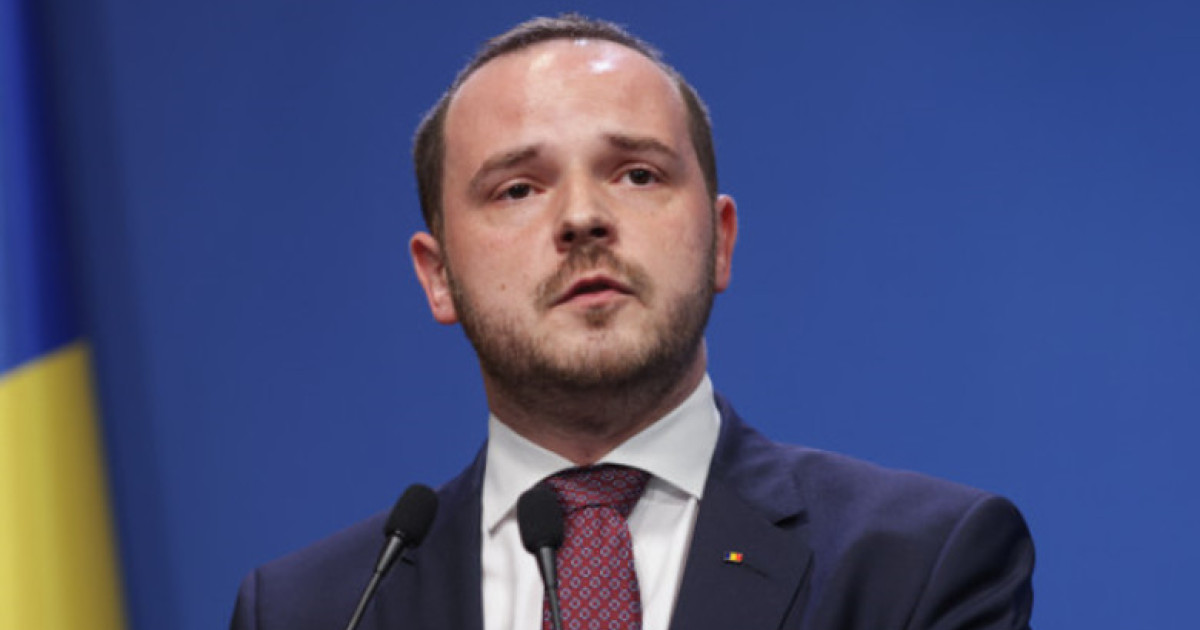
The Minister of Health, Alexandru Rogobete, convened, on Tuesday, a video conference with the managers of ambulance services and hospitals in the ministry’s network, to analyze the financial problems and the risks of blockage in the health system. The official called for an assessment of funding needs by the end of the year, after ambulance services and emergency units received additional funding of 150 million lei. According to the minister, the health system would need up to 11 billion lei to function until the end of the year.
The Minister of Health announced, on Tuesday evening, that he had discussed with the managers of the ambulance services throughout the country and those of the hospitals in the ministry’s network about the financial difficulties and the necessary measures to ensure the continuity of medical services.
“We analyzed together the critical situations in hospitals and emergency services, the financial blockages and the measures that must be taken in the immediate period. The budget decisions of the last months have put additional pressure on the health system. And here we do not allow blockages. The safety of patients and the operation of medical services cannot be sacrificed in order to achieve austerity objectives,” Alexandru Rogobete said.
Additional funds of 150 million lei for emergency services
The minister stated that the immediate priority is the stabilization of medical services and the identification of problems that require urgent interventions.
“Last week we added 150 million lei to the funding of ambulance services and emergency reception units. Managers have already confirmed that this measure has reduced the financial pressure,” said Rogobete.
He asked the managers of the ambulance services to submit the situation of the financial needs by the end of the year, including for the expenses of personnel, medicines and sanitary materials. It also requested data on human resources, the number of new ambulances received in each county and the operational capacity of the services.
“I want to know the real problems of each unit, identify bottlenecks and intervene before financial or personnel shortages affect patients,” explained the minister.
Rogobete emphasized that supplementing the budget is not a long-term solution and that it is necessary to identify resources for the last months of the year.
“We cannot build a stable health system through spending cuts alone. We need predictable funding, accountability and decisions adapted to the reality in hospitals,” he added.
On Monday evening, the Minister of Health declared that the entire sanitary system in Romania would need approximately 10.5-11 billion lei to operate by the end of the year. According to him, the budget rectification is to be carried out by the end of next week.
Guard pay and new malpractice law discussed with medical representatives
Alexandru Rogobete discussed with the president of the College of Doctors from Romania (CMR), Cătălina Poiană, about several measures regarding the activity of the medical staff, according to Agerpres.
One of the main topics concerned the remuneration of doctors for the on-call hours performed. The minister presented the prospect of introducing a progressive payment system for guards, including for resident doctors.
The College of Physicians has conveyed that it is waiting for the implementation of this initiative and considers appropriate remuneration of the medical staff necessary.
The discussions also focused on the establishment of a working group to identify legislative solutions in the field of malpractice and the development of a new law.
Also, the representatives of the two institutions addressed measures to support resident doctors, reduce bureaucracy and speed up procedures for professional recognition and equivalence of qualifications, including for doctors returning to Romania from the United Kingdom.
The College of Doctors reaffirmed its willingness to collaborate with the Ministry of Health to improve the working conditions of medical staff and the quality of services offered to patients.