
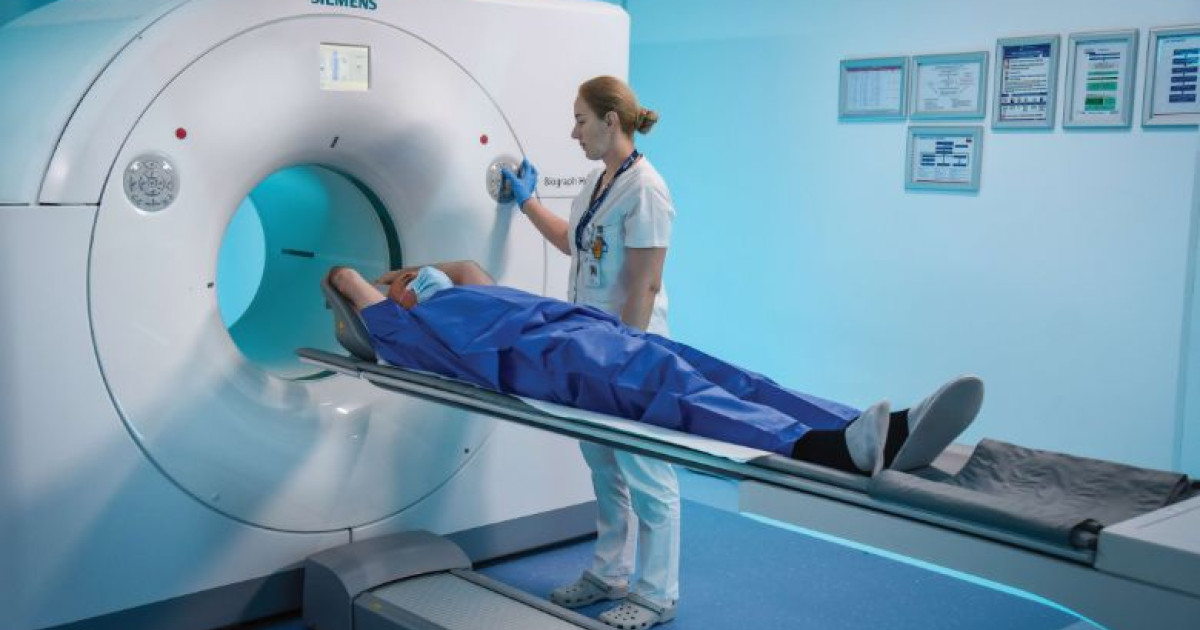
For the staging of a prostate cancer or for the restaging of the disease, when there is a suspicion of a relapse after treatment, the urologist or oncologist may recommend, in some cases, the PET-CT PSMA exam.
The investigation involves a PET-CT scan, performed after intravenous administration of a special radiotracer that binds to PSMA expressed on the surface of cells. Prostate-specific membrane antigen – PSMA – is a protein present in prostate tissue, which can be overexpressed on prostate cancer cells. This protein thus becomes a molecular “target”. The radiotracer accumulates in areas where there are PSMA-expressing cells, which allows imaging to identify PSMA-positive lesions and may help to highlight metastases.
It is important to note that the results of the PSMA PET-CT examination are interpreted by the doctor in a clinical context, because PSMA is not exclusively expressed by prostate cancer cells, and uptake of the radiotracer can also occur in some normal tissues or in other conditions.
The examination is recommended by the doctor, and the results are interpreted together with the results of other imaging and laboratory investigations, when the additional information can contribute to the establishment of therapeutic conduct. The results may contribute, in certain situations, to treatment planning, including radiotherapy, or to the evaluation of patients for PSMA therapy with lutetium-177.
The therapeutic plan is individualized according to the stage and characteristics of the disease, the results of investigations and the particularities of the patient. Monitoring is also important and may include periodic measurement of the PSA level and, when deemed necessary by the physician, imaging investigations to assess disease progression and response to treatment.
Currently, Romanian patients who receive a recommendation for PET-CT PSMA can perform this advanced investigation in the country, the examination being introduced for the first time for Romania at the SANADOR Oncological Center. The availability of the investigation in Romania simplifies patients’ access to this examination, without the need to travel abroad.
In addition, at the SANADOR Oncological Center, patients also have access to other advanced investigations, as appropriate, and benefit from cancer treatment through an integrated multimodal approach, depending on the indication established by the Tumor Board. Eligible patients can also benefit from PSMA therapy with lutetium-177, introduced for the first time in Romania at the SANADOR Oncological Center.