
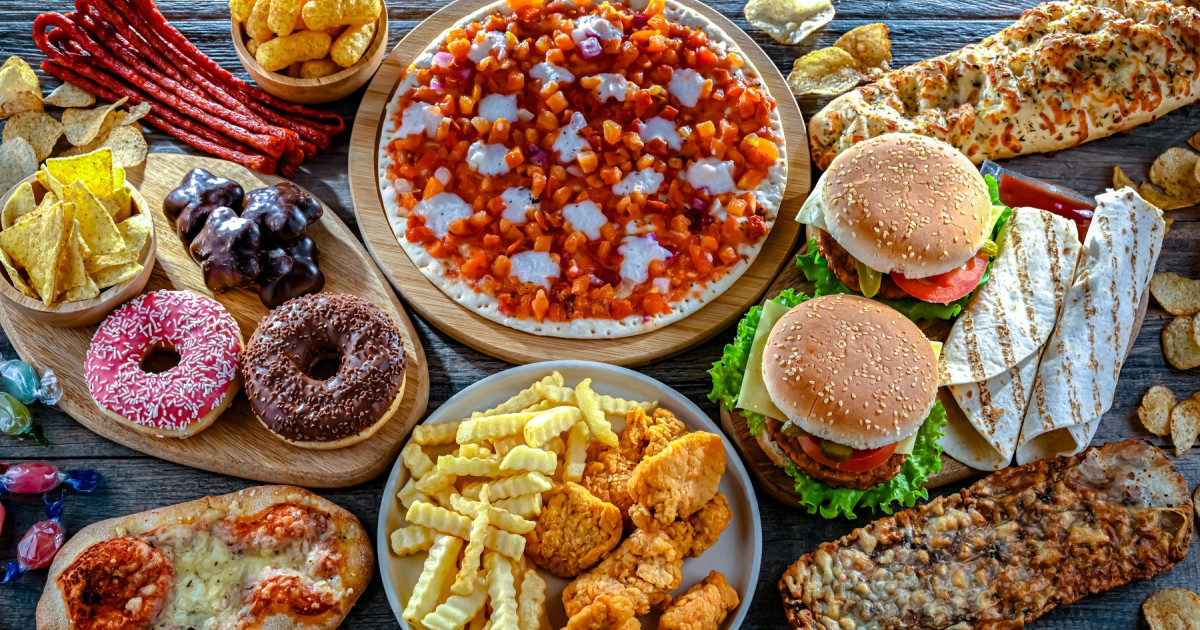
A large study of more than 460,000 people in the United States brings surprising results regarding the link between ultra-processed foods and colorectal cancer.
The researchers found that higher consumption of such products was not associated, overall, with a higher risk of colon cancer. However, certain categories of ultra-processed foods were associated with an increased incidence of the disease, while others showed an inverse association.
The research, led by Erikka Loftfield of the US National Cancer Institute, was published on October 15, 2026 in the scientific journal PLOS Medicine, and the results were presented by ScienceDaily.
Effects
The study questions the idea that all ultra-processed foods have the same health effects, suggesting that their nutritional value and the ingredients used may be more important than the degree of processing.
Ultra-processed foods account for more than half of the caloric intake of American adults. These products have come under increasing scrutiny in recent years due to possible links to various chronic diseases, including colorectal cancer.
Over 460,000 people, monitored for almost 19 years
For this research, scientists analyzed the medical and dietary information of 461,682 Americans aged 50 to 71 at the time of study enrollment.
Participants were enrolled in the NIH-AARP Diet and Health Study during 1995-1996.
At first, they filled out questionnaires about the frequency of consumption of different foods. Based on the answers, the researchers estimated the amount of ultra-processed products consumed by each person.
Participants were monitored until 2018, with a median follow-up of 18.8 years.
The results showed that, overall, people who ate higher amounts of ultra-processed foods did not have a higher incidence of colorectal cancer compared to those who ate lower amounts.
However, when the researchers analyzed the different product categories separately, they identified important differences.
Which ultra-processed foods have been associated with a lower risk of colorectal cancer
According to the research, a higher consumption of whole grains, fiber, dairy products and calcium from ultra-processed food sources was associated with a lower incidence of colorectal cancer.
Conversely, higher consumption of meat from the ultra-processed food category was associated with a higher incidence of this form of cancer.
These results suggest that foods in the same category, depending on the degree of processing, may have very different associations with health.
The researchers also looked at the possible effect of replacing ultra-processed foods with less processed alternatives.
According to the results, replacing 10% of the amount of ultra-processed food consumed, calculated by weight, with minimally processed products was associated with a 2% lower incidence of colorectal cancer.
Why not all ultra-processed foods have the same effects
The authors of the study believe that simply classifying foods as ultra-processed is not enough to assess their effects on health.
For example, products containing whole grains and fiber may have different nutritional characteristics than processed meat products, even though they are all included in the same category.
The results are consistent with existing dietary recommendations for colorectal cancer prevention, which encourage consumption of whole grains, fiber, dairy and calcium-rich foods, as well as limiting consumption of processed meats.
Erikka Loftfield, the study’s coordinator, explained that the study did not identify an overall association between the total consumption of ultra-processed foods and the occurrence of colorectal cancer among older American adults.
However, separate analysis of food groups showed that higher consumption of whole grains and dairy, but lower consumption of meat, was associated with a lower incidence of the disease.
Limitations of the study. What researchers warn
Although the research included a very large number of participants and a long follow-up period, the authors draw attention to some important limitations.
Most of the participants were white, older Americans. Therefore, the results cannot be automatically generalized to young people or to populations with different ethnic and demographic characteristics.
Another limitation is that participants reported their eating habits only once, at the beginning of the study. The researchers were thus unable to track dietary changes over the years.
In addition, the availability and variety of ultra-processed foods has increased considerably over the period under review, meaning that initial estimates may not reflect actual consumption in future years.
The authors emphasize that the study is observational and cannot prove that certain foods directly cause or prevent colorectal cancer.
The researchers’ conclusion is that the types of foods consumed and their nutritional characteristics may be more relevant to the risk of colorectal cancer than simply their classification as ultra-processed products.