
Australia, Estonia, Finland, Grenada, Iceland, Mauritius and New Zealand are the only countries that meet the limit recommended by the World Health Organization (WHO) for fine particulate matter emitted by cars, trucks and industrial processes.
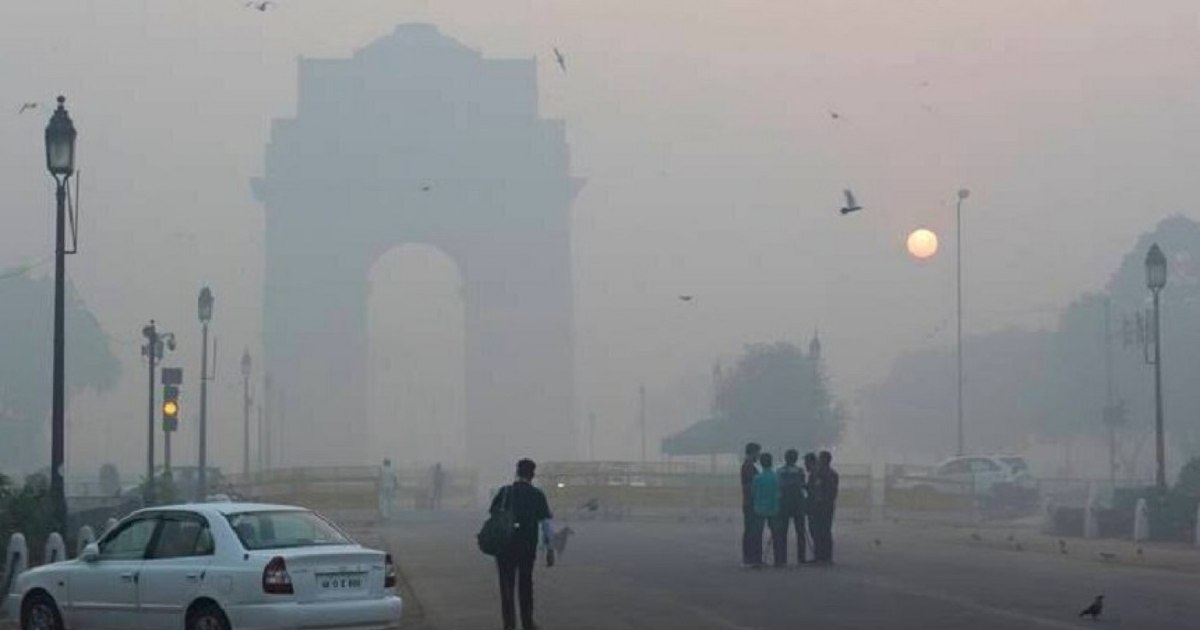
Pollution in New Delhi PHOTO: Archive
Only seven countries meet an international standard for air quality, and deadly air pollution is getting worse in some places due to an increase in economic activity and the toxic impact of smoke from wildfires, according to a new report.
Of the 134 countries and regions analyzed in the report, only seven – Australia, Estonia, Finland, Grenada, Iceland, Mauritius and New Zealand – comply with the limit recommended by the World Health Organization (WHO) for small particles in suspension expelled by cars, trucks and industrial processes, writes theguardian.com.
The vast majority of countries fail to meet this standard for PM2.5, a type of microscopic soot particles smaller than the width of a human hair that, when inhaled, can cause a host of health problems. health and deaths, risking serious implications for the population, according to the report by IQAir, a Swiss air quality organization that draws data from more than 30,000 monitoring stations around the world.
Although the world's air is generally much cleaner than it was for most of the last century, there are still places where pollution levels are particularly dangerous. According to the IQAir report, Pakistan, the most polluted country, has PM2.5 levels more than 14 times higher than the WHO standard, with India, Tajikistan and Burkina Faso being the next most polluted countries.
But even in rich and rapidly developing countries, progress in reducing air pollution is under threat. Canada, long considered to have one of the cleanest atmospheres in the western world, became the worst country for PM2.5 last year as record wildfires ravaged the country and spewed out toxic rays across the country and in the US.
Meanwhile, in China, air quality improvements were complicated last year by a rebound in economic activity following the Covid-19 pandemic, with the report finding a 6.5% rise in PM2.5 levels.
“Unfortunately, things went backwards” said Glory Dolphin Hammes, IQAir's General Manager for North America.The science is pretty clear on the impact of air pollution and yet we are so used to having a background level of pollution that is too high to be healthy. We're not making adjustments fast enough.”
Air pollution kills about 7 million people a year worldwide – more than AIDS and malaria combined – and this burden is felt most heavily in developing countries that rely on particularly dirty fuels for heating, lighting and indoor cooking.
The world's most polluted urban area last year was India's Begusarai, according to IQAir's sixth annual report, with India hosting the world's four most polluted cities. However, a large proportion of developing countries, especially countries in Africa, lack reliable measurements of air quality.
The WHO lowered its guideline for “safe” levels of PM2.5 in 2021 to five micrograms per cubic meter, and by that measure many countries, such as those in Europe, which have significantly cleaned up their air in the past 20 years, does not fall into this category.
But even this stricter guideline may not fully capture the risk of insidious air pollution. Research published last month by US scientists showed that there is no safe level of PM2.5, with even the lowest exposures linked to an increase in hospitalizations for conditions such as heart disease and asthma.
Hammes said countries should act to make their cities more walkable and less dependent on cars, change forestry practices to help reduce the impact of forest fire smoke and rush to adopt faster clean energy instead of fossil fuels. “We share the atmosphere with everyone else in the world and we have to make sure we don't do things that harm other parts of it”she said.
Aidan Farrow, senior air quality researcher at Greenpeace International, said better air quality monitoring was also needed.
“In 2023, air pollution remains a global health catastrophe, IQAir's global dataset provides an important reminder of the resulting injustices and the need to implement the many solutions that exist to this problem.” he said.
