
Arturo Casadevall, a professor of molecular microbiology and immunology at the Johns Hopkins Bloomberg School of Public Health, has spent four decades investigating how fungi can both enhance and devastate life as we know it. His new book, “What if Fungi Win?”, lays out how we might overcome this growing threat.
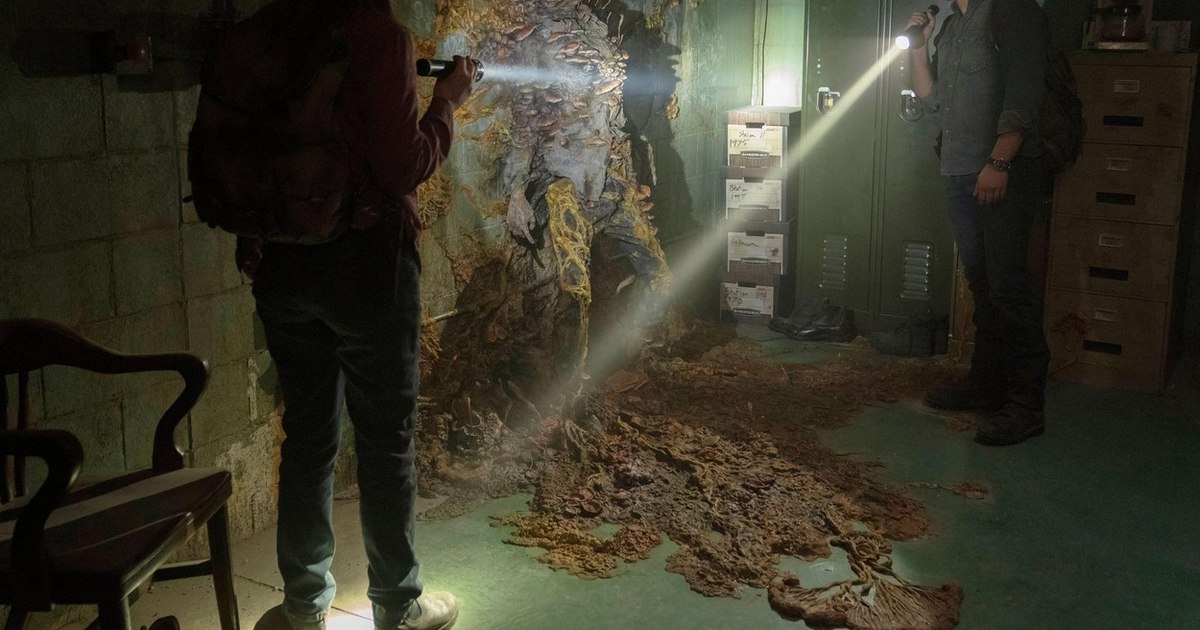
Photo capture of the series “The Last of Us” PHOTO: Profimedia
According to Professor Arturo Casadevall, some of the most dangerous infections for human life are fungal infections, caused by fungi, such as those that used to kill HIV-infected patients, who often died not because of the disease itself, but because of these infections which develops extremely quickly.
“This was the first large-scale human fungal crisis in history. Once I started working on the medical side of mushrooms, I discovered the wonders of this kingdom”, explained Prof. Casadevall, in an interview for The Guardian.
But he explains that it is unlikely to reach a situation like the one portrayed in the series “The Last of Us”, which depicts a world in which a fungus triggers the apocalypse.
“Unlikely, but not impossible. At the moment, we don't know of any fungus that can turn a human into a zombie. But I have no doubt that over time we will see new dangerous fungal pathogens. In fact, we are already seeing this happen. So who knows“, explained the microbiology professor.
But adding to the dangers posed by the development of new dangerous fungal pathogens are global warming and climate change, which are game-changers for the development of these types of dangerous pathogens that are rapidly transmitted from person to person.
“Everything in our environment is affected as temperatures rise; there is no reason to believe that mushrooms will be an exception. As modern medicine paradoxically creates more and more people vulnerable to new fungal infections, there is growing evidence that certain fungi have the potential to trigger new diseases that will affect many more people in unprecedented ways”, Casadevall explained to The Guardian.
One such case has already occurred, a mini fungal epidemic that affected a lot of people and spread quickly from person to person, Casadevall says, but so far there are no concerns about a possible outbreak. pandemic, turning people into zombies, or altering the behavior of those infected by fungal pathogens.
“Candida auris was unknown in medicine until 2007, when it was recovered from the ear of a person in Japan. Then, a few years later, in 2010, 2011, 2012, it appears independently on three continents (South America, Africa and the Indian subcontinent).
So we have a medical mystery. We have an organism that medicine knew nothing about. One of the things I've proposed is that it may have been the first fungus to break through our thermal barriers (most fungi can't survive at 37°C, the internal temperature of the body) after it- they have adapted to higher temperatures. It is probably the first example of a new fungal disease emerging as a result of climate change“, says the microbiologist.
Fungal pathogens can also be used for the good of mankind
“Fungi are essential elements for life on Earth. They're useful to us in food – you can't have wine without fungi, you can't have fermentation without fungi. They are the source of revolutionary drugs such as penicillin and statins. Innovators are using fungi to produce vegan leather car seats and building materials. Others use them to degrade the plastics that fill our landfills. In the future, they could be sources of new materials, things that could improve our daily lives”, explains Casadevall.
However, the microbiology professor claims that such fungal pathogens can also be used as a weapon of biological warfare, should a dangerous fungal pathogen fall into the hands of a “bad character.”
“We always worry about engineering organisms for evil purposes. I don't know if this is done by anyone. But surely, (for) a realm this large and this diverse and has this many powerful species, it has to be on the radar – that bad actors could use them in one way or another. They produce powerful toxins, so they have been considered as biological warfare agents. There are nefarious uses of mushrooms, but in general, the good and potential good they do far, far outweigh the negatives.
Many of the fungi produce spores, and the spores are designed to be carried by the wind. Generally, when people create biological warfare, they must modify the organism so that it can be dispersed through the air. Well, the mushrooms are ready to be scattered through the air“, Arturo Casadevall also told The Guardian.
However, in his book, What If Fungi Win, professor and author Casadevall reports that these fungal pathogens have already won, and if they win, humanity will also have to won.
