
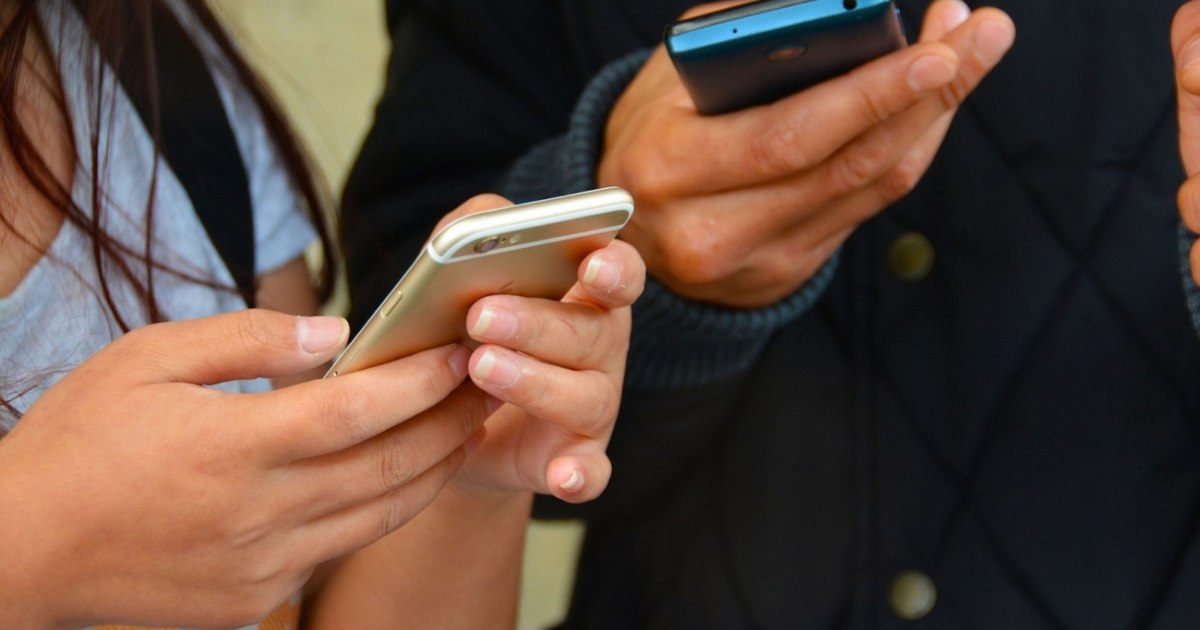
The use of mobile phones will be completely prohibited in schools, announced the Secretary of State in the Ministry of Education, Florian Lixandru, who specified in a television show that students will be forced to leave their devices at the entrance to educational institutions. A statement that puts even more fuel on the fire: the parents, many of them, do not see the decision with good eyes and say that they do not follow the regulations approved by order of the minister.
Banning cell phones in schools, a controversial decision. Source: archive
“As before, the use of mobile phones during class hours is prohibited, except in situations where they can be used as a teaching tool. Basically, at the teacher’s decision, he can allow students to use mobile phones during the respective lesson. The management of the educational unit has the obligation to provide a space where the students can store their phones, phones that cannot be used during the school program – basically, they should be stored at the entrance and each student should collect their phone when leaving. If a student happens to be caught with their phone on them during school hours, the teacher has the option of confiscating their phone and returning it at the end of school hours. As an element of novelty is the fact that I cannot use the phones during the entire school program of a day. Until now, in the old regulation, they had the possibility to use it during breaks. Now, practically, they are not even allowed during the breaks”, stated the Secretary of State in the Ministry of Education Florian Lixandru, in a televised broadcast.
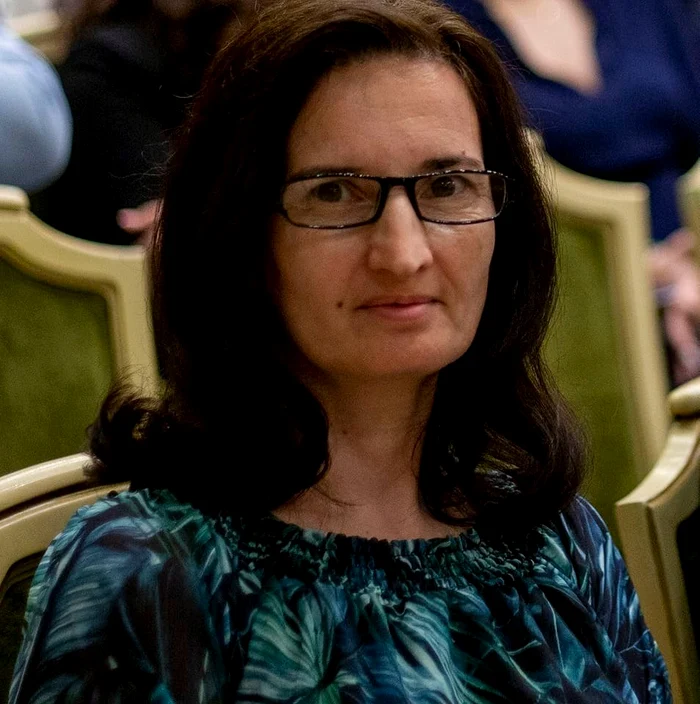
Iuliana Constantinescu does not agree with such drastic measures. Source: Facebook
The decision, says Iuliana Constantinescu, president of the Parents’ Association of the Theoretical High School “Lucian Blaga” Bucharest, remains, for now, at the discretion of each individual school: “Through the internal order regulation, schools will decide whether or not students are allowed to use mobile phones in schools. Or if they are only allowed with them during breaks. It is about the organization and operation regulation that is drawn up based on the regulation approved by order of the minister. If Mr. Secretary of State knows that this regulation has been changed…I have no knowledge of it. So, somehow we have to go further and legislate this regulation”.
Banning phones in schools too drastic, some parents say
The parent representative told us that, from her point of view, banning mobile phones during classes is a good idea: “I think it is absolutely fine to ban the use of cell phones during school hours and by high school students provided that such a regulation is developed and approved in consultation with all stakeholders. If at the level of an educational unit, both students, teachers and parents agree to such measures, there is absolutely no problem”.
Regarding banning cell phones in schools, in general, the parent has a different point of view: “There may be exceptional situations where a student needs to contact their family, or vice versa, the family needs to contact the student. I don’t think the school has the possibility to be an intermediary. That is, to notify each student in the event of an emergency. That is, it would become too much of a chore for the educational unit.”
Iuliana Constantinescu believes that such a drastic measure can be elegantly avoided: “Students should turn off their phones during class. Or to silence them. And to keep them in their satchels. Otherwise, the teacher may confiscate the devices. Make a report because a violation of a regulation is discovered. In the report, he must state the reason for confiscating the phone. And in case of repeated violations, the student can be reprimanded or penalized with a reduction in the performance grade”.
The father stated that “although we have a generation of students born with technology in hand, and it is natural to use technology because it means evolution, we must be very careful how we use technology and especially from what age”.
The danger of improper use of all that means technology and virtual space is immense, the parent also says: “We have reached the situation where our children live, simply, in parallel, virtual worlds, which are totally different from the reality in which they should live. And we end up with some generations of children who are totally emotionally unbalanced, with major problems understanding the world they live in, and who are guided only by what they see and experience online. It is a real problem, not at the level of Romania, but at the world level. As other countries step up their efforts to control what happens in the virtual world and the access of underage students to the Internet, so should we.”
The school principals we spoke to told us that the move to ban these devices in class is welcome and long overdue. Moreover, most principals of educational institutions have already started preparing special boxes for students to store their gadgets. However, there are high schools, such as Colegiul ILCaragiale, where students have access to metal boxes located at the secretariat and locked during the day with a key.
What measures have other European states taken?
Many schools in Europe have introduced bans or restrictions on the use of mobile phones amid concerns about their impact on young people’s mental health.
Hungary
Starting this school year, Hungary has banned the use of mobile phones in primary and secondary schools. Moreover, all gadgets with internet access are banned in the neighboring country. Exceptions are situations where the activity is educational and is carried out at the request or with the consent of the teacher.
Netherlands
Schools in the Netherlands have adopted a nationwide total ban on mobile phones starting the first week of September. Phones can only be used in class if they are necessary for the content of the lesson.
France
In 180 colleges, a system is being tested that prohibits the use of mobile phones during the entire school day. The testing of the so-called digital break, which targets more than 50,000 students, is being implemented ahead of a possible plan to introduce this measure at national level, starting in 2025.
Belgium
In Belgium, mobile phones are banned from classrooms in hundreds of French-speaking schools in Brussels and Wallonia, starting this school year.
The plans were announced during the summer by the new government of the French-speaking region.
Greece
In Greece, students are required to keep their mobile phones in their schoolbags during lessons. The Minister of Education in this country specified that the possession and visible use of mobile phones is prohibited, even during breaks, and a violation can attract suspension for a day.
Italy
In Italy, mobile phones are banned in classrooms starting this school year. The measure aims to ban the use of mobile phones in schools, including for teaching purposes. Tablets and computers can continue to be used, with the consent of the teachers.
Spain
In several regions of Spain, bans and restrictions on the use of mobile phones in schools have already been introduced, such as in the communities of Madrid, Galicia, Castilla-La Mancha, Andalusia and Extremadura. In Aragon, the Valencian Community, the Balearic Islands and Navarre, as well as Andalusia, for example, teachers have the right to confiscate and retain students’ phones until the end of the school day.
Slovenia
In Slovenian primary and secondary schools, it is up to each individual school whether to restrict the use of mobile phones. Internal rules vary from one school to another, but few have completely banned the use of mobile devices.
Croatia
There are no uniform rules in Croatia, and the Ministry of Education has not yet taken any decision in this regard. However, some schools have already taken the decision to ban the use of mobile phones by students throughout the school program, including during breaks. These include schools in several Croatian cities, such as Zagreb, Split, Rijeka, Osijek and Zadar. A school in Split has also introduced a measure where students are not allowed to bring mobile phones to school, claiming that simply prohibition to use them is not enough.
