
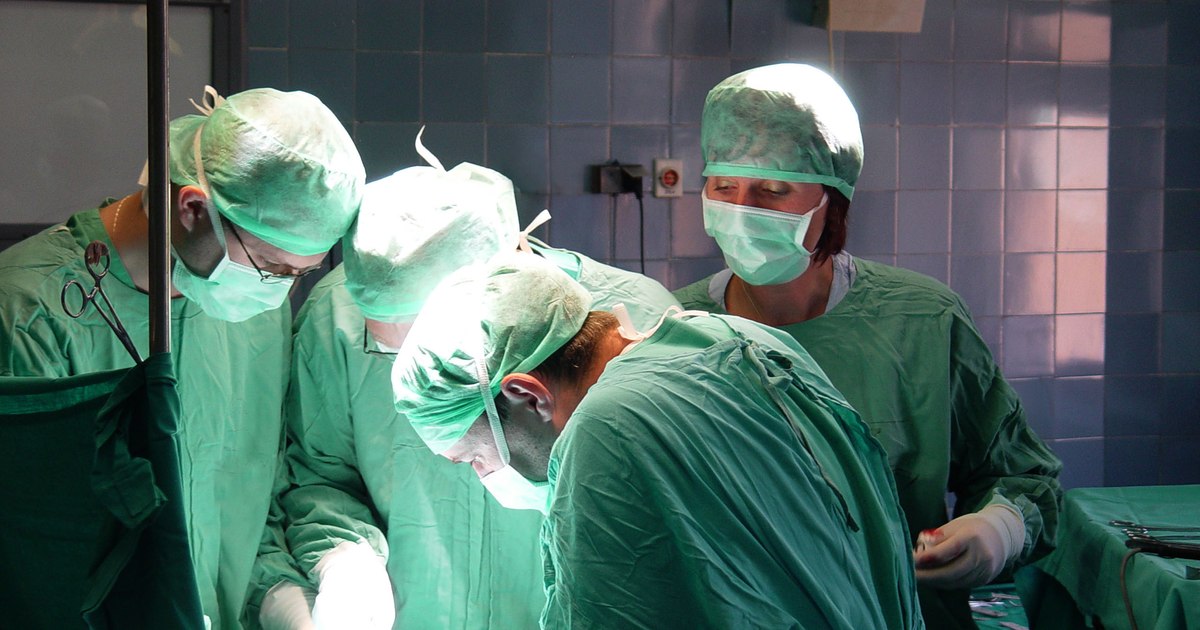
The exodus of doctors from public hospitals continues, while managers look for desperate solutions and announce the abolition of guard lines. A surgeon warns that we are in a situation that may become irreversible. Doctors’ grievances are no longer about money.
High-risk specializations are no longer attractive PHOTO: archive/Shutterstock
More and more public hospitals are facing a shortage of doctors, with specialists choosing in large numbers to leave with guns and baggage in the private environment. The financial gain is comparable, if not even greater, but the risks are lower, appreciate the doctors still left to take care of the health of the sick in public hospitals. Moreover, the situation will be even worse if the signals are not correctly interpreted and urgent measures are not adopted, believes surgeon Daniel Grigore, the leader of the Pro Medica Olt Union from the Slatina County Emergency Hospital, a union affiliated to the Hippocrat Federation.
“Watch Residency now to see how many majors will remain undiscovered”
The Slatina County Emergency Hospital, the largest hospital in Olt, announced two days ago that it had to temporarily suspend the home guard for Ophthalmology, due to the lack of staff, following that the ophthalmology emergencies that arrive at the hospital during the time interval 15.00 – 8.00 to be redirected to the hospital in Craiova. All the Slatina hospital called, not long ago, for specialists or primary doctors with the cardiology specialty, who want to collaborate with SJU Slatina with a service contract, to contact the hospital. Specialists are needed both for the activity within the department and for the outpatient department. We are also looking for cardiology residents, specialists, or primary care physicians willing to perform part-time contract on-call. And the two situations are not singular. Doctors have also left from other departments, it is true that they have also come, but there is a real danger that in the long term it will be more and more difficult to find solutions to optimally ensure the activity.
In small hospitals, the situation has been desperate for years, in the absence of specialists such as anesthetists, for example, suspending surgical interventions, etc.
I asked the leader of the doctors’ union from SJU Slatina, surgeon Daniel Grigore, why doctors are leaving public hospitals, choosing not to go abroad, as was the case many years ago, but to private practices. On the one hand, the doctor explains how he got here, but on the other hand, he also raises a strong alarm signal about the decisions of colleagues who have not yet completed their professional training.
“The pressure is very high and especially on these surgical specialties, where the responsibility is very high anyway. They charge specialties, they shouldn’t handle certain cases, they also charge them to those who are a few surgeons. It’s a very big problem at the national level, but unfortunately our decision-makers won’t solve it and limit themselves to tinkering a bit in one direction or another, changing a law at a time, but it’s not enough. Take a look at the Residency now to see how many majors remain undiscovered. No one takes them anymore, especially the surgical ones, Anesthesia, UPU. Because the liability is very high, the guards are very poorly paid, this is also the problem. But the financial problem somehow remains in second place, the most serious is the environment in which we work every day. You leave home and if something happens to you…”the doctor explains.
“They start from the assumption that you left home to do harm, which does not exist”
The surgeon says he has been advocating for a long time for legislation to stop specialists from feeling like swords are over their heads all the time. The insurance policies that doctors pay today insure a very small part of the risks, while court sentences target hundreds of thousands of euros in compensation, money that, says surgeon Daniel Grigore, doctors may not be able to earn in whole career.
“You’re human and you can make mistakes, because that’s what it is, we’re human too, we’re not robots. And there is no understanding, from either side. Especially the specialties with problems will be more and more deficient. Our young colleagues no longer want to assume from the start. They find specialties that go very well in private and don’t want to take the heavy specialties anymore. The same is happening abroad, and there the deficit is even greater. And in France and England. So far it has been covered with doctors from Eastern Europe, from Asia, but slowly you see that it will not be anywhere. To give you an idea, only one resident completed General Surgery in Craiova. In my generation we finished around 20-30“draws the doctor’s attention.
The fear of the consequences of a mistake is the first thing that turns students away from specialties with a high risk of malpractice, the doctor claims.
“We don’t have a serious malpractice law, by which it is specified that it is possible to make a mistake, that malpractice covers those medical mistakes. Because we have to take into account that in medicine, as in any other field, mistakes can be made. This is why this malpractice insurance was established, which theoretically should cover all the damage you have caused. But that doesn’t happen here. There are court orders that set enormous sums. To compensate with 500 thousand euros or one million euros in Romania… I don’t know if a doctor makes a quarter of this amount in a working life. You think ten times – why take another specialty of this when you can always remain uncovered, and you and your family? (…) It starts from the assumption that you left home to do harm, which does not exist. There is no doctor in this world who leaves home to harm someone. We go to the hospital to heal people”, adds the doctor.
Two years ago, the doctor recalls, the union structure of which he is a part submitted to the decision-makers including a draft for a malpractice law. It did not become law, it was not debated, no changes were made to it, it lies in the drawers.
Consequently, there is increasing pressure to drop the guards.
“We do the guards through a contract separate from the employment contract, and I’m not telling you that the pressures are very high for no one to do guards anymore. And I don’t know where it will end. Legally, we are only required to stand guard. We continue to do them because we want to and because we kept saying to cover the system, let it be good”, myou would say the doctor.
A cardiologist, Dr. Grigore gives an example recently discussed at a meeting with his colleagues, consults perhaps over 100 patients in an emergency room, charging for the work performed in the emergency room an amount similar to what a patient pays in the private environment for a cardiac ultrasound. Instead, the workload is enormous, the doctor emphasizes.
“The cardiologist sees 100-120 patients. Here, at the County Hospital, there are around 170-180 presentations at the UPU, 70-80 CT scans are done in one ward. Just asking someone their name and making a record, think of how many sick people can happen. Unfortunately, our decision-makers don’t listen and don’t listen to us, and they’ve always messed around. I give 100 lei each to the guards. Well, that’s not how it’s solved, the problem is very serious and at some point it will get into a hopeless situation, because you don’t really have anywhere else to get doctors. If we all resign from the guard line, where are you going to get those people? They still covered them with residents, let’s say a resident from Craiova comes, that another specialty comes and covers your respective specialty, but at some point, if you have 50-60 resignations from the front line of that hospital close. Residency positions have been released. Last year, for example, those from Surgery were taken last”, adds the doctor.
For the Neurosurgery specialty, a future doctor prepares in residency for seven years, for Cardiac Surgery – nine years, explains Dr. Grigore, and if he makes a mistake, the doctor’s career can end suddenly, as things stand today, warns the surgeon. It is the reason why the decision-makers should consider the adoption of urgent measures that can stop this decline.
Directing patients, right from the time of admission, without having to walk between hospitals, to the competent units for solving certain cases; a rethinking of the system so that the Emergencies are no longer blocked with cases that are not actually emergencies; a salary system that truly rewards merit, etc. they are problems that can be solved, but which would require the adoption of unpopular measures, therefore politicians are not willing to take them on, believes doctor Daniel Grigore.
“I have colleagues who worked in England. There, for example, if you have a hernia, you want to have an operation and you go to the hospital now, the problem is not solved like here, in one day – two, three at the most. We usually work it out. In that week he is also operated on and possibly discharged. There, the minimum waiting time for a usual illness, I’m talking about surgery, is around a month or two, or even 6 months. (…) But the world doesn’t know. The population there is very educated. No one comments, no one makes a fuss. They sit quietly and wait, and that’s it, because they know they have nowhere to go, and if they make a fuss, it’s for nothing. They have, unlike us, much better primary care sector. The doctors there investigate the sick, when they send him to a surgeon they send him already documented, investigated and already operate on him. This, indeed, is different. But even so the waiting times are longer”, says the doctor.
And the situations in which the doctor causes harm to the patient are solved differently, says doctor Daniel Grigore. When allegations of malpractice are reached, a mediation committee is usually convened and the case is discussed, and in most cases an agreement is reached regarding compensation, which the insurer pays, the doctor says.
