
There has been talk for some time, globally, of a powerful duo – Artificial Intelligence (AI) and energy. And it's no surprise that the energy sector is channeling its efforts to exploit the potential of AI to boost efficiency and drive innovation.
The technology is in a truly unique position to support a concomitant growth of smart grids and the huge amount of data they generate. This volume is a key reason why energy companies see AI as a vital resource. According to the International Energy Agency, a recent estimate suggests that AI alone already serves more than 50 different uses in the energy system, and that the technology market in this sector could be worth as much as $13 billion.
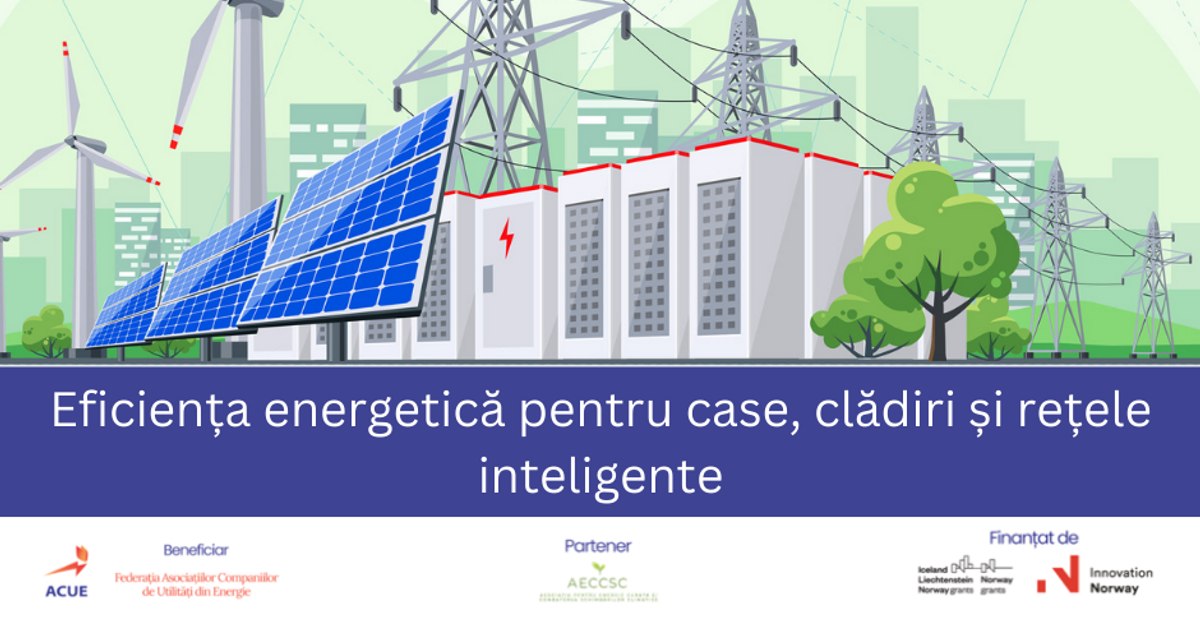
When we imagine the energy landscape of 2050, we cannot help but be captivated by this synergy between technology as a whole and energy. Imagine a world where smart grids distribute energy, optimizing consumption patterns based on real-time data analysis. Renewable energy sources such as solar, wind power dominate the scene, fueled by advances in storage technologies. The once dreamed concept of energy communities is becoming a tangible reality, with decentralized energy production facilitating the transfer of power and energy to consumers. Energy efficiency is no longer an afterthought, but the basis of infrastructure design, with buildings and transport systems optimized for minimal environmental impact.
Starting from this, the ACUE Federation has developed, for the project Energy efficiency for homes, buildings and smart networks, a series of materials and video infographics that show where we are in terms of efficiency, what we have to do and a likely scenario in which the sector will transform energetic.
To support the explosive growth rate of renewables and prosumers three things are crucial: investment in networks, storage and flexibility, where technology will be able to orchestrate the entire energy system.
