
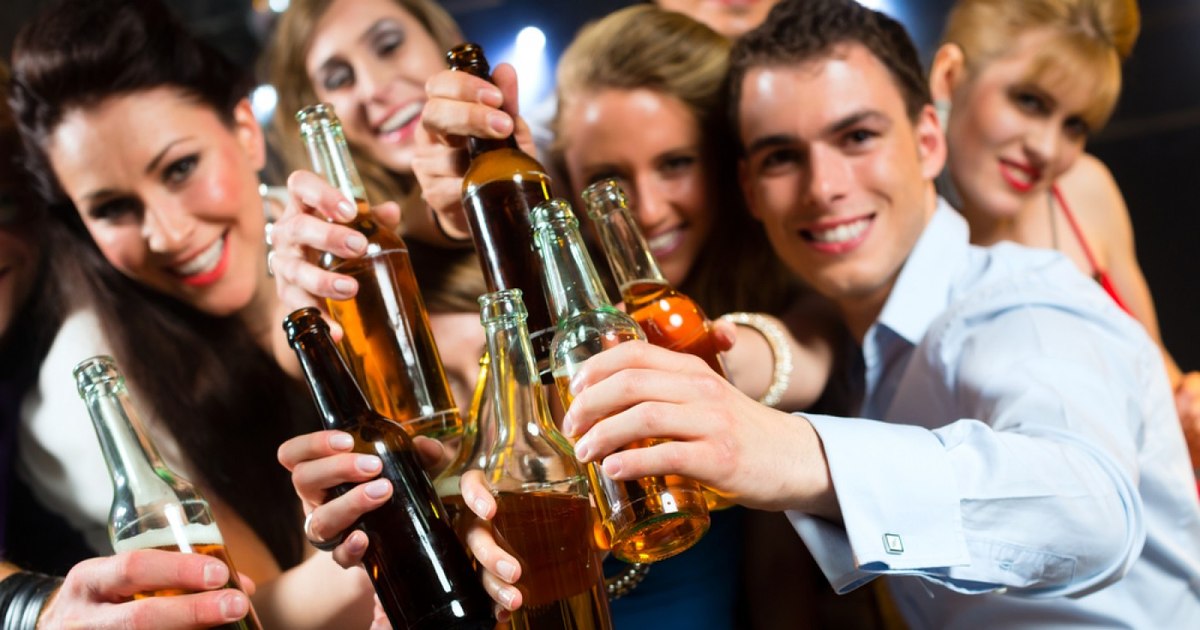
A psychologist draws attention to the fact that, during the holidays, we are witnessing a real unwanted phenomenon that has placed us in the charts for several years and which is promoted without restrictions by televisions. “This thing is completely illegal and not allowed,” draws attention to the specialist.
Associating alcohol consumption with well-being will encourage consumption, says the psychologist PHOTO: archive
Mihai Copăceanu, psychologist, specialist in addictions, makes a hard X-ray of what we have seen, in the last two weeks, on the screens during peak hours, despite the fact that on a theoretical level we want to decrease the consumption of alcohol that has led us at the top of the international charts.
“Children sing carols, their parents pour alcohol from glasses down their throats!”
“For several days, the televisions have been broadcasting repeated live shows showing how great Romanians enjoy the holidays, how well they have fun and especially what they eat and how much they drink. That “traditional foods”, carols and Christian and pagan customs are presented is not the biggest problem. Basically, there is nothing new: we all have sausages and sausages at home and know the traditional carols. What is clearly illegal and immoral is presenting alcohol consumption in an exclusively positive manner, with a state of well-being, fun, good mood and happiness”, the psychologist draws attention. Copăceanu describes how in one of the captured shows, all the men from a village in Maramureș, present in front of the camera, had bottles and/or glasses of alcohol in their hands, and some were not only dancing and singing with the glass raised, but they consumed live shouting loudly a “God help!”.
“What use are the messages in the anti-alcohol campaigns?”
“I was speechless seeing the miracle. This thing is completely illegal and not allowed. What good are the messages from anti-alcohol campaigns if we present alcohol consumption live on television in a positive way?”the psychologist asks. The specialist in addictions reminds that the law regulates that even the advertising templates in which alcoholic beverages are promoted must end with the sound and visual warning: “Excessive consumption of alcohol seriously harms health.”, even if, adds Mihai Copăceanu, this message in reality has no no preventive impact. What happens instead when seeing such news, the psychologist warns, is that associating alcohol consumption with a feeling of well-being will surely influence the increase in alcohol consumption.
“Not to mention that minors are present at the tables in these images. Children sing carols, their parents pour alcohol from glasses down their throats! And I was looking at a nene who looked over 70 years old but was dancing happily with a palinka in his hand. What example are you giving us, baby?!
Art. 113 of Decision no. 220/2011 of the CNA clearly states that in the time interval 6.00-22.00 any form of advertising of alcoholic beverages is prohibited. Day and night we saw reports of happy Romanians with a glass of alcohol in hand, at meals or dancing. My question is: is the CNA sleeping?”, the psychologist continued the call.
Mihai Copăceanu reminds that we are the country with the highest levels of alcohol consumption among adults and unfortunately also among minors. “At 13 we are in 3rd place and this is also due to the positive attitude, permissiveness and tolerance we exhibit with regard to alcohol. We directly and indirectly promote the consumption of alcohol through dozens of TV shows, now for the holidays and not only”, adds the psychologist.
“The responsibility is everyone’s, not just the state’s”
Mihai Copăceanu appeals to the producers of the shows to forbid reporters to present in live or recorded shows people who consume alcohol, or to provide images of alcohol on tables. Instead, we should all show an attitude against the promotion of alcohol consumption, says the psychologist.
“The responsibility is everyone’s, not just the state’s. We have an obligation to change the positive perception of alcohol consumption and to acquire a new anti-alcohol culture, to give up our toxic “traditions and habits” where alcohol is a mandatory drink that equates to fun and well-being!”, concludes Mihai Copăceanu.
