
An outbreak of foot-and-mouth disease was discovered on a buffalo farm in Brandenburg, near Berlin, Germany, prompting Romanian authorities to take a series of measures.
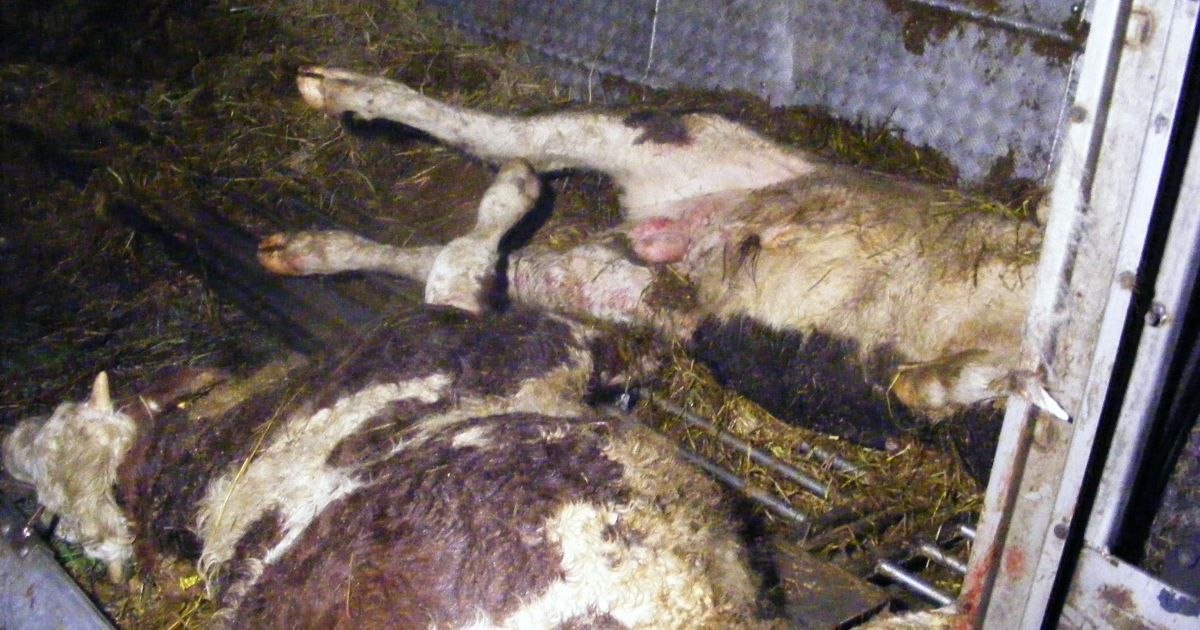
Foot and mouth disease is highly contagious. Archive photo
Germany notified, on January 10, through the World Animal Health Information System (WAHIS) of the World Organization for Animal Health (WOAH), the first outbreak of foot-and-mouth disease on a buffalo farm in Brandenburg, near Berlin . The disease was confirmed by analyzes carried out by the Friedrich Loeffler Institute (FLI).
Following the confirmation of this outbreak in Germany, ANSVSA started a series of measures to prevent the introduction of the virus in Romania. These measures include:
1. Informing breeders’ associations: Informing the representative of the main associations of cattle, pig, sheep and goat breeders, emphasizing the obligation to notify the veterinarian if the animals show changes in behavior, signs of illness or cases of mortality.
2. Public information campaign: Information campaigns were carried out regarding the obligation of animal owners to notify the veterinarian in case of changes in behavior, illness or mortality of animals. This information is distributed through printed materials (posters) that will be placed at the free practice constituencies, town halls, churches and other public locations.
3. Monitoring of animal transports: The supervision of animal transports (cattle, pigs, sheep and goats) from intra-community trade has been intensified, including by analyzing the possibility of their suspension.
4. Additional traffic controls: Controls have been intensified to identify unauthorized animal transports.
5. Informing economic operators: Economic operators who purchase cattle, pigs, sheep and goats from Germany (European Union) are obliged to pre-notify the County Sanitary Veterinary and Food Safety Directorates (DSVSA) before any purchase. Also, the veterinarian will assist the unloading of the animals from the means of transport and will perform a clinical examination of them.
These measures will be detailed in the meetings organized by the County Veterinary and Food Safety Directorates with the representatives of breeder associations and economic operators involved in the animal trade. ANSVSA sent instructions and memos to the territory, and these actions will be implemented by organizing meetings with all the actors involved.
The purpose of these meetings is:
• Informing veterinarians, economic operators and other people involved in ruminant and pig trade;
• Intensification of passive surveillance;
• Training veterinarians to recognize the clinical signs of foot-and-mouth disease according to World Organization for Animal Health (WOAH) guidelines.
ANSVSA requests economic operators in Romania who are active in the field of trade in ruminants and pigs to pay special attention to the instructions sent through the county DSVSA, in order to protect livestock from this disease.
If there is any suspicion of foot-and-mouth disease, ANSVSA recommends immediate notification of the county DSVSA.
Foot and mouth disease is particularly contagious
Foot-and-mouth disease is an acute infectious disease that causes fever and the formation of fluid blisters on the mucous membranes of the mouth and on the limbs of infected animals. The disease is caused by a virus with seven serotypes, each with the same symptoms. The incubation period ranges from 24 hours to ten days, and symptoms typically appear three to six days after infection.
We mention that, in Romania, there is a National Surveillance Program for foot-and-mouth disease, part of the Surveillance, Prevention and Control Program of Animal Diseases, which includes active and passive surveillance of animals from indigenous herds and those originating from intra-community trade.
90% of contaminated animals die
Foot-and-mouth disease is a particularly contagious viral infectious disease, with epidemic and sometimes pandemic developments, which is still a problem for the health of animals and for the economy of the affected countries. Foot-and-mouth disease affects all species of domestic and wild biungulate animals and very rarely humans.
The name foot-and-mouth disease comes from the Greek word aphte which means burn, thereby suggesting the similarity between the blisters produced by burns and those produced by the foot-and-mouth disease virus.
Foot-and-mouth disease was and is considered the most damaging disease in animals due to: the morbidity of over 90% of the herd, the high and rapid diffusibility in the territory, the numerous species affected, the very expensive prevention and control measures, but also the fact that, in the century XX no territory on earth, where there were receptive animals, was bypassed by the evolution of at least one episode of disease.
It is worth noting, however, that many territories, such as: Australia, New Zealand, North and Central America, Scandinavia and Panama, have been free of foot-and-mouth disease for 50-75 years, but also that in Europe the disease evolves sporadically, and in Africa, South America and some Asian countries, foot-and-mouth disease is still endemic and even epidemic.
In FMD-free countries, where the disease has not existed for decades, or in countries where the disease has been eradicated for a long time, the accidental introduction of a FMD virus can easily develop an FMD epidemic.
As the spread is extremely fast, controlling the disease is difficult and sometimes it can even get out of control (for example the epidemic in Great Britain in 1967-1968, when 634,000 animals had to be killed and the epidemic in 2000-2001, when no longer less than two million animals were contaminated and were killed).
Aggressive symptoms
The general symptoms of the disease are: fever with variable intensity, accompanied by common symptoms and other major infections, such as: loss of appetite, anorexia, rumination disorders, deviation, decreased milk secretion.
The symptoms that precede the vesicular eruption are: dry nose, the skin on the mothers and the plantar crown warm and congested.
The epidemiological characteristics of the disease and the antigenic plurality of the foot-and-mouth disease virus have made foot-and-mouth disease the most damaging disease encountered in animals. At the same time, the need to prevent this disease, anywhere in the world, required the creation of uniform and consistent bodies and regulations at the international level (FAO, OIE, etc.).
At the level of the European Union, the European Reference Laboratory for Foot and Mouth Disease, Institute for Animal Health, Pirbright Laboratory, of the Biotechnology and Biological Sciences Research Council (BBSRC) in the United Kingdom, established by Council Directive 2003/85/EC of 29, operates September 2003 on Community measures for the control of foot-and-mouth disease repealing Directive 85/511/EEC and Decisions 89/531/EEC and 91/665/EEC and amending Directive 92/46/EEC
