
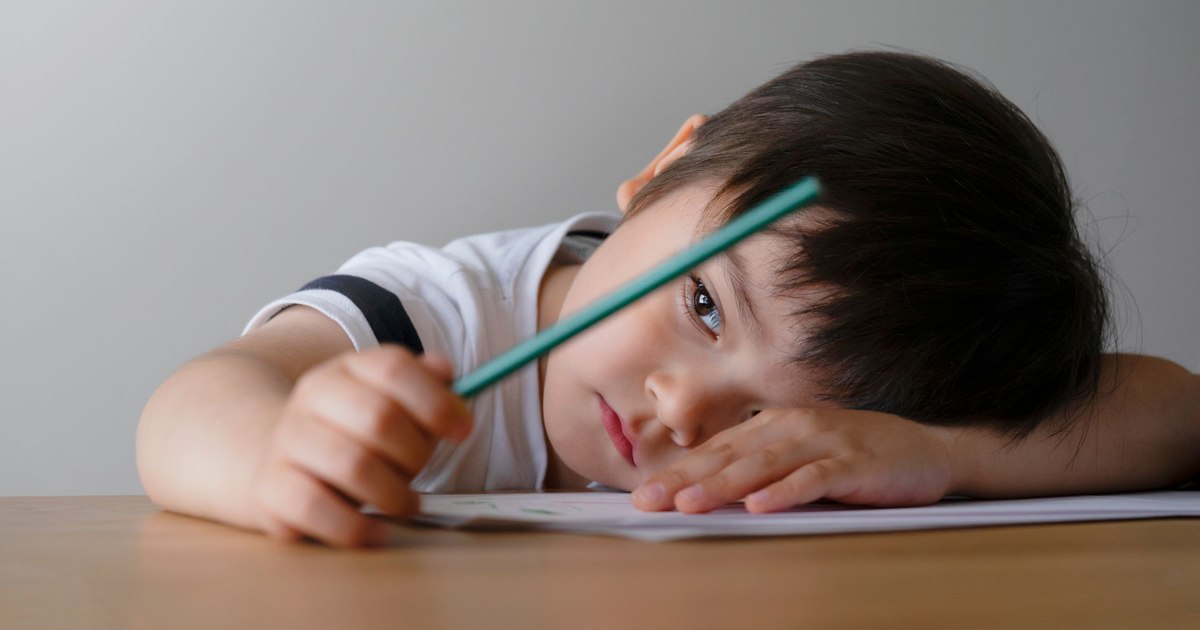
In Romania, at the end of March this year, 53,214 children lived with one or both parents who went to work abroad. The phenomenon, although in slight decrease compared to the end of 2024, retains a hard core of vulnerable cases: 8.102 children They have both departed parents, and over 2,000 are already in the special protection system. For many of these children, the lack of parents is not only a cold statistic, but a daily reality in which the absence of affection, direct supervision and educational support, which leaves deep traces.
Children who raise without parents risk low school performance and even output shutterstock
The risk of school dropout, emotional difficulties and social adaptation problems increase directly in proportion to the duration of separation, warns the specialists.
“The parent -child relationship is irreplaceable”
The clinical psychologist, Diana Pîrje, points out that the separation of parents is always felt by the children and can leave deep traces.
“The child is affected and can even develop the feeling of abandonment, because he needs both parents to grow, to develop. The parent-child relationship is irreplaceable“,
she said for the truth.
Behind an apparent acceptance, you can hide the frustration and conviction that life means “shortcomings, sacrifice and torment.”
“On the surface, the child gets to understand the situation, but in himself he can frustrate, he can learn that, in fact, life means shortcomings, sacrifice and torment.”says the specialist.
The emotional impact, according to age
Separation of parents affects children differently, depending on age. The smaller the child, the greater the impact. The psychologist explains that the little ones between 5 and 13-14 are the most affected, as it is the stage in which they form their life models.
“Automatically, the impact is even greater as the child is smaller. I would say between 5 years and 13-14 years. The little ones need more support, more affection and somehow, then they create their life models and landmarks, from what they see in the environment. The family is the first environment of which a man belongs and the most important educational model: from there the child learns about the world and life. If he doesn’t have the family next to him, what will he learn? That the family means missing, sacrifice, torment and will not understand why. Maybe he will even get to feel unjustified, to compare with other colleagues, to feel envy those who have parents with ”, says Diana Pîrje.
Adolescents, on the other hand, starting at 14-15, can understand the situation more rationally. Even so, the feeling of lack and longing for parents remain.
“Since adolescence, starting at 14-15, maybe it is a little easier, in the sense that the child already has the cognitive ability to understand more, it can be the state of greater acceptance. Even so, it is hard for him, because as I said, the parent remains a parent and no one can replace him,” the specialist considers.
Low school performance, bullying and forced maturation, part of the long -term effects
In the long term, says slopes, these children risk becoming “rescue children”, who assume premature responsibilities, giving up their own childhood:
“Speaking for years in a row, a child cannot develop healthy with both departed parents (…)
Over time, he will wonder: where is my mother, what she does, I want to be next to her. The child will ask these questions and, perhaps even early will enter the role of a saving child. He will see the torments that parents go through. They, in their turn, may tell them: We do all these things for you. The child may feel pressed and guilty that, because of him, these sacrifices must be made. ”
The role of savior also means forced maturation. From an early age, they begin to work, to understand that life is difficult and it means sacrifice.
“Maturation and maturation is good to the point where something is too forced. They risk not enjoying childhood at all“concludes Diana Pîrje. The effects are not limited to the emotional sphere.
According to the organization “Save the Children”, the children left home after leaving their parents to work abroad, lacking their affection and supervision, are exposed to several risks: school, self -insulation, the appearance of emotional and behavioral disorders. Moreover, the lack of both parents or legal representatives determines the limitation of children’s access to health and educational services, to legal protection or social benefits.
Psychologists sound an alarm signal that the lack of parents also expose children to bullying or stigmatization in the community, especially if the adults around them do not intervene.
“Certainly the school performance can be affected, because the child will be consumed a lot.
(…) At school, teachers, teachers, should be careful not to compare them with other children. In cases where the other children tend to throw stones, to make bullying, to say: look, you do not have parents near you, I have family – all these emotional showers should be prevented, which will break over the child. He will feel overwhelmed and may want to want to stop going to school“warns the psychologist.
IARINA TABAN, founder we reach big, emphasizes that whether we are talking about children in the protection system or those with departed parents, the emotional consequences are similar:
“” Whether we relate to the children in the protection system or to the children who have parents who are abroad, we talk about abandonment, only their shape differs. Many children remain without parental figures at an early age, when emotional development is essential, when they need the love and support of parents. Near them will not hurt or leave them. ”
The role of psychologists, school counselors and community
To alleviate the effects of parents, psychologists, school counselors, teachers and not only can provide emotional and educational support:
“Certainly, they have to offer them, first of all, support and support in the homework. As long as the children do not have their parents, they should benefit from this support to a higher degree than the other children,” Diana Pîirje believes.
We arrive Mare is an example of a long -term educational program that supports the education of children and young people from placement centers and disadvantaged media. The mission is that to provide educational support, training hours, interactive workshops and cultural experiences, so that these children are not neglected and regain their confidence in their own forces:
“No child should grow up alone. Every child needs constant support, affection and guidance to become the independent, happy and responsible adult. This is why it is vital to involve the community and to make solid partnerships, so we continue to be the voice and support of these children.
Also, the involvement of relatives and tutors is essential in the good growth and development of children:
“Grandparents or tutors in which these children are, to try to explain their situation, offer them all support, all attention, that they try to supplement this condition and lessons that parents could offer. Of course, direct communication with parents is important, maybe even possible visits,”
Detailed data of a hard reality
- Children with both parents departed: 8.102 (7,422 in the care of relatives without protective measures; the rest in placement).
- Children with a parent left: 38.949 (37,268 in the care of relatives; 910 in special protection system).
- Children from single -parent families with the only parent left: 6.163 (5.402 in the care of relatives without protection).
- Children in Special Protection System:
2.086 (375 at maternal assistants, 375 in residential services, 1,238 in relatives up to the fourth degree, 98 in other persons).
Although there is a slow decrease in the total number of children with parents abroad, it is not sufficient to reduce the long -term social and emotional effects.
Romania needs public policies to provide additional educational support for these minors, to train teachers in managing vulnerability and community support networks, so that these figures do not turn into whole generations with silent trauma.
