

A scientific report by researchers from Harvard, the University of Michigan and Duke University argues that certain ultra-processed foods (UPF) are designed in ways that encourage repeated and potentially compulsive consumption. That’s why they should be treated more like cigarettes, say the study’s authors, meaning there should be formal regulations such as marketing restrictions. The Romanian doctor Mihail Pautov supports the approach and draws attention to the fact that we are led to believe that the problem is with the consumer, who cannot help himself, when the state must come up with a set of rules.
What the study shows
“Many ultra-processed foods share more characteristics with cigarettes than with minimally processed fruits or vegetables, and therefore warrant regulation commensurate with the significant risks they pose to public health”say the authors of the study.
But the study does not indicate that juices and ultra-processed foods (UPF) are as dangerous as cigarettes themselves, only that they share characteristics in stimulating addiction and compulsive consumption.
Basically, this category of foods and snacks—which includes carbonated beverages and packaged snacks like chips or crackers—is designed to maximize stimulation of the brain’s reward circuits through quick combinations of carbohydrates and fats and taste-enhancing ingredients (emulsifiers, artificial colors and flavors). They can generate repetitive consumption behaviors similar to the criteria of addiction.
The report emphasizes the idea that population health can be affected not only by the nutritional content of food, but also by industrial and advertising strategies that promote overconsumption. Among the regulations that should be imposed, the authors of the study believe, are marketing restrictions and greater liability of producers.
Dr. Mihail Pautov: “It doesn’t happen by coincidence, but by premeditation”
Medical surgeon Mihail Pautov praises the study and its necessity. At the same time, he says that the mechanisms of addiction are foreseen in detail and speaks of premeditation on the part of the food industry:
“It is the same as with cigarettes, where the patient knows that it is bad for him to smoke, he wants to quit smoking, but he feels an overwhelming desire to light cigarette after cigarette, and this makes him become a subscriber to the tobacco industry. The same thing happens with ultra-processed foods. Patients know they are not allowed to drink caffeinated drinks and eat crisps, but they feel an overwhelming need and try to quit, but fail. And this does not happen by coincidence, but by premeditation. The ultra-processed food industry intentionally premeditates this. The concentration of sugar in the juice is not random, it is exactly the concentration likely to predispose you to addiction. If the sweet and sour juice you drink had less sugar, it wouldn’t give you the kind of addictive dopamine. If it had more sugar, it would probably fill you up faster and make you feel nauseous. That’s why the concentration of sugar is specifically chosen to make you addicted. That’s why the chip you’re eating is always crunchy in that appetizing way, because the industry has studied 100 types of baking and 100 types of crispiness to choose exactly the type that will make you the most addicted. And so it is with all additives and dyes. They’re all designed to get you addicted to those substances.”
It is not the fault of the consumers, regulation is needed
All this time, accuses Dr. Mihail Pautov, people are made to believe that the problem is with them.
“The current policies completely blame the consumer. You are given some recommendations to eat right and if you can’t follow them, it’s your fault that you can’t help yourself. And consumers don’t realize that they actually need to demand clear regulations from governments, just as they demanded for cigarettes. Because if you send your child to a school and there are ten advertisements for different types of cigarettes at the kiosk, the teacher smokes in class and you are told <
Medical advice is doomed to fail: “It’s no use recommending that people eat fruits and vegetables or whole foods when the industry makes ultra-processed foods so addictive.”
What is there to do? The doctor clearly supports the version of researchers from American universities: the food industry must be regulated and thus transformed from a competitive environment into a responsible one.
“The food industry is not by nature evil, it does not want to harm people, but it wants to make a profit and that profit must increase every year”says Dr. Mihail Pautov.
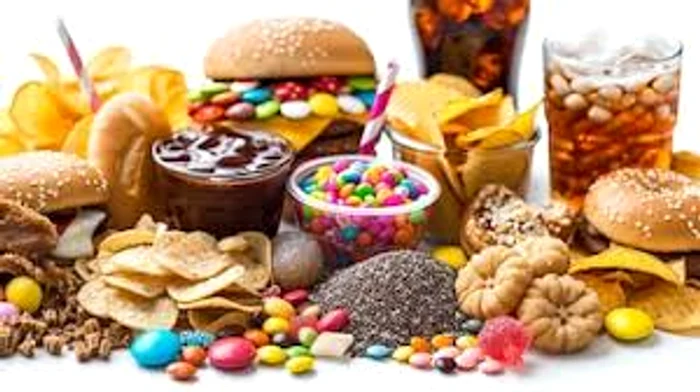
Is it necessary to completely give up ultra-processed foods?
The Romanian doctor says no. And it comes with a variation that can work for those who don’t want to give up the little pleasures of food altogether, but don’t want their health to be affected:
“I think the solution is the quantitative limitation of these foods. That is, we have to give ourselves a very strict amount, which we should not negotiate, but it is our amount of joy. For example, I like chips and once every three weeks I buy a bag of chips and eat them. I like a fast food chain, I stop once a month and eat there, because it’s tasty food. But otherwise I focus on eating the way our grandparents ate: things that grow in the ground, that require minimal preparation or processing.”
