
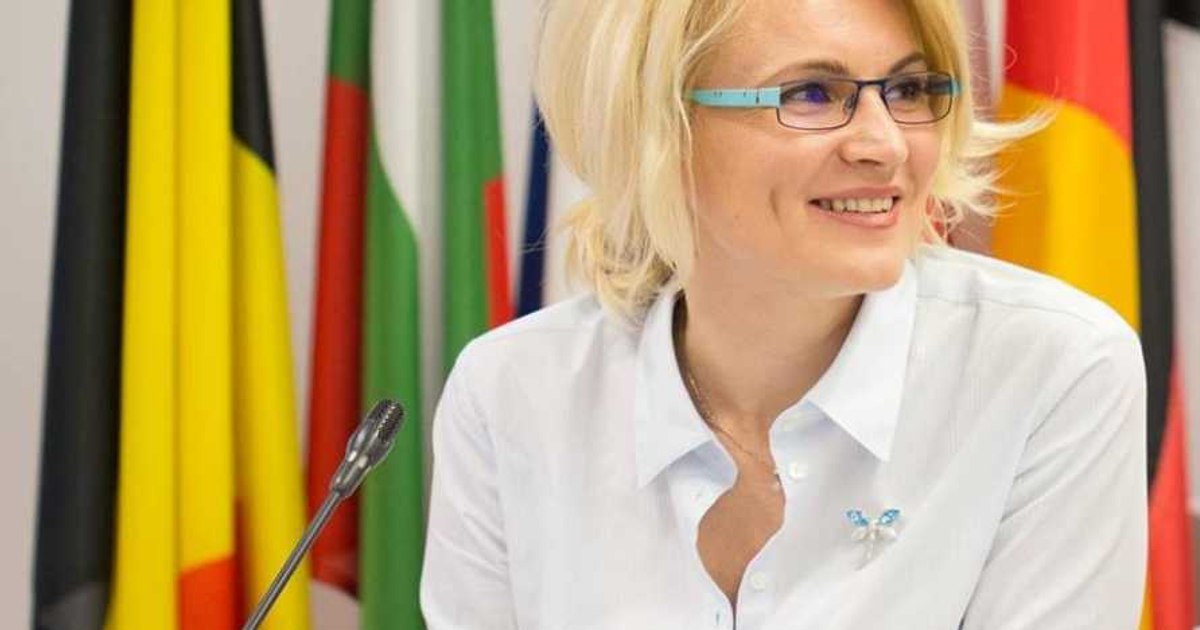
Andreea Paul, the name circulated for the Education portfolio in the Bolojan government, explained to Mediafax that the Romanian education system needs a deep reform, based on a “dashboard” of performance, digitization through artificial intelligence and constant dialogue with the actors in the system. The statements were made against the backdrop of protests in education generated by government measures to reduce the budget deficit.
According to Andrea Paul, three main directions must be followed in order to improve Romanian education: combating school dropout, increasing the quality of education and integrating AI to personalize the students’ journey.
“One type of performance is to bring children to school, which is Romania’s grade 0 priority, missed for three and a half decades. And here a strong coalition between civil society, which can work punctually, personalized at the grassroots level, with decentralized institutions, with public and local authorities”, said Andreea Paul.
Increasing educational performance
Paul explained that the second objective is to improve the quality of the educational process: “Another kind of priority is to get children to school from grade 5 to grade 8. And that means increasing the quality of education. (…) And we can’t do that without investing significantly in teachers.”
Artificial intelligence, support for students and teachers
In addition, Paul argues that AI can transform the way education is personalized.
“Another kind of achievement is to be able to take education to the level of personalization, related to the talents, interests, abilities, passions of each student. And this can be done with tutoring based on artificial intelligence, supporting the teacher in the classroom. What I want to say is that the future of education is based on AI, and we should not be afraid of this reality. There is a lot of fear in the way of AI, of many risks in the use of AI, but an education seated can no longer ignore this technological dynamic”, she stated.
Andreea Paul is a well-known economist, university lecturer at ASE Bucharest and founder of the organization INACO – Initiative for Competitiveness, an NGO dedicated to increasing Romania’s competitiveness through education, digitization and civic involvement. He was an active politician, holding positions as advisor to the Presidential Administration, the European Parliament and the Government (economic advisor to the Prime Minister), as well as a deputy mandate (2012-2016).
The statements come in the context of protests by education unions, including the Federation of Free Education Unions, the Federation of Education Unions Spiru Haret, the Alma Mater National Trade Union Federation and the National Alliance of Student Organizations from Romania. The trade unionists demand, among other things: the resumption of employment, support for young researchers, the increase of budgets for education and research, the preservation of the allowance for the doctorate and the unblocking of university funds for European projects.
