
A supercomputer revealed when people could disappear from Earth. According to him, due to extreme temperatures, volcanic eruptions and climate change could lead to the distant future to the disappearance of mammals, including that of humans.
When people/photo could disappear: EPA
This prediction is part of the study initiated by researchers at the University of Bristol, the United Kingdom, who predict that over 250 million years, due to extreme atmospheric conditions, people’s lives could reach the end.
Also, the researchers believe that, in the future, the dry surfaces could reunite, forming a supercontinent, called the last pange. This supercontinent will form close to the equator, where high temperatures and intense geological activity could lead to a change in the environment.
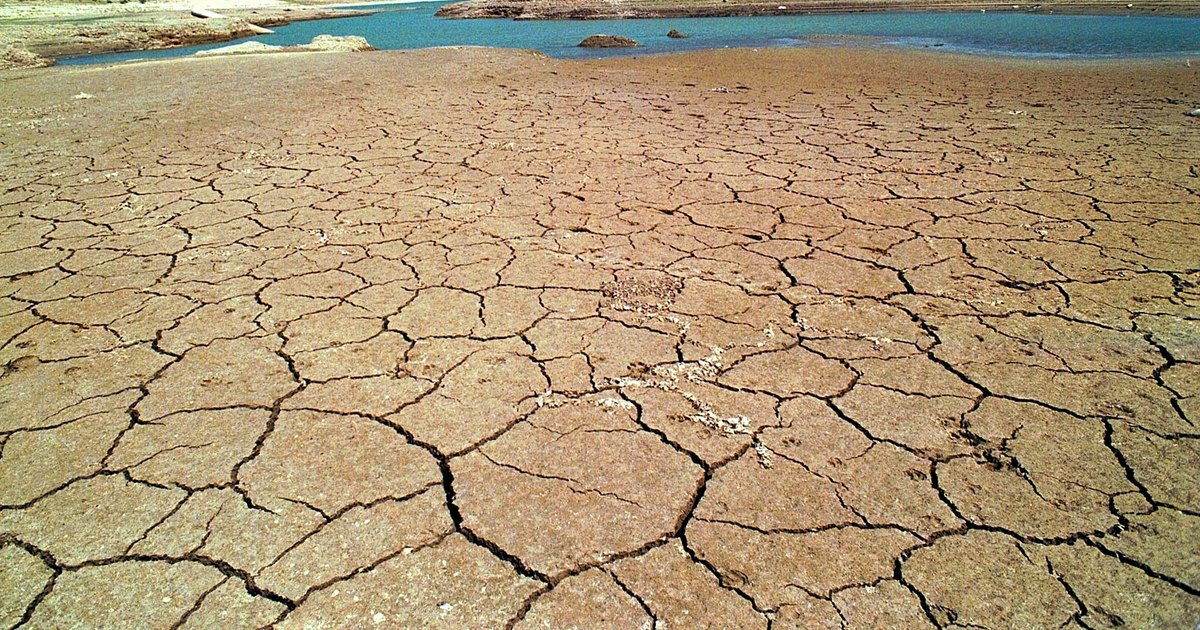
The study, published in natural Geoscience, states that the change could lead to constant temperatures over 40 degrees over the entire surface of the new continent, which would transform most of the regions into deserts, unfriendly for many mammals.
According to the researchers, the factors behind this transformation would be that, this huge terrestrial surface, if it has no exits to the seas, will experience extreme heat. Also, if the activity of the volcanoes increases, the level of carbon dioxide released into the atmosphere will increase, which will amplify the greenhouse effect.
Last but not least, over 250 million years, the sun will be 2.5% brighter, and automatically it will produce even more heat.
Due to these major changes, the researchers claim that it will be impossible for mammals to live on 92% of the supercontinent surface. Therefore, they could live only in coastal and polar areas.
Also, the combination of extreme heat and suffocating humidity could exceed the biological level of tolerance, which would transform much of the surface of the new continent into an impossible to live.
Alexander Farnsworth, a specialist in climate change in Bristol considers this scenario as a “triple blow” on the environment.
If people were more than 250 million years old, it would be almost impossible for them to live. One of the solutions, say the researchers, would be to leave the planet, looking for something better.
However, it is not the first time that life on Earth has been threatened by such climatic phenomena. 200 million years ago, in the context of other supercontinent formations, there have been mass extinction cases.
“Expections have taken place and will happen again. Life will find a way – but it may not be the life we know today“Explained Hanna Davies, a geologist at the German Research Center for Geology.
