
American researchers claim that they identified the moment and place where Covid-19 first appeared-and, to the surprise of many, it was not in China, as it was initially believed.
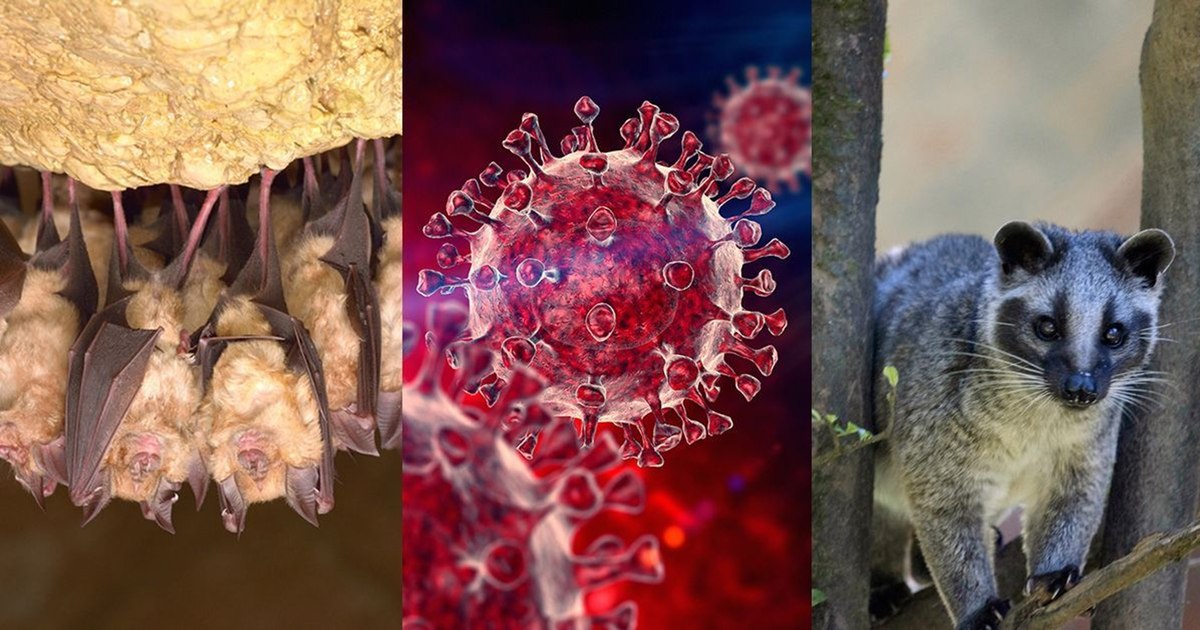
The horseshoe bats, the host of the viruses that led to Covid-19, possibly, through the Zibeta palm collage
Specialists at the University of California, San Diego say they have discovered evidence that Sars-Cov-2-the virus that causes Covid-19-would have started to evolve, most likely, in bats since 2012, in an area between western China and North Laos.
They analyzed over 100 coronaviruses discovered at horseshoe bats, comparing them with SARS-COV-2 and with “The cousin” His older Sars-Cov-1-the virus responsible for the 2002 epidemic. These comparisons allowed them to build, according to their statements, the most detailed image of these viruses.
The results suggest that the closest viral relatives of SARS-COV-2 appeared 5 to 7 years before the virus broke out in Wuhan.
How did SARS arrived 2,000 km away. Origin in the wild, years before the epidemics
At the same time, the nearest relatives of SARS-COV-1 were found to originating up to a decade before the epidemic of this virus in Guangdong, southern China in 2002.
In both cases, precursor (ancestral) viruses were located at distances of 1,000 even over 2,000 kilometers from the places where human outbreaks took place-Wuhan, in 2019, for Covid-19, and Guangdong for SARS.
As the horseshoe bats have very restricted territories – usually only a few square kilometers – the researchers are unlikely that the animals themselves have transported viruses over such great distances.
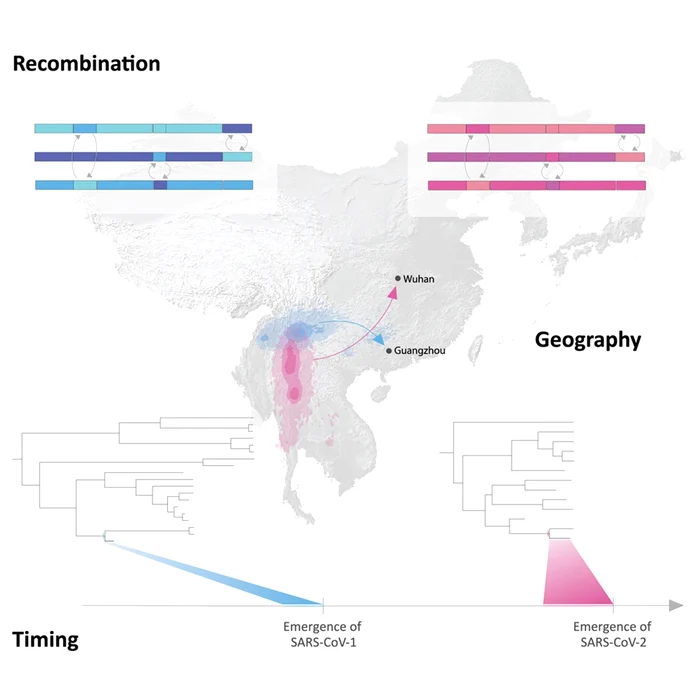
The map of natural evolution and migration of SARS viruses through the trade with wild animal animal
Dogs-Treton and Zibete: Possible intermediate hosts for SARS-COV-2
Instead, researchers claim that the virus has most likely reached an intermediate host-such as dog-dogs or zibes-who have been captured and transported by wild animals in traditional markets in big cities.
This conclusion reflects what scientists already knew about the 2002 SARS outbreak, when the palm trees, sold in the wet markets of China, were identified as key intermediaries between bats and humans.
The researchers argue that in both SARS outbreaks, bats tanks in bats were far from cities where epidemics broke out – thus, the same type of movement over long distances and was not a unique phenomenon for Covid.
“Viruses closest to the original Coronavirus SARS have been identified for palm trees and raccoon dogs in southern China, hundreds of kilometers away from the populations of bats that were the initial source of the virus. For over two decades, the scientific community has come to the conclusion that these great distances have been traveled through the trade with wild animals. We see the same pattern in the case of SARS-COV-2 ”, said Michael Worobey, a doctor in biology, professor and head of the Evolutionary Ecology and Biology Department at the University of Arizona.
Wuhan, Epicentr Probably: Link of Animal Markets with Sars-Cov-2
And Dr. Joel Wertheim, top expert in infectious diseases and the main author of the study, said: “At the beginning of the Covid pandemic, people were worried that the distance between Wuhan and the bat virus tanks was too great to support a natural origin. This study shows that it is not unusual.”
The team from UC San Diego noted that four live animal markets in Wuhan were selling, at the end of 2019, species known to be susceptible to viruses from bats – the clearest clue so far that one of them could have been “The epicenter” the first human outbreak.
Laboratory leak hypothesis: What experts say about the possibility of a human error
Although the researchers support the natural origin of the virus that triggered Covid-19, the study cannot completely exclude the possibility of a laboratory leak.
Several experts-including US intelligence agents, such as FBI and CIA-considers plausible the scenario in which Sars-Cov-2 would have escaped from the Wuhan Virology Institute (WIV), where, at that time, research was carried out on coronaviruses.
Dr. Simon Clarke, specialist in Infectious Diseases in the UK, who was not involved in the study and had access only to a press release, said for Dailymail.com: “This study claims the hypothesis that SARS-COV-2 appeared from the trade with wild animals, but I do not see how it could prove it. After all, we know that the Wuhan laboratory collects wild viruses.”.
Asked about the methods used, he added: “It is a top magazine and I expect the study to have been rigorously examined before publishing.”
Researchers at the University of California, San Diego (UC San Diego), published, on May 7, 2025, the study we refer to in the scientific journal Cellaafter developing a method that excludes the regions of the viral genome frequently affected by recombination – a natural process that complicates the analysis of the evolution of the viruses.
By filtering these sequences “Prevombed”have managed to build one of the most reliable genetic chronologies so far.
China returns the accusations: “Pandemia could have started in the US”
China reacted firmly and rejected the accusations regarding the origin of Covid-19, claiming that it is not responsible for the Covid pandemic, and even indicating the United States as a possible source of the virus.
In an official document published last week by the Information Bureau of the State Council, the Chinese authorities suggested that the virus that killed over 1.2 million Americans and at least 7 million people could have originated in the US.
The document seems a direct response to the accusations resumed by the team of former President Donald Trump, who continues to claim that Sars-Cov-2 would have escaped the Wuhan Institute of Virology-a laboratory known for his research on coronaviruses.
Chinese officials accuse Washington of trying to divert attention from their own pandemic mistakes, politicizing investigations on the origins of the virus.
“The US government, instead of taking failure in the management of the pandemic and reflecting on its own deficiencies, chose to blame the public and distract the public, politicizing the investigation into the origins of SARS-COV-2. A complete and in-depth investigation on the origins of the virus should be carried out in the United States. A responsible response to the world ”shown in the report.
Conclusion: The origins of pandemic, between science, animals and international suspicions
Cases of transmitting viruses from animals to humans (zoonotic spillover) are growing globally, against the background of intensifying the interactions between man and wildlife, either by trade, or as a result of the urbanization and destruction of habitats. The researchers believe that, by continuing the sampling from the populations of wild bats, it could become possible to anticipate the place where a future coronavirus pandemic could erupt. Moreover, understanding the evolution of these viruses and other pathogens could be essential for the preparation and control of future global sanitary crises.
The new study of the researchers at UC San Diego rewrite the chronology of the appearance of SARS-COV-2, suggesting that the virus would have begun to evolve for years before the outbreak of Wuhan. The analysis strengthens the hypothesis of transmission through wild animals, but does not completely close the door of the theory of leakage in the laboratory. In the absence of a global consensus and against the background of political tensions, the truth about the origin of Covid-19 remains an enigma with huge stakes.
