
Independenta Film brings to Romanian cinemas six of the most anticipated films that premiered at the Cannes Film Festival: Emilia Perez (director: Jacques Audiard), which won both the Jury Prize and the Award for Female Performance, awarded to the all-female cast of Screenplay Award-winning The Substance (dir. Coralie Fargeat), Megalopolis (dir. Francis Ford Coppola), Parthenope (dir. Paolo Sorrentino), Marcello Mio (dir. Christophe Honoré) and Everybody Loves Touda (director: Nabil Ayouch).
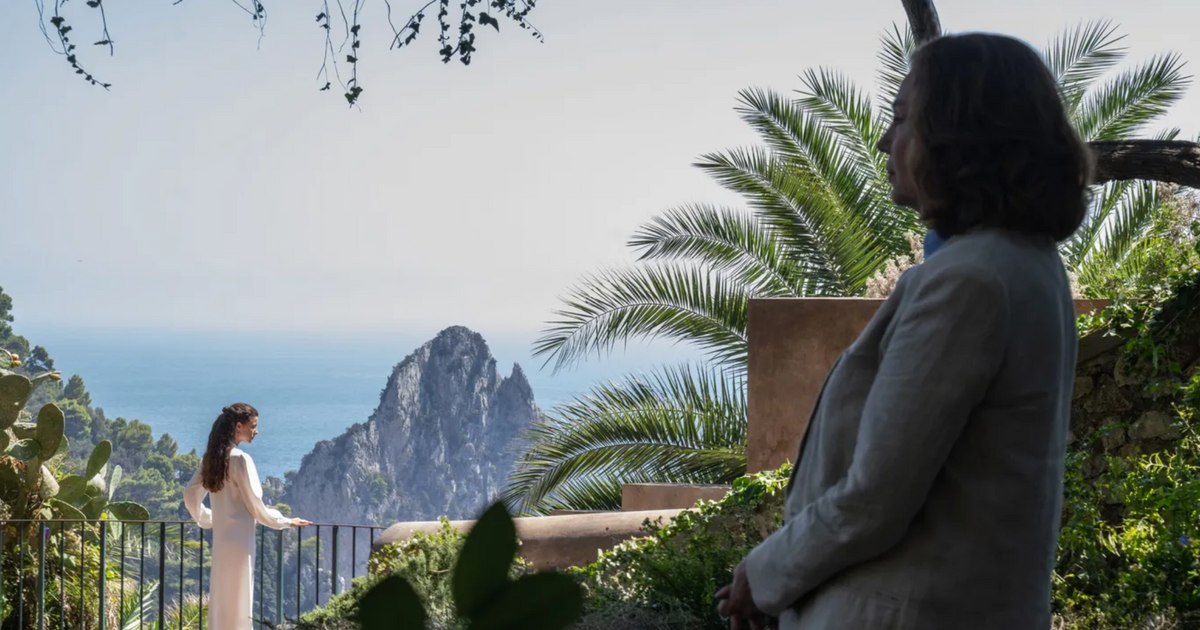
Parthenope, directed by Paolo Sorrentino
Emilia Perez, an original production directed by Jacques Audiard, starring Selena Gomez, Zoe Saldana, Karla Sofía Gascón and Adriana Paz, combines elements of thriller with musical to tell the story of a Mexican cartel leader, Manitas. He decides to change his gender to escape the dangerous life in the bosom of the mafia and become the woman he always dreamed of being. With a script written by Audiard and his constant collaborator Thomas Bidegain, Emilia Perez talks not only about physical transformation, but also about its emotional and social implications, while delivering a bold and impressive cinematic experience.
The film brought the Best Actress Award to four actresses – Selena Gomez, Zoe Saldana, Karla Sofía Gascón, Adriana Paz – and is also the winner of the Jury Prize.
The Substance, directed by Screenplay Award winner Coralie Fargeat, is a body horror film starring Demi Moore as Elizabeth Sparkle, a declining actress who turns to a revolutionary substance capable of regenerating her cells and to restore his youth. Margaret Qualley stars as Sue, a younger and more vibrant version of Elizabeth created by the substance, leading to the dual existence of the two women, alternating weekly. The film tackles themes such as aging, self-image, and the entertainment industry's obsession with youth and beauty. Critics praised Demi Moore's performance, noting how the film uses her real-life experiences with ageism in Hollywood to enrich the story.
Francis Ford Coppola's Megalopolis, starring Adam Driver, Giancarlo Esposito, Shia LaBeouf, Audrey Plaza, Nathalie Emmanuel and John Voight, is a sci-fi feature film of gigantic proportions, in which the author invested $120 million of his own money to produce , and the director of photography is the Romanian Mihai Mălaimare Jr. Coppola's ambitious project, on which filming began in 2001, stopped as a result of the September 11 attack and resumed 20 years later, has the action set in a dystopian world, entitled New Rome, on the verge of collapse. About the message of his film, the director said at the end of the Cannes premiere: “The most beautiful word we have in any language is esperanza. The hope. And I dedicate the film to this. Hope. And the children. Make a world for children.“
Paolo Sorrentino's Parthenope pays homage to the director's hometown of Naples and follows the story of a young woman, Parthenope, from her birth in 1950 to adulthood, capturing her personal and professional transformations. Beauty, desire and identity are some of the themes addressed by Sorrentino, using gorgeous cinematic shots of the city of Naples and the island of Capri, as well as a soundtrack signed by Lele Marchitelli, with whom he also collaborated for La grande bellezza or the miniseries The New Pope and The Young Pope.
Marcello Mio, written and directed by Christophe Honoré, combines comedy and introspection, walking the audience through the life and identity of actress Chiara Mastroianni, daughter of film legends Catherine Deneuve and Marcello Mastroianni, in a meta and humorous story. Chiara Mastroianni plays a version of himself who, in an attempt to reconnect with her father's legacy, begins to dress and act like Marcello Mastroianni. This choice provokes various reactions from those around him, including his mother, played by Catherine Deneuve. The film has been praised for its treatment of themes such as family heritage, gender roles and the complexities of mother-daughter relationships, and is considered a tender and funny tribute to cinema and actors.
Everybody Loves Touda, directed by French-Moroccan filmmaker Nabil Ayouch, follows the story of Touda, played by Nisrin Erradi, a woman from a small village in the Atlas Mountains who dreams of becoming a Sheikha, a traditional Moroccan performer. To fulfill her dream and provide a better life for her 9-year-old son Yassine, who is deaf and mute, Touda moves to Casablanca. The film explores themes of patriarchy and sexism, highlighting the difficulties Touda encounters in a male-dominated society. Nisrin Erradi's electrifying performance adds energy to every scene she sings in, giving the film a touch of vitality and authenticity.
The films will premiere in Romanian cinemas later this year, distributed by Independenta Film.
