
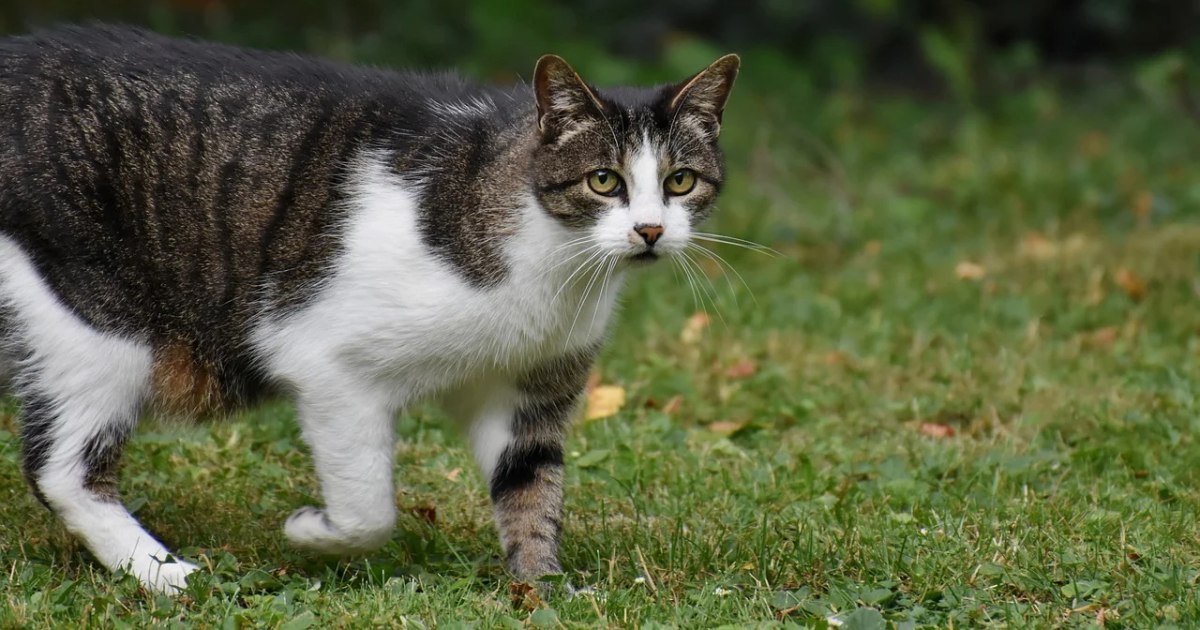
The researchers found that cats develop dementia similar to people affected by Alzheimer’s, and this discovery provides hopes for scientists for an important discovery in researching this disease.
Photo: Pixabay
According to Agerpres, a group of experts at the University of Edinburgh performed a post-mortem analysis of 25 cats who had symptoms of dementia, including confusion, sleep disorders and an increase in vocalization.
In the brain of cats with dementia a beta-amyloid accumulation, a toxic protein and at the same time one of the defining features of Alzheimer’s disease, which offers hopes for a discovery “wonderful ”due to increased accuracy.
The discovery was described as a “Natural perfect model for Alzheimer’s“By scientists who contributed to it.
Also, microscopic images have revealed an accumulation of beta-amyloid in the synapses of old cats that had feline dementia, and scientists hope that these discoveries will contribute to a clearer image of how beta-amyloid can lead to cognitive dysfunction and losing memory in cats, providing a valuable model for people.
The synapses allow the flow of messages between the brain cells, and their loss leads to reducing memory and thinking capacities with people with Alzheimer’s.
The researchers found evidence that the brain support cells, astrocytes and microglia, captured the affected synapses, a process known as “”synaptic cutting”, An important process in the development of the brain, but which contributes to the appearance of dementia.
Experts believe that these discoveries could contribute to the development of new treatments for Alzheimer’s disease, as well as to understanding and managing feline dementia.
Previously, researchers studied Alzheimer’s disease on genetically modified rodents, as they do not naturally suffer from dementia. However, the study of feline dementia would have the potential to contribute to the development of treatments for people, due to increased accuracy.
Robert McGeachan, the study coordinator, from the Royal University of Veterinary Studies in Edinburgh, said: “Dementia is a devastating disease, whether it affects people, cats or dogs. Our discoveries highlight the striking similarities between feline dementia and Alzheimer’s disease.”
“This opens the way to explore the possibility that the new promising treatments for Alzheimer’s disease can help the elderly pets also“Said the specialist.
Danielle Gunn-Moore from the Feline Medical Department of the University, said: “Feline dementia is so disturbing, for the cat and her master.
By conducting studies like this we will understand how to treat them best. This will be wonderful for cats, for their owners, for people with Alzheimer’s and their close friends. ”
