
Problems in air traffic cause major delays throughout the globe, but some destinations are more affected than others, as a recent analysis by the publication reveals The Telegraph. Therefore, the Romanian tourists will also face this summer with flight delays, because the forecasts are not at all embarrassing.
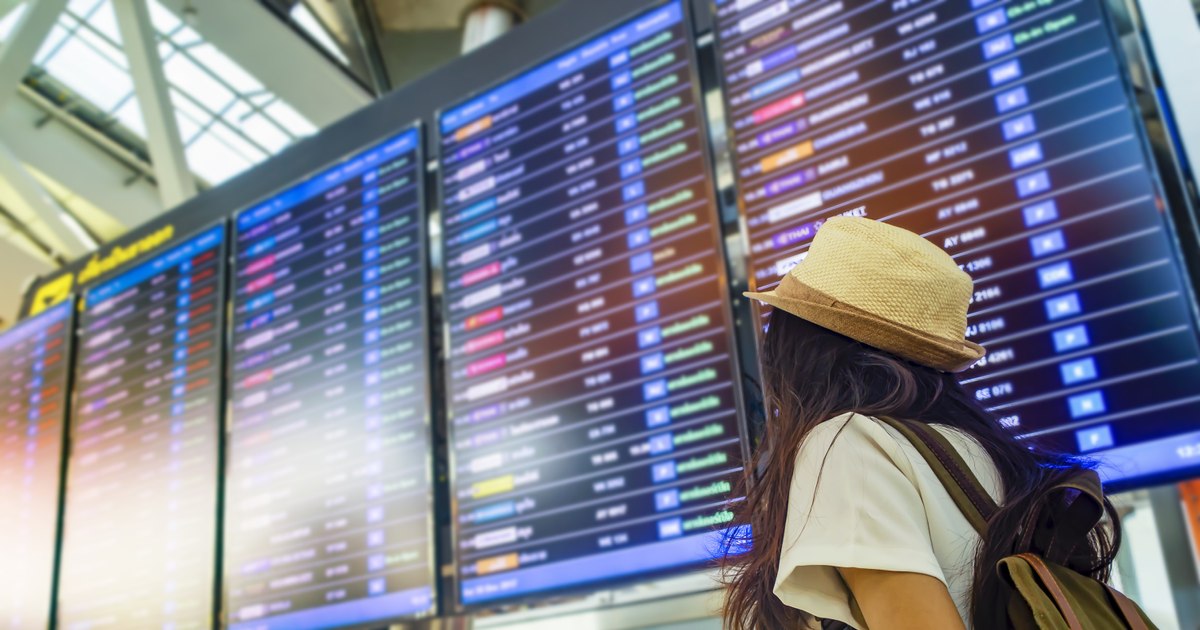
Flight delays can give you your holiday over shutterstock photo
In 2024, passengers in Europe had the most serious delays since Pandemic, mainly caused by the lack of staff in air traffic control and by routes changes imposed by the Ukraine.
A recent Eurocontrol report shows that, last year, about three flight had delays in departure, and 27.5% of flights arrived at the destination more than 15 minutes late. In the summer months (June-September), only 58% of flights took off in time.
Experts are pessimistic about the summer of 2025. Brian Smith, an experienced pilot in commercial aviation, argues that the delays will increase, because the expansion of airlines exceeds the rate of change of the European air traffic control system.
In turn, director Ryanair, Michael O’Leary, told The Independent that “The situation will be more serious than last year, especially in weekends. Europe must solve the air traffic control system, for which we pay extremely high taxes ”.
The author of the new Eurocontrol report, Dr. Peter Whysall, said the punctuality of airlines is “It is likely to get worse, if the structural problems are not addressed.”
Therefore, here’s what you need to know about the destinations with the biggest problems, but also those with exceptional punctuality times, and how these delays can be avoided.
Destinations with the highest flight delays
According to the new Eurocontrol report, the most affected air traffic control centers are Karlsruhe (Germany), responsible for 13.1%of European traffic delays, Budapest (12.9%), Marseille (7%), Zagreb (6.5%) and Reims (France) with 6%.
Looking at a broader perspective, in terms of countries with the highest delays in air traffic control, France (21.2%), Germany (17.8%) and Hungary (12.9%) are the weakest performers. These percentages include both flights that flow these areas, not just those that leave them.
Of the 30 largest airports in Europe, Lisbon (Portugal) had the largest arrival delays, 4 minutes and 12 seconds on the flight, followed by Amsterdam (Holland) with 3 minutes and 48 seconds, Gatwick and Heathrow (UK) with 3 minutes and 36 seconds (Greece) with 3 minutes and 27 seconds.
Lisbon, Gatwick and Sabiha Gökçen International Airport (on the Asian side of Istanbul, Turkey) had a percentage of less than the European average of 67.2%.
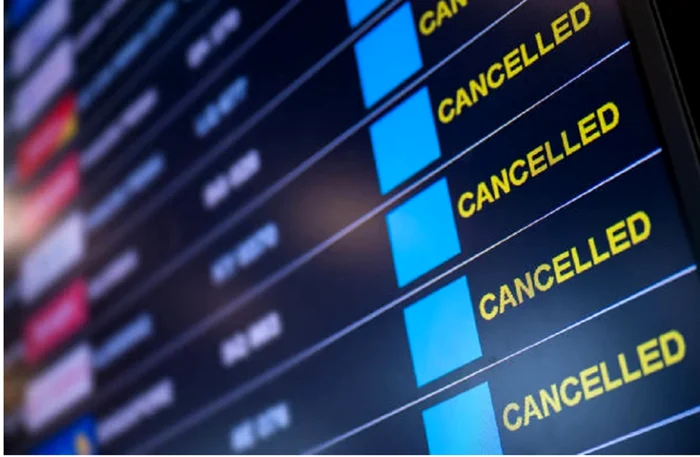
Delays can cause canceled flights photo shutterstock
Causes that cause flight delays: the problem of staff, weather and strikes
In Europe, there are several factors that affect the control of air traffic. The biggest obstacle is the lack of staff, a problem aggravated by the Ukraine war. For example, the Zagreb Air Traffic Control Center (Croatia) signals a “Very big and unforeseen growth of traffic”which makes it difficult to provide an adequate service with current staff levels.
Bad weather is also an important cause, being responsible for 40% From the delays registered in 2024. However, the Eurocontrol document emphasizes an interesting hue: the air traffic control authorities can be penalized for the delays caused by lack of capacity or personal, but not for those caused by the weather conditions. So if “Weather” It is invoked as the cause of the delay, but the real cause is the lack of staff, the control authority will not be penalized.
“The attribution of all the delays of the ATFM of the time, ignoring the capacity constraints that could be alleviated and solved, distracts and resources from finding real solutions for fundamental problems.”is mentioned in the report.
Historically, industrial actions (strikes) – especially in France – caused major problems of air traffic control throughout Europe. Those who fly frequently can remember that the year 2023 was a very problematic one from this point of view. However, a new law in France, which obliges air traffic control officers to announce their absences before an industrial conflict, allowed the French authorities to more efficiently plan their operations.
And for the big airports in the UK – Heathrow, the busiest airport in the world with two tracks, and Gatwick, which has the world record for the busiest airport with a single track – insufficient capacity is a major problem. The data show that Heathrow and Gatwick have the longest waiting queues for landing of the 30 largest European airports: at Heathrow, a plane is waiting on average 7 minutes and 26 seconds, and at Gatwick, 5 minutes and 58 seconds.
How can you avoid flight delays: destinations with the best punctuality rates
Delays can occur at any time, so there is no infallible way to avoid them completely. However, experienced passengers know that one of the biggest factors that affect punctuality are reactionary delays – caused by the delayed arrival of aircraft, crew or luggage.
The solution? Fly the morning! Earlier scheduled flights have lower chances of being affected by such chain delays.
You can also consider the destinations with the best punctuality rates in 2024. Spain is a positive example, and the airports in Barcelona and Madrid have even enhanced the punctuality compared to 2023.
Although the Spanish air traffic control area (ENAire) was responsible for only 10.7% of the air delays in Europe in 2024, you must take into account an essential detail: if your flight passes above France (which is responsible for 21.2% of traffic delays), problems may not be completely avoided.
If you want maximum safety, look north! Scandinavian airports have much better performance than the European average. For example, Oslo had a take-up rate of 83.7%, and Copenhagen and Stockholm (both by 80%) were also in the top of the most reliable airports in Europe.
What does it mean when the pilot talks about “slots”
Brian Smith, pilot at a British cargo transport company and former aviator for Ryanair, Emirates and AIR2000 (later First Choice), also explained how the air traffic control slots influence the punctuality of flights: “The air traffic control units must maintain the separation between aircraft – vertically, horizontally and over time – to prevent conflicts that could lead to dangerous situations.”.
Although the system is strongly computerized, the aerial space has numerous restrictions that create true “Blocking necks”well known in the industry. It all comes down to how many aircraft can safely manage a control center in a certain segment of air space.
To manage traffic, pilots receive one Calculated Take-off time (Ctot), known simpler right “slot”which allows them to fall into the congested flow of flights.
If, for one reason or another-a technical problem, an incident with a passenger or delay in boarding-a plane loses its slot, it can reach the tail of the take-off, which leads to significant delays.
“There are improvements in the process of implementation, but they will not become functional too soon. So, for passengers traveling in peak hours, this year will be a pretty challenging one.”warns Smith.
