
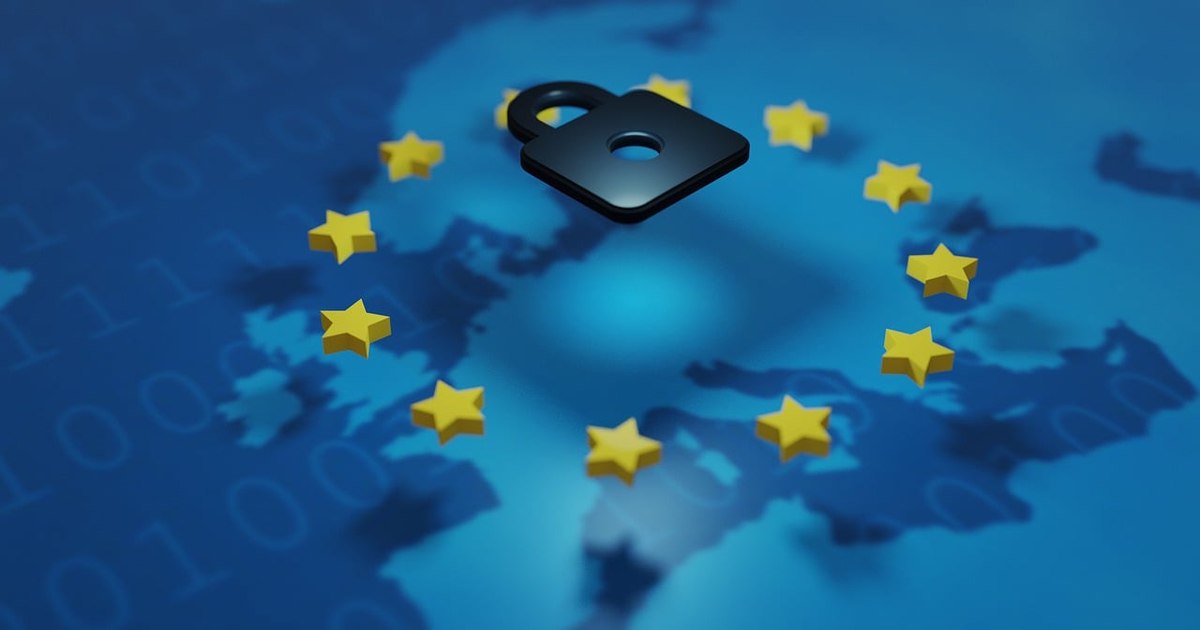
Last weeks, on the R/Europe forum on Reddit, users from all over the European Union have encouraged each other to write to MEPs in their countries about Chat Control, drawing their attention to preparing the biggest attack on digital intimacy: all encrypted messages could be automatically scanned.
Photo source: pixabay
On R/Romania, a Romanian confessed that he decided to send emails to all the Romanian MEPs on the controversial legislation. However, other users said that they contacted only a few MEPs, not the whole list, and some of them even received answers: from simple auto-reply, to detailed messages that promised that “end-to-end encryption will not be compromised.” The answers received (and their lack) triggered on Reddit a heated debate on the uselessness of representation, the wooden language of the politicians and the differences between Romania and other European states.
We recall that, in the autumn of 2025, the European Union could adopt a law that transforms each phone into a potential surveillance tool. Under the pretext of protecting children, Brussels is considering forcing platforms to automatically scan all messages, including end-to-end encrypted ones.
The initiative called “Chat Control” has been launched since 2022 by the European Commissioner for Internal Affairs, Ylva Johansson. The stated purpose: to combat abuses on minors in the online environment. But since then, the project has undergone multiple delays and reviews, due to the opposition from both technology companies and cryptography experts. Critics point out that the measure would practically mean the compromise of end-to-end encryption, considered the safest form of digital messages. Once created a technical “portion” for automatic scan, it could be exploited not only by authorities, but also by authoritarian regimes or groups of hackers.
A first wave of reactions relativized the moment through a bureaucratic detail: “The European Parliament is on vacation between July 25 and August 21. The meetings return only on August 22 ”, explained a commentator, suggesting that the answers could be late. The reply came right away: “Recess means that there are no meetings, not that the parliamentarians have no activity.”
The few reactions received are placed in the context of a wooden language. “Vasile Dîncu replied. Some automatic mass-given message”, reports a user, publishing a long email, which list the risks on end-to-end encryption and invoke articles from the fundamental rights Charter.
An official response
MEP Vasile Dîncu, vice -president of the Special Committee for the European Democracy shield, said to support the objective of the European Regulation for combating sexual abuse of children (CSAM), but warns that proposed solutions cannot compromise digital security and fundamental rights.
In the official response to the citizens, Dîncu showed that there are four sensitive areas: the high risk of false positive results by using AI, weakening end-to-end encryption, compatibility with articles 7 and 8 of the Charter of Fundamental Rights and the lack of solid technical evidence that preventive scanning mechanisms would be effective.
“Any preventive supervision measure must be justified by a real, demonstable need and be proportional to the purpose pursued”, Dîncu said, emphasizing that the technologies used must be certified and subject to independent audits.
He said that maintaining END-to-end encryption remains essential for EU cyber security and that detection models should be applied strictly in judicial context, with precise mandates, not at a generalized level. “The solutions must be targeted and risk -based, otherwise we risk transforming prevention into mass surveillance”, added the MEP.
In addition, Dîncu asked that any version of the regulation should be subjected to a “Full democratic poll”, with the participation of national parliaments, civil society and the technical community, to avoid the legislative haste and to guarantee democratic legitimacy.
“Personally, I support the fundamental objective of this legislation: protecting children from online sexual exploitation, but I believe that this objective cannot be achieved by irreversible compromise of the EU digital security infrastructure and by violating fundamental rights”, said Dîncu.
He also stated that he will carefully analyze the revised text of the proposal under the Danish presidency of the Council and will support only those measures that have a verifiable technical basis, are compatible with the jurisprudence of the EU Court of Justice and maintain a balance between the safety of children and the right to private life of the citizens.
The text, impeccable as a legal formula, was ironed, however, by Reddit users: “With esteem, Chatgpt. ”
Beyond irony, frustration is real. “I looked at that list and it is tragicomic what specimens we have in Parliament. If someone is really expecting to do something, it is broken by reality.” Another notes with bitterness: “Of course they didn’t answer. They would vote Pro with four feet if they had.”
A commentator tried to bring the international perspective: “I sent on August 11. Those who say that during this time they do not answer because they are in Recess, look at R/Europe. There many people show that their parliamentarians have already responded.” This comparison with other countries has lit the discussion even more: if in France, Germany or the Netherlands, a simple email receives at least one receipt confirmation, in Romania the answers are exceptions.
For some, the theme Chat Control becomes a pretext for wider critics. A user writes an angry comment, mixing UK Safety Act, problems with Visa and Mastercard and fears about the total loss of intimacy: “It’s not Okay to apply this roule to everyone. To listen to our phone, to arrest us for a joke and ready, humanity does not exist in anything. We will run Linux all and change the devices to be encypted hardware, not software. ”
Dan Popescu, director of Engineering at Scopefusion, warns in a statement for the truth that the adoption of such a law would mean the real end of the confidentiality of communications and a structural vulnerability of the security infrastructure.
“A serious violation of digital intimacy”
“The adoption of such a law would be a serious violation of digital intimacy and communications security. Practically, all private messages, including those protected by end-to-end encryption, would be preventively scanned, whether or not there are suspicions. It is the equivalent of opening all personal letters by the post before reaching the recipient.” says Dan Popescu.
In free interpretation, the expert points out that “chat control” would transform the fundamental principle of confidential correspondence into a mass surveillance mechanism, where each Internet user would have been treated as a suspect.
Encryption, last line of defense
“The encryption, the only real guarantee against cyber attacks and abuse, would be compromised by the introduction of mandatory portions. Any portion created” for good “becomes an exploitable vulnerability, authoritarian regimes or governments interested in social control.”Verites Popescu.
With paraphrase, he shows that the moment the encryption mechanisms are weakened by the design, they can no longer protect neither ordinary users, nor critical infrastructures, because the attackers will exploit the same “doors left open” by legislators.
Sensitive statistics, questionable solutions
The specialist also recognizes an uncomfortable aspect of the debate: “It is true that data from several European states show that immigrants appear disproportionately in statistics on sexual abuses on minors.” However, adds that directing the debate to the entire population is a fundamental error: “Instead of discussed and addressed the problem where it manifests itself concretely, the” chat control “law is generalist and comes over the intimacy of all citizens, without discrimination, treating them all as suspects.”
In other words, the punctual problem is artificially extended on a large scale, the cost is supported by the whole society, by losing the right to private life. “Instead of protecting the children, it sacrifices the fundamental freedoms of the whole population”, concludes Dan Popescu.
