
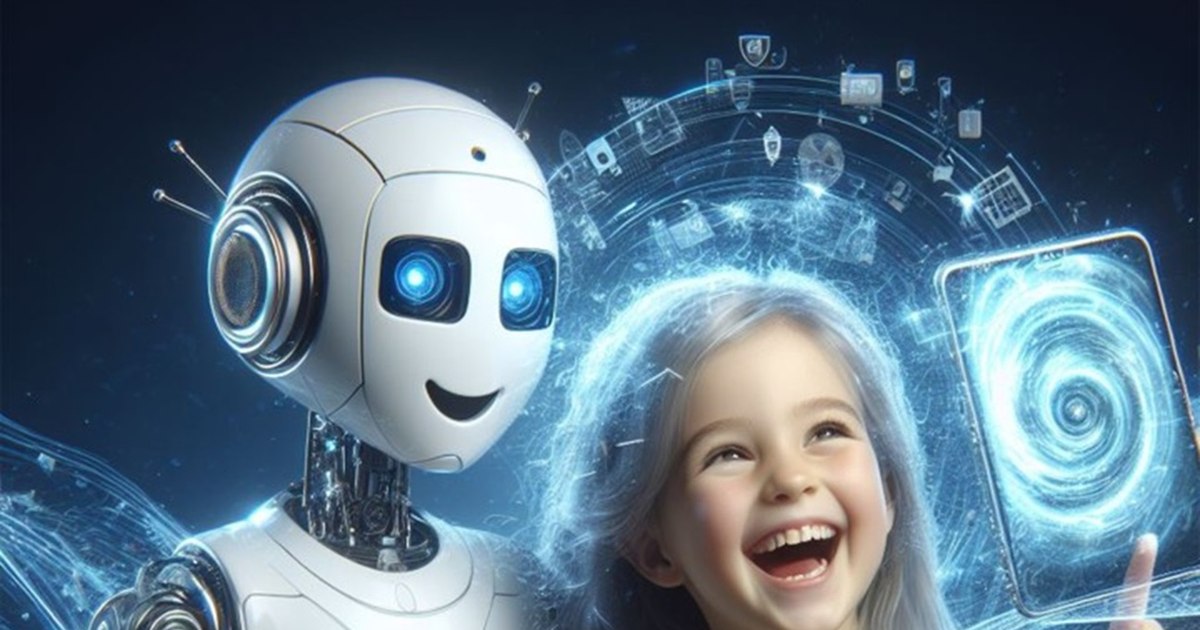
A report The Guardianbased on testimonies of parents and teachers around the world, highlights how adults choose to introduce artificial intelligence into children’s lives – either as an educational tool, or with caution, or even with reluctance.
Children, fascinated to learn with the help of artificial Linkedin photo intelligence
From explanations about the surrounding world and support in the realization of themes, to the generation of fantastic stories and images, artificial intelligence (Ia or AI – acronym in English) becomes more and more present in the routine of the little ones. While some parents and teachers use it active to stimulate children’s curiosity and creativity, others prefer a gradual, controlled or even completely avoiding these tools, invoking risks related to ethics, accuracy and influence on cognitive development.
The report of the British daily reflects a wide range of attitudes – from enthusiasm to caution – outlining a complex image of the way it is integrated (or not) in the education of the new generation.
How to introduce parents and teachers artificial intelligence in the life of the little ones
The artificial intelligence (Ia) rapidly entered our lives, and with the occurrence of Chatgpt at the end of 2022, it began to reach, gradually, from the adult offices and from the university campuses among adolescents, and now in the lives of the youngest. Although Ia platform regulations, such as Chatgpt or Google Gemini, provide that these tools are intended for people over 13, parents and teachers assume responsibility to introduce children, despite the risks that are not fully understood.
The recently published report, made on the basis of readers’ testimonies, highlights the varied approaches of parents and educators compared to use in the education of the little ones. Thus, some parents see in technology a precious ally, actively integrating it into daily activities to stimulate children’s curiosity and facilitate their learning.
For example, a father told how his 9-year-old son replaced Google searches with regular interactions with Chatgpt to get help, teaching him to ask questions and seek clues, rather than direct answers.
Prudent approaches: Ia used limited to protect the imagination and critical thinking of children
Others, however, choose a more cautious approach, using only at strictly controlled moments. Some parents are worried about the potential dangers of technology, especially related to the ethics and accuracy of information, and prefer to present to children only its limited aspects. These parents emphasize the importance of developing the critical thinking of the little ones, instead of allowing them to depend on the answers offered by an algorithm.
However, not all parents are willing to let their children use. Some believe that it risks replacing the imagination and natural creativity of children, encouraging them to copy and pay a price of integrating this technology.
Such a parent, worried about plagiarism and risks related to copyright protection, said: “Young children have to learn to think and use their imagination. They do not need cars to think in their place.”.
You have as support: How parents use technology for answers to essential questions
On the other hand, there are parents who use artificial intelligence platforms to answer the curious questions of their young children. For example, a parent told how to use chatgpt for questions like “Why are the important bones?” or “How is the water formed?”offering quick and accessible answers that stimulate the curiosity of the little ones.
Other parents, like Nate in California, have stressed that AI is just a help, not a substitute for critical thinking and active learning.
Integration of artificial intelligence into education
Also, educators mentioned that they consider the integration of artificial intelligence in the school curriculum, using it as an instrument that stimulates the imagination and creativity of the students.
Teachers believe that it is important for students to learn to ask questions as they would do with a teacher. At the same time, as in the case of other sources of information, they are emphasized by the importance of verifying the facts.
“You can provide quick, but not always correct answers. Students have to learn to think critically”explained an English teacher from Vancouver.
Challenges and dilemmas of the integration of artificial intelligence into children’s education
While some parents and teachers are confident in the integration of this technology, others remain reluctant. Fear of the risks associated with incorrect use of data and data protection and confidentiality concerns are recurrent themes. However, one thing is clear: it will become an integral part of the children’s education and life, and the way it will be managed and introduced is a continuous challenge for parents and educators alike.
Thus, in the face of a future in which technology and education are becoming more and more close, parents and teachers are forced to navigate with caution through the complex universe of artificial intelligence, reflecting not only to the immediate benefits, but also to the long -term impact on the cognitive and ethical development of the new generation.
