
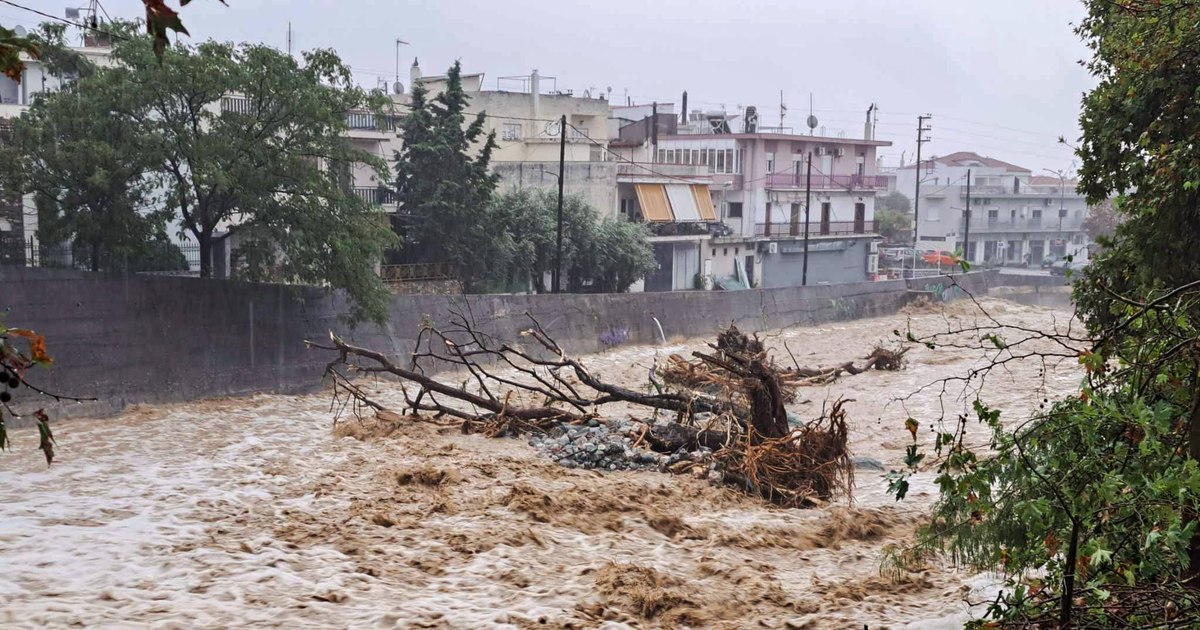
Rising global temperatures, caused by the burning of fossil fuels, are making rain more frequent and more severe in most regions of the world.
Photo: Profimedia
Dams broke and thousands of people were forced to evacuate residents of southern Germany, following days of relentless rain, according to dw.com.
This is the latest of several countries hit by extreme flooding this year. The United Arab Emirates and Oman experienced the heaviest rainfall on record. In Kenya, floods have claimed many lives and triggered landslides. And in Brazil, flooding affected an area the size of the United Kingdom and displaced more than half a million people.
While coastal flooding is largely driven by winds and high tides, river, groundwater and flash floods are all related to heavy rainfall.
What is the science behind extreme flooding?
Modeling precipitation patterns is a complex process, but it is based on a clear physical principle: warm air holds more moisture.
Greenhouse gases released into the atmosphere act as a blanket over the earth, trapping heat and causing temperatures to rise. This leads to faster evaporation of water on land and in the sea, which means that when it rains, there is more water to release. And when a large amount of rain is dumped on the land in a short period of time, it can lead to flooding.
The air's ability to hold moisture increases by 7% for every 1 degree Celsius rise. Since the pre-industrial era, global air temperatures have risen by about 1.3 degrees Celsius.
Temperature increases also cause more precipitation to fall as rain instead of snow, which can make high-elevation regions vulnerable to floods and landslides. A 2022 study published in the scientific journal Nature found that in snowy and high-altitude areas of the Northern Hemisphere, extreme precipitation increased by an average of 15% for every 1 degree Celsius of warming.
What is the impact of climate change on global precipitation?
Climate change has an impact on the frequency of torrential rain during storms and sudden bursts through its influence on complex atmospheric and weather patterns.
Globally, at a temperature increase of 1.5C, which the world is getting closer to achieving, heavy rainfall that would have been a once in 10 year event will occur by 1, 5 times each decade and will be more than 10% wetter, according to the UN's International Panel on Climate Change (IPCC).
Last year, Europe received about 7% more rain than normal, with most of the continent experiencing wetter-than-average conditions. Heavy or record rainfall caused flooding in Italy, Norway, Sweden and Slovenia.
Advances in attribution science allow experts to more precisely establish the causal relationship between climate change and extreme weather events. According to one estimate, on average, 1 in 4 extreme rainfall events in the last decade can be attributed to climate change.
Although no attribution studies are yet available for the recent floods in Germany, heavy rainfall is becoming more frequent. Last year, the average rainfall was 20% higher than the average for the period 1991-2020.
And the floods that devastated western parts of Germany, as well as Belgium and the Netherlands, in 2021 were directly linked to climate change.
According to scientists at World Weather Attribution, a UK-based academic institution, rainfall was between 3% and 19% heavier and 1.2 to nine times more likely.
More recently, this spring's floods in Brazil are believed to have been twice as likely and up to 9% stronger due to the burning of fossil fuels.
How many people are affected by the floods and where do they live?
Floods, which are among the most widespread natural disasters, are often devastating. Rushing currents can sweep away loved ones, critical infrastructure, wildlife and fertile soil, leaving behind suffering and crippling economic damage as the water recedes.
It is estimated that since 2000, the proportion of people exposed to flooding has increased by 24%.
Currently, 1.8 billion people – just under a quarter of the global population – are directly exposed to one-in-100-year flooding, a term used to describe a flood so severe that it is likely to be matched or exceeded on average only once a century.
In Europe, Germany has the highest number of people at risk of flooding, followed by France and the Netherlands. In 2023, a third of the continent's river network will see flows exceed “high” flood thresholds, and 16% will exceed “severe” levels. December levels were the highest on record, with “exceptionally” high flows in a quarter of the continent's rivers.
Although flooding is a global threat, some regions are more affected than others.
An estimated 89% of people at high risk of flooding live in low- and middle-income countries. Most live in South and East Asia, with 395 million exposed in China and 390 million in India.
According to one study, the number of people living in areas at very high risk of flooding has increased by 122% since 1985. This trend is believed to be driven by rapid urbanization, especially in middle- and low-income countries, with cities often located near water courses.
Will floods increase in the future?
Science tells us that the risk of extreme flooding will continue to rise if the world fails to limit global warming.
According to the IPCC, at 2 degrees Celsius warming above pre-industrial levels, what would have been a once-in-10-year rainfall event will occur 1.7 times per decade and be 14% wetter. And if the world warms up to 4 degrees Celsius, heavy rains that used to occur once a decade could occur almost three times more often and release 30% more precipitation.
According to calculations by the Joint Research Center, the science and knowledge service of the European Commission, in Europe alone, if no adaptation measures are taken and if temperatures rise by 3 degrees Celsius, by 2100 floods could cause damage of 48 billions of euros per year and could triple the number of Europeans exposed to flooding.
