
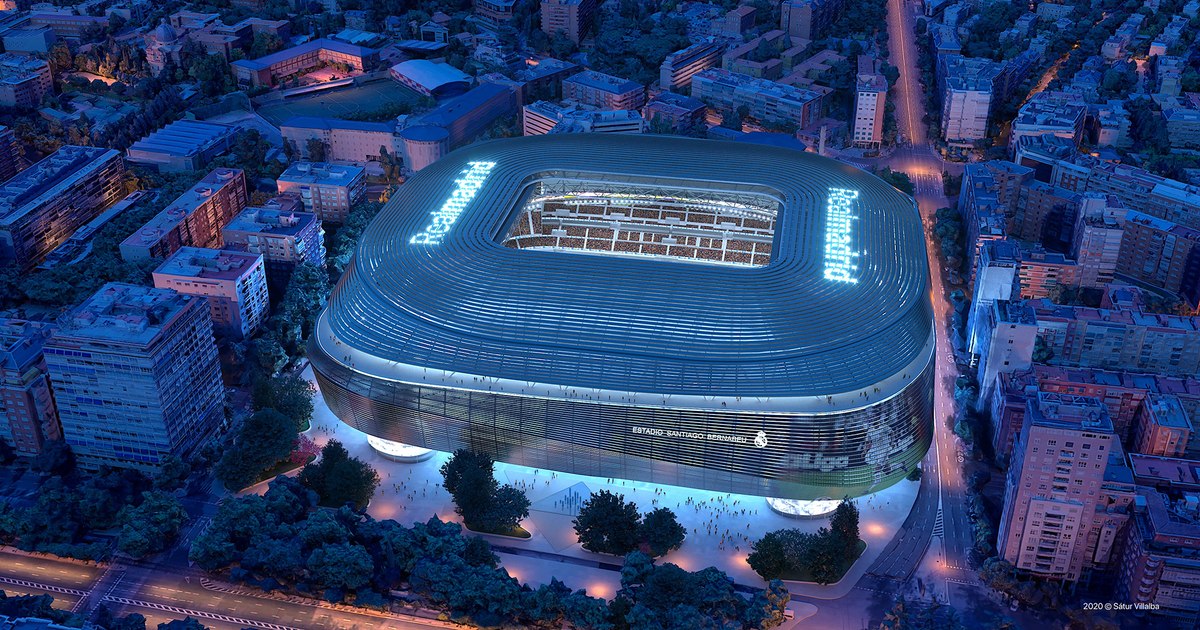
Real Madrid produced one of the most surprising decisions of the last decades. After 70 years, the club gives up the full name of the football temple. The stadium will no longer be called “Santiago Bernabéu”, but simply “Bernabéu”.
Real Madrid changes the name of the stadium | PHOTO Facebook
The announcement comes just before the 83,186-seat arena hosts the Washington Commanders vs. Miami Dolphins football game on Sunday, November 16, an event that will once again fill the spectacularly transformed stadium through the recent upgrade.
The management of Madrid believe that the name “Bernabéu” is shorter, easier to pronounce and much more “marketable”. Club officials are convinced that this change will help strengthen the global brand and attract new major sponsors, according to tribuna.com.

Real Madrid decided to rename the stadium “Santiago Bernabeu” | PHOTO Facebook
A legendary name, born in 1955
“Santiago Bernabéu” became the official name of the stadium in 1955, in honor of one of the most important people in the club’s history: player, coach and above all, visionary president.
Born in 1895, Santiago Bernabéu played for Real Madrid between 1912 and 1927, later coaching the team from 1936–1941. In 1943 he became president, a position he held until his death in June 1978.
Under his leadership, Real Madrid built the empire that would dominate Europe: 6 Champions Cups (5 consecutive between 1956–1960, plus the one in 1966) and 16 La Liga titles.
Throughout history, the stadium has been host to moments that have written European football:
- Champions Cup Final 1957 – Real Madrid–Fiorentina 2–0
- The 1969 final – AC Milan–Ajax 4–1
- 1980 Final – Nottingham Forest–Hamburg 1–0
- Champions League Final 2010 – Inter Milan–Bayern, 2–0, with Cristi Chivu on the pitch
The arena also hosted two major trophies at national team level: the EURO 1964 final, won by Spain over the USSR (2–1), and the 1982 World Cup final, Italy–West Germany 3–1.
