
In three counties in Romania, the majority of the population able to work does not have a job. In these poor areas of Romania, the burden of work, taxes and social benefits is borne by only about 40%. The shocking fact is that some of those who do not work have never had a job.
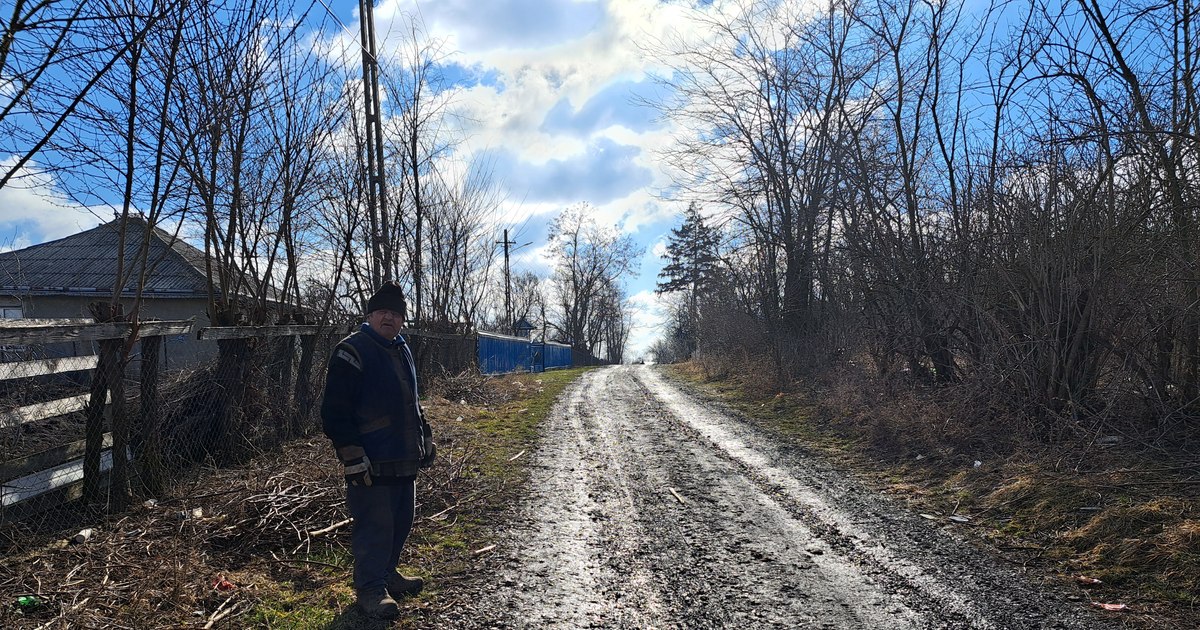
Many counties are short of labor. Photo: The truth
Many counties in Romania are haunted by poverty. In some of these, the majority of the population does not even have a salary, that is, they do not work with legal forms. Under these conditions, people pay no taxes, no health insurance or pension. I am part of a vicious circle of poverty, backwardness, vices and lack of perspective in which a good part of our country sinks. According to official statistics, the worst situation in terms of employment is in three counties in Romania. It is about Botoșani, Giurgiu and Călărași. In these counties, say the official figures, the majority of the population has no job, salary or medical insurance. All the burden, in Botoșani, Giurgiu and Călărași, falls on the shoulders of 40% of the population, the only tax payers. The worst situation is in Giurgiu county, where only 41.4% of the working population has a job. The rest of 59% sit for nothing. That is, they do not officially have a job. The penultimate place is occupied by Călăraşi with an employment rate of 43.2%. And the third place from the queue is awarded by Botoșani county, with an occupancy rate of only 43.7%, at a tiny distance from Călărași.
County of pensioners and people without income
Botoșani is a county with potential, especially agricultural, cultural and touristic. However, it is part of the category of the poorest counties in Romania. And poverty is not related to the lack of resources, but to a real social drama that the county is going through. Over 60% of the population lives in rural areas. A good part of the villagers live exclusively from subsistence farming and animal husbandry. In most communes there is no other perspective, no important economic agents, no factories or any other form of earning a living. At most a few village shops, breweries and in the best case large farmers who employ, obviously also in agriculture and animal husbandry. In some villages of Botoșani, poverty and lack of perspective combine in a dramatic way with vices and the lack of health education in the first place. Moreover, there are municipalities that do not even have a family doctor, let alone hospitals or dispensaries. There are also happy cases of involved mayors with good social projects, but these are rare.
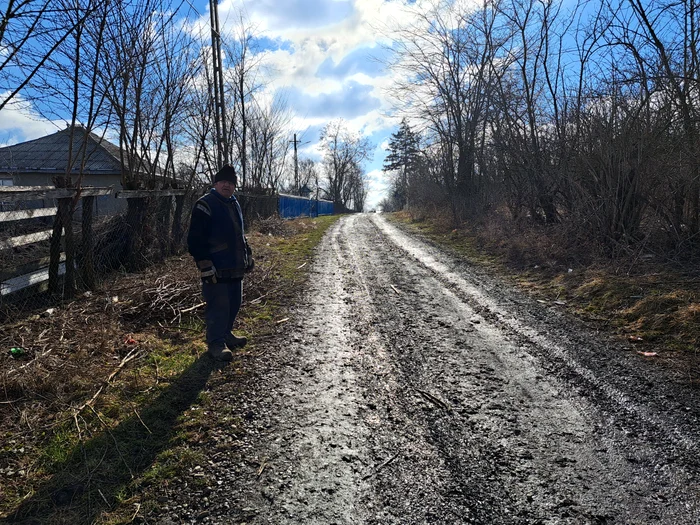
Villages are aging PHOTO Cosmin Zamfirache
Official statistics confirm the dramatic situation. In Botoșani County, over 72% of the population consists of pensioners. That is, a profoundly aging society. Most of the young people from the countryside, without any job prospects, without being able to support themselves, went abroad en masse, leaving the villages almost empty. Only 25% of Botoșani’s population is active, meaning it carries the weight of the county’s economy. The economic picture can be completed with the fact that, in Botoșani, the state is the main employer. The statistics from AJOFM come in addition and show that, in fact, the only people who work legally, in Botoșani, are much less. Thus, out of 25% of the active force, only 40% work. Some do not even have social assistance. More than 47,000 Botošan residents do not have a job and, implicitly, no salary.
“Boss, the world lives on what it can get! It’s not worth hitting the road for three lei”
As the social workers from the town halls in Botoșani County also show, poverty goes hand in hand with vices. A part of those who stay for nothing or go to work during the day, in the dark, around the village, for no more than 100 lei, are also alcohol and tobacco users. “There are people who, in addition to poverty, start to have vices, that is, especially alcohol consumption. And from there, problems in the family begin, with children, quarrels, and other and other problems. They don’t understand that they are harming themselves with their hand”says Elena Vechiu, social worker from Dobârceni commune. Although scholarships for jobs in the countryside were made, through AJOFM, in collaboration with the town halls, too few of the unemployed showed up. Not even for unskilled jobs, where neither education nor experience was required. “Often, it is a long distance from the city, but there might be conditions for commuting in urban areas. Many, however, end up complacent in the situation they have. They are not open to going to the city, commuting, trying something else. And with the people from AJOFM, we tried several actions through which they would benefit from qualifications, find a job, at least unqualified, to have an income, but they still yes, yes…and they don’t go anymore. He prefers to stay like this”adds the social worker from Dobârceni. Village people say that working in the city, for example, has no advantage.
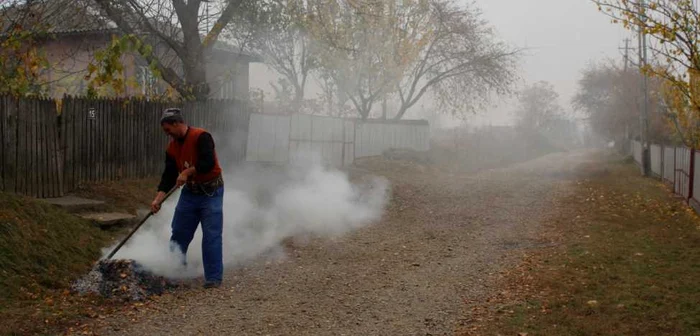
Many people live from agriculture PHOTO Cosmin Zamfirache
The main impediment would be distance and low wages. He prefers to stay in the country, raise a few birds, maybe a cow, at best. And work by day, when hunger knocks at the door. “Boss, the world lives on what it can get! It’s not worth hitting the road for three leu. The low salary and you also give money on the road, another package or something. It’s not worth it. What you get in apples, you give in pears“, says a villager from the Dângeniu area. Another, from the Costești area, close to Botoșani, says he prefers to raise birds and what animals he can, possibly grow vegetables in the garden.
“If I go to work in the city, and it takes another 10 hours, until I get home, who takes care of the animals and the garden. The woman with the children cannot do hard work. Food prices are high, if I start buying I leave poorer. Better here in the country, food is. Money, from an allowance, I make another twist and a penny comes out”says the local. The heads of AJOFM admit that there is a problem with public transport in the county. I mean, there are many communes where people can’t get to work, because of the bus schedule. “Qin terms of people’s access to a job, an impediment is the inconsistency of public transport at the county level. There are very few routes, very few localities whose inhabitants have provided transport for Botoșani Municipality or Dorohoi Municipality, in order to be able to carry out a normal work schedule”, states Anca Apăvăloaie, head of the Botoşani County Employment Agency.
No book, no part
The problem is also aggravated by the fact that, especially in rural areas, few locals have a high level of education. Statistics show that about 80% of those who do not have a job, but live on social assistance, have no more than eight grades. 813 Botošan residents don’t even have four classes. Under these conditions, they don’t even have the chance of qualification courses.
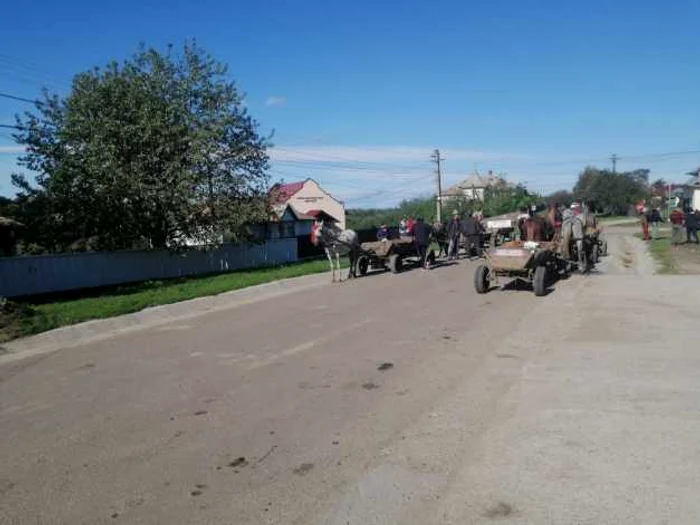
Most of the people in the village live from agriculture PHOTO Cosmin Zamfirache
“At the end of August we had more than 4600 people registered in our records. Of these, 852 are beneficiaries of allowances, they are those people who benefit from social protection, the unemployed with allowances. But of the 3,717 who are not indemnified, 2,782 are beneficiaries of the minimum income of inclusion, that social aid, as it is known as the phrase. Of these 2,782, 2,282 people completed eight or fewer grades. They are more than 80%. They are on record to benefit from active measures to be included in the labor market. But these people do not hold a qualification. Given the level of sutdiu they cannot access qualification courses of level 2 or 4, which would allow them a job that is better paid”says Anca Apăvăloaie, director of AJOFM Botoșani. Shocking is the fact that only 835 people out of the 2782, good for work, but with social assistance, ever had an employment contract. The remaining 1900 or so have never worked in their lives. Some not even until the age of 50.
The heads of AJOFM say that, unfortunately, in the county, few local authorities are involved at the social level to reduce this economic and social drama. “All these investments in infrastructure by the local authorities are beneficial, but it is very good and it is equally important that this leaning towards people who want a job, who want to have an income, as a result of their work. Not only to social assistance. There are representatives of the town halls that have an inclination towards this human, social side, with projects financed from the European social fund for this issue of employment, projects for information, counseling, professional training, they financed business plans that led to the establishment of start- ups, social economy enterprises, or simple companies. But not all communities have the same interest. Fewer communities have these positive things happening“, adds Anca Apăvăloaie
