
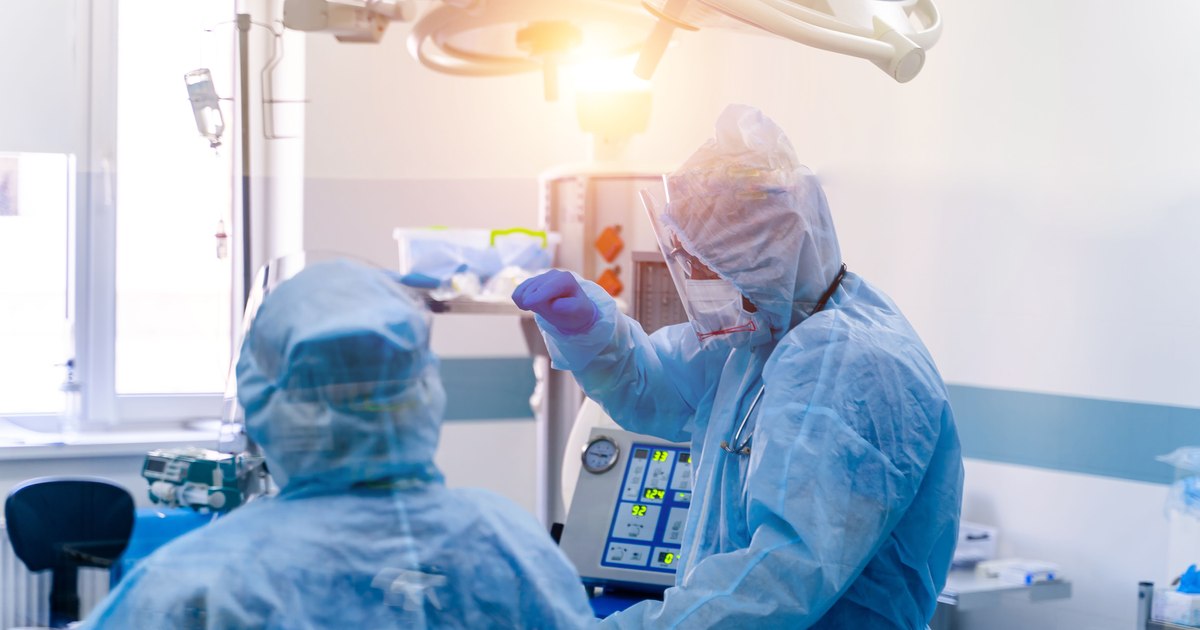
Intensive care units and Emergency Departments across the country are overcrowded, and doctors warn that they can no longer cope with the growing number of critically ill patients. Due to the lack of beds at ATI, the seriously ill end up being treated even in the emergency rooms, in conditions unsuitable for intensive care.
The situation is dramatic especially for patients who need respiratory support. “We get the same answer: all ATIs are 0”, said Fiorela Mitoiu, chief physician of the UPU – Pantelimon Hospital, for Observator News.
In many hospitals, intensive care is de facto done in the UPU, where intubated patients stay even for weeks. “We have up to 2-3 weeks of inpatients in the UPU“, explained the doctor.
The approximately 3,000 places in the ATI wards are insufficient, and the lack of equipment and space forces the medical staff to resort to emergency solutions. “Patients stay on UPU stretchers and a UPU stretcher is no match for an ICU bed. We have had …critical patients stay and receive care on the SMURD stretcher for 40 minutes until a stretcher can be released”said Fiorela Mitoiu.
Protocols broken to save lives
Doctors in several hospitals admit that they have to improvise to treat all patients. An ATI specialist from the Moldova area testified, under the protection of anonymity: “You have to improvise, in the sense that you put patients on extra beds, on stretchers, in the worst case. Clearly you as a doctor cannot decide who gets a place in therapy and who doesn’t and then you have to admit them all, whether you have beds or not“.
Under these conditions, patients with a real chance of being saved sometimes end up stuck between wards, without quick access to the necessary care. “We are talking about intensive care, here the fight is against the clock, in a day it might be too late”, said Radu Ţincu, head of the ATI-Toxicology section, Floreasca Hospital.
Analyzed measures to increase ATI capacity
Authorities are discussing solutions to increase the system’s capacity, including training doctors from other specialties for intensive care skills and introducing ATI beds in more wards. “I do the two-year intensive therapy competence, additionally to their specialty. They can do 80%, 90% of the intensive care actions on the ward, and then your capacity increases”said Raed Arafat, head of the DSU.
The addition of beds for palliative care is also being analyzed. “We must look towards respect and human dignity at the moment of death“, stressed Radu Ţincu. However, specialists warn that the real effects of these measures will appear only in the coming years, after the equipment and training of the medical staff.
