
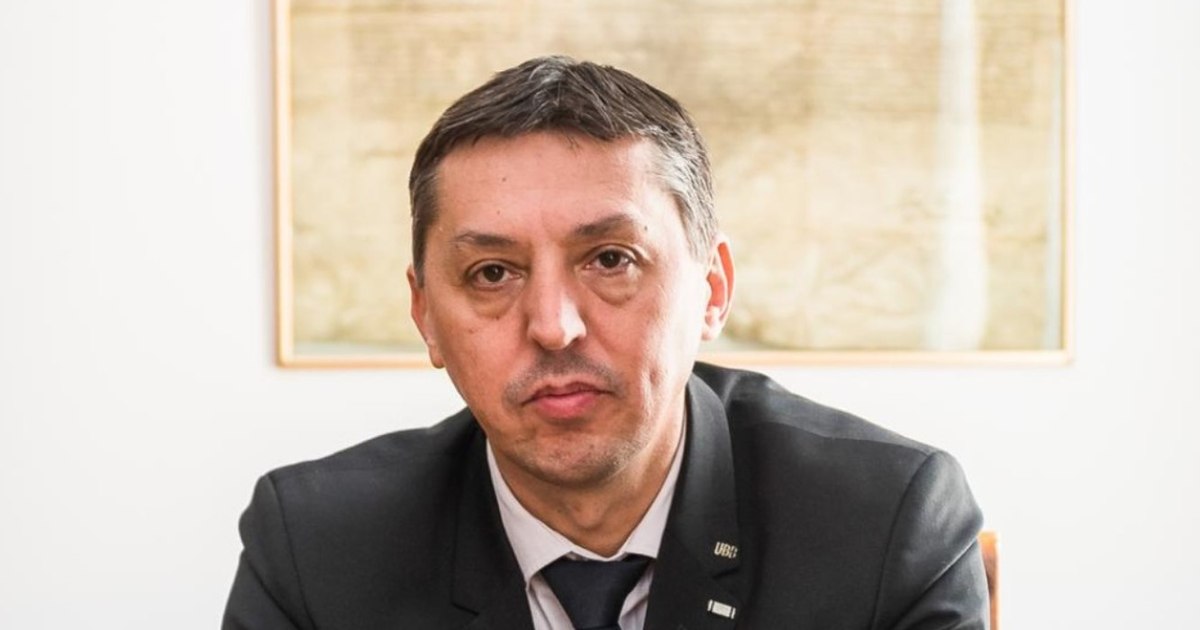
The school year 2025-2026 begins in a context marked by fiscal-budgetary crisis measures, necessary to ensure the payment of salaries and scholarships in the education system, said the Minister of Education, Daniel David, in a detailed statement.
Minister of Education, Daniel David Photo Edu.ro
The minister also explained the short, medium and long term priorities, as well as the reforms prepared for the post-crisis period.
The fiscal-budget crisis imposed temporary measures in education
Daniel David said no one wanted the current measures imposed.
“SWe have to implement them in order to end the year with predictable salaries and scholarships and to then build a development hope in the future. Certainly, if not the fiscal-budget crisis, these measures would not have been taken or were taken differently“,
It is shown in an open letter of the minister, to the people of education.
He stressed that these measures are not the reforms targeted by him in the system, but were proposed in the light of the QX report.
Daniel David pointed out about it “Interventions necessary to have this year and in the years that come a functional system.”
The minister stated that these measures were included “In the political agreement of the Coalition and were detailed in the Governance Program and in the Fiscal-Bigger Law 141/2025“And that their implementation was done in compliance with the principle of rationality, according to some European practices.
“I have accepted their implementation provided that people are not fired and not to reduce wages, but also in compliance with the principle of rationality, namely that the measures must be found in some practices of the European Union countries and, in addition, in the perspective that some of these measures will be temporary. Also, these measures must be the basis for an increase of our system, in the future years, education needing additional resources for more attractive salaries, hiring specialists (eg support teachers, computer scientists) and national infrastructure programs (eg: especially the one aimed at early education). Their implementation was done at the level of the ministry, always careful about the feedback of the people of education in the system (students, students, teachers and unions: here and here), respectively from the larger ecosystem (civil society & local authorities), starting from many discussions with them, and where possible, we have implemented their suggestions. Many functional things implemented in the secondary legislation issued by the ministry have also resulted from these discussions, including advanced constructive proposals on the occasion of the trade union protests“,
is the continuation of the letter.
Message for the educational community
Daniel David appealed to unity and responsibility:
“We can exit this situation only together, through solidarity and with rational and decent actions, without letting the different positions become animosities or reactions that affect our social image and the functioning of our education system. We do it for us, but especially for our children.”
He also explained the reasons for reduced communication during the international evaluations.
“I chose to communicate less during the international assessments in order not to stimulate controversies that could affect the country’s financial balance. In the same logic, another reason was the desire to ensure that the most important objective – the payment of salaries and scholars,
says Daniel David.
Concrete measures for school year 2025-2026
Among the main measures announced are:
Teaching rules and holders:
“We start the school year 2025-2026 with a total of approximately 214,700 norms in the system (229,110 in the school year 2024-2025), of which about 156,390 covered with holders.
Increasing the didactic norm:
“The increase of the didactic norm by 2 hours per week generally keeps us in the area of the European Union average … This growth leads to a greater interaction of students with qualified teachers, but it must come with a reduction in bureaucratic-administrative loading on teachers.”
Remedial hours: The introduction of remedial hours “creates the premises for a national program with a positive educational impact. Within these hours children (1) strengthen the learned things, (2) recover the unassimilated skills and (3) learn how to use them in everyday life, which makes education more attractive and more effective.”
Reorganization of the school network:
“The reorganization of the school network led to a reduction in its fragmentation (by about 8.1%) and to a greater flexibility in creating the didactic norm.”
Classes and limits:
“The rethinking of the limits for the classes of students did not lead to dramatic changes, most of the classes being within the minimum – maximum limits.”
grant: The stock market fund “will be higher than in 2022-2023, without being able to compare with the stock market funds from 2023-2024 / 2024-2025 … I prioritized the social scholarships to be able to maintain in the pre-university education system the children from the disadvantaged environments.”
Short, medium and long term priorities
Daniel David detailed the objectives of the educational system after the fiscal-budgetary crisis:
- In the short term, we must make sure that in the field of education the retired teachers can be involved in educational activities and the budget for 2026 must be carefully prepared, including we have to seriously implement the renegotiated PNR, with completion in August 2026.
- In the medium term, we must ensure that, in the law of unitary pay, the start salary for the debut/assistant assistant employed by the authorities is honored, as a measure of increasing the attractiveness of the field.
- In the long term, we must target 15% of the general consolidated budget for education expenses and 1% of GDP for research.
- Regardless of the deadline, temporary budgetary fiscal measures (or others relevant to our education-research system) must be adjusted with the return of the country from the fiscal-budgetary crisis.
Final message to the educational community
Finally, the minister calls for optimism and collaboration.
“I invite you, dear people of education, to face the present dissatisfaction-I see it in messages and protests, but neither I nor you have contributed directly over the years to this situation of fiscal-budgetary crisis-but to build a better future. Which affects our social image and the functioning of our education system, and this must be done for us all, but especially for the future of our children ”wrote Daniel David.
