
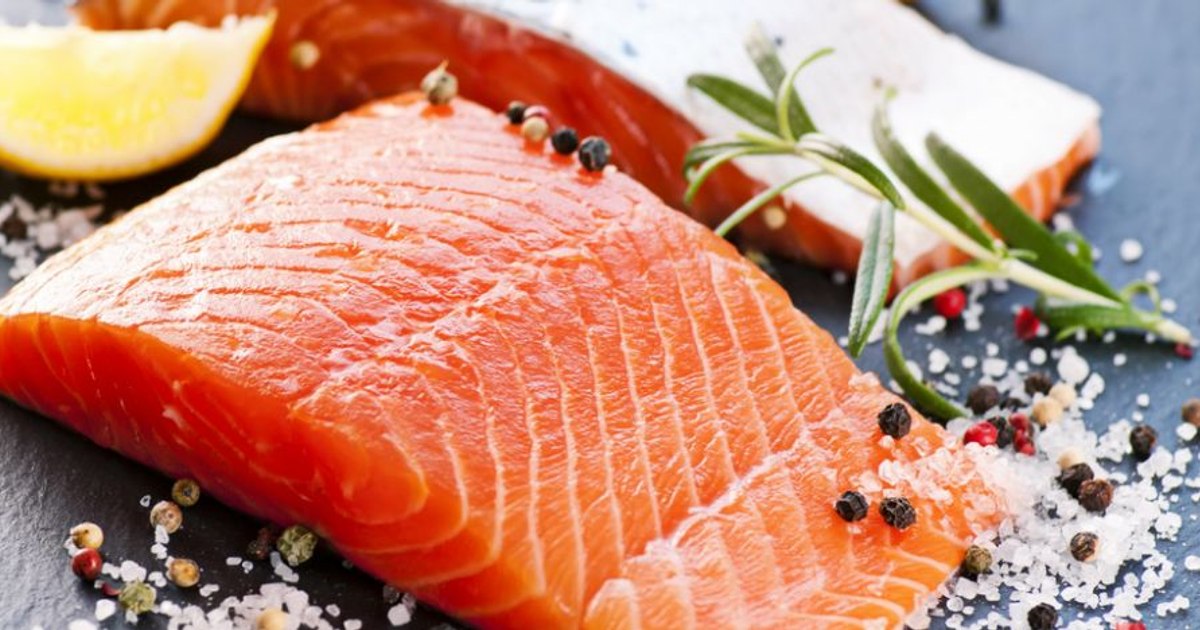
Researchers have discovered a real ecological surprise in expired salmon cans from the 1970s. it’s about parasites that reflect the health of Alaska’s marine ecosystems.
Scientists have analyzed cans of salmon that have expired for decades PHOTO Archive
The discovery was made by ecologists Natalie Mastick and Chelsea Wood of the University of Washington, who were looking for a way to retroactively track the effects the parasites had on marine mammals in the Pacific Northwest, ScienceAlert reports.
Wood was contacted by the Seattle Seafood Association, who asked if she would be interested in taking on decades-old cans of expired canned salmon — dating back to the 1970s — and her answer was, unequivocally, yes.
The cans had been set aside for decades as part of the association’s quality control process, but in the hands of conservationists, they became an archive of superbly preserved specimens; not salmon, but worms.
Although the idea of finding worms in canned salmon can be a little disturbing, these marine parasites, anisakizi, about 1 centimeter long, are harmless to humans when they are killed during the canning process.
“Everyone assumes that worms in salmon are a sign that things have gone wrong”Wood said, when the research was published this year.
“But the life cycle of anisakis worms integrates many components of the food web. I see their presence as a signal that the fish on your plate comes from a healthy ecosystem.”
Anisakis worms enter the food web when they are eaten by krill, which in turn are eaten by larger species.
Thus, these worms end up in salmon, and finally, in the intestines of marine mammals, where the worms complete their life cycle by reproduction. Their eggs are excreted into the ocean by the mammal, and the cycle begins again.
“If a host is not present – marine mammals, for example – they cannot complete their life cycle and their numbers will decline.”said Wood, the paper’s lead author.
The 178 tin cans from “archive” contained four different species of salmon caught in the Gulf of Alaska and Bristol Bay over a 42-year period (1979–2021), including 42 cans of chum salmon (Oncorhynchus keta), 22 coho salmon (Oncorhynchus kisutch), 62 of pink salmon (Oncorhynchus gorbuscha) and 52 red salmon (Oncorhynchus nerka).
They found that the worms grew over time in chum and pink salmon, but not in red or coho.
“Seeing how their numbers have increased over time, as we’ve seen with pink salmon and chum, indicates that these parasites have been able to find all the right hosts and reproduce.”said Mastick, the paper’s lead author.
“This could indicate a stable or recovering ecosystem with enough suitable hosts for anisaki worms.”
But it’s harder to explain the stable levels of worms in coho and sockeye salmon, especially since the preservation process has made it difficult to identify the specific species of these worms.
Mastick and her colleagues believe this innovative approach—old, dusty cans turned into an ecological archive—could lead to many scientific breakthroughs.
The research was published in the journal Ecology and Evolution.
