
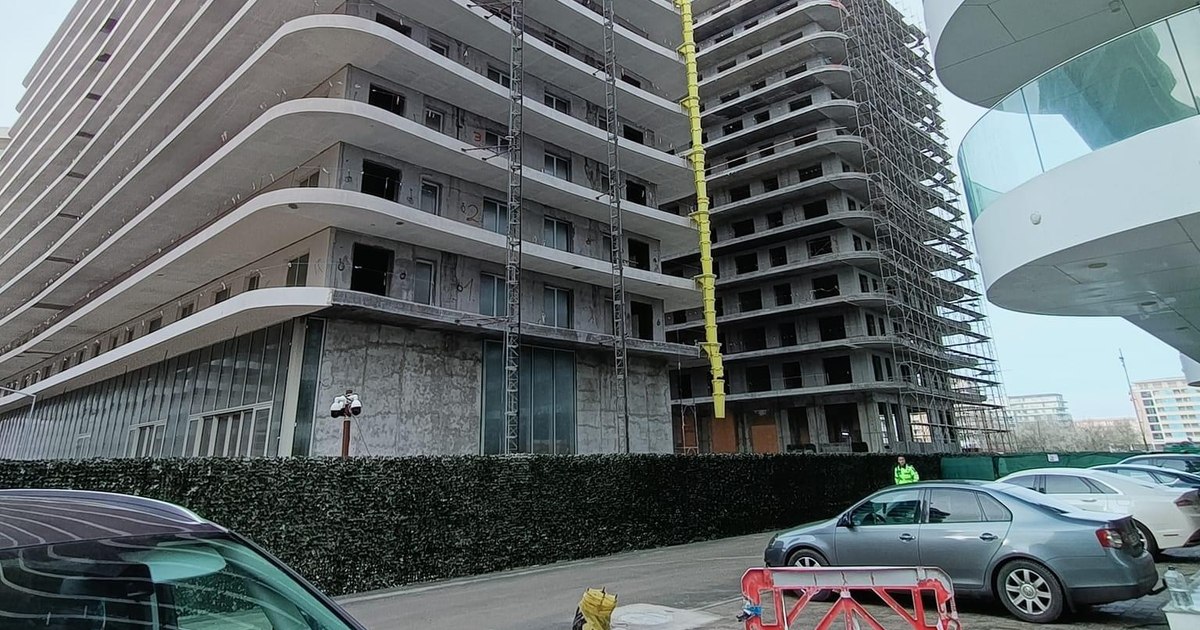
How close is too close? The distance between buildings – a technical detail or a public health problem? Do you know how you stay? When it comes to the houses and blocks we live in, not only the finishes or the surface matters. The distance between buildings is a key element of living quality, with direct effects on health, comfort and safety.
Complex in Mamaia North Source Facebook
InfoCons and the Order of Architects in Romania attract attention, in the campaign “10 things you need to know if you want to live healthy”, that too little distance between buildings can transform the dream of a home into a nightmare.
In this article you will find out why the distance between buildings counts for your health and safety, what risks involve too close to neighbors, how the law and urban derogations work, what are the system problems and what measures you can take to protect yourself.
Why does the distances between buildings really matter really matter
It’s not just a matter of urbanism or aesthetics. It is about natural light, fresh air, intimacy, but also fire safety and earthquake.
An apartment just two meters from the neighboring block stays dark even at noon. In the absence of air circulation, the mold and thermal discomfort appear. And, last but not least, windows “Glued” The neighbor transforms personal life into a public show.
On the forums, people tell that, only after they moved, they discovered the lack of light and air, noise or other “Hidden vices”although they thought they made a good investment.
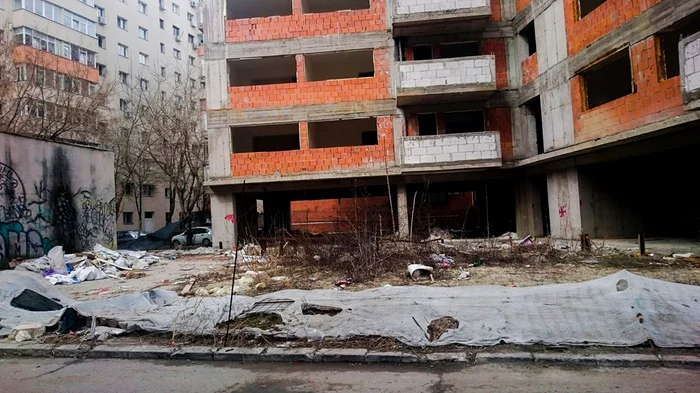
Blocks that do not respect the distance between buildings in Bucharest Photo Facebook fight for your street
The correct distance between buildings = health, safety and good investment
When you choose a home, do not just look at the finishes or the surface of the apartment, draw attention to the InfoCons and OAR campaign. Ask yourself:
- “Do I have enough natural light?”
- “Can I have efficiently ventilated?”
- “Do I keep my privacy?”
- “Am I safe?”
Here’s what you risk if you live too close to the neighbors:
- Natural light – The lack of exposure to the sun affects health and well -being.
- Clean air – Insufficient ventilation leads to higher costs for air conditioning and increases the risk of mold.
- privacy – Neighbors become permanent spectators of your life.
- Safety – too small distances increase the risk of fire propagation and make it difficult for emergency interventions.
- The value of the house – The apartments without natural light and windows to the walls are sold harder and cheaper.
An architect quoted in a urban debate pointed out: “A poorly located building is a life sentence. Not only for those who live there, but also for the whole community.”. This message emphasizes how important the correct distance between buildings for the quality of life and the value of a real estate investment is.
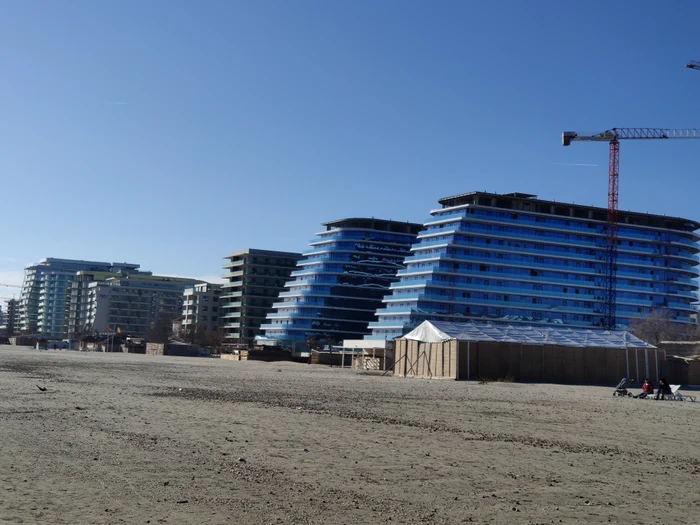
Construction Mamaia Nord Photo Călin Gavrilaș
The distance between buildings: Law and reality – clear rules vs. abusive derogations
The Civil Code and the General Urbanism Regulation clearly establish: the distance between two buildings must be at least equal to the height of the highest (H), but not less than 3 meters. This means that, for a block of 20 meters, the minimum distance should be 20 meters, otherwise it is an illegal construction.
In practice, however, the rules are often “Bypass” through urban derogations-PUZs and PUDs approved by the local councils. Officially, these derogations should be exceptions justified by public interest; Unofficially, they become tools by which developers maximize their profit, and the local authorities close their eyes. The result: high blocks “legal”but obviously immoral, only a few steps away from people’s windows.
To all this is added the lack of real control. The state inspectorates in construction admit that they have no resources to check each yard. Once the building is high, even if there have been deviations, demolitions are rare. In the best case, fines are given.
The result? Suffocated neighborhoods appear with blocks “Glued” Some of the others, without light, without air and without intimacy. On the forums, people pour their frustrations: “At the City Hall they told me that everything is legal, that there is a PUZ approved. But legally for whom? For us, the tenants, a life condemnation.”
The problem is also amplified by the lack of unity between the tenants. As long as people are waiting for it as “others” To fight for their rights, the system will continue to rely on passivity and resignation.
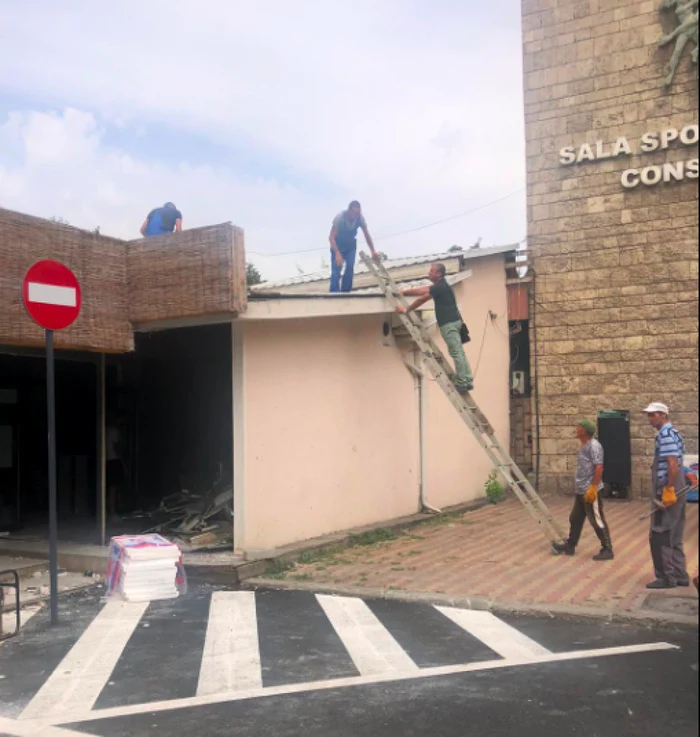
Cafe demolished in Constanta Photo City Hall Constanța
Insufficient distance between buildings: When the neighborhood becomes suffocating
Even the new buildings, with modern finishes and attractive promises, can hide unpleasant surprises: rooms that never see the sun, windows that give directly into the neighboring wall, air lack and compromised intimacy. The phenomenon does not only affect the big cities – the recent real estate developments have also reached the average or small cities, such as Râmnicu Vâlcea, Pitești, Sibiu, Ploiești, Oradea or Baia Mare, where blocks appear at very distances from each other, suffocating the existing homes.
The forums are full of complaints, and in the absence of the agreement of the neighbors or the intervention of the authorities, the tenants are facing illegal abuses and practices, often impossible to challenge. In historical areas, high density and urban exceptions are sometimes used to justify such irregularities. The examples that arrived in court, such as Apahida (Cluj) or Bucharest, Mamaia or Sinaia, Cluj Napoca or Timișoara, show that when the authorizations do not comply with the law, citizens can obtain their suspension or cancellation.
These situations highlight that the problem is not only about the law itself, but the application of the urban rules and the ability of the communities to intervene, otherwise the quality of life remains compromised.
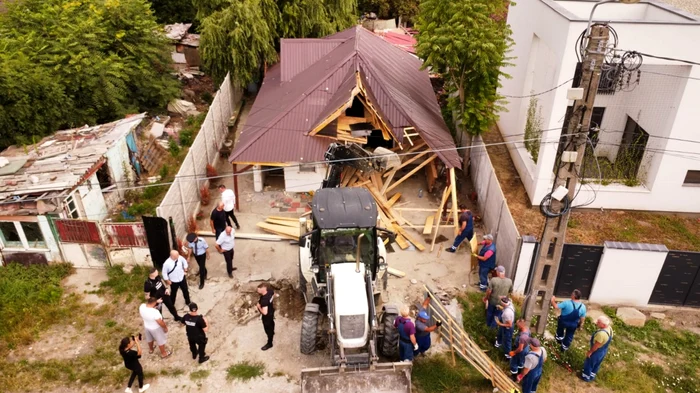
Building built abusively in Timisoara demolished later photo Timisoara City Hall
A system problem in urbanism and the distance between buildings
Lawyers, as well as other specialists, point out that most irregularities appear in the context of PUZs and PUDs or approaches transferred or expired. “Often, the problems come to light only after the construction is completed. At that time, the sanctions are minimal, and the demolition remains a rarity.”explains a lawyer from the Bucharest Bar.
This is why we can’t talk about a fixed list of “Customs cities”: The cases are punctual, but frequent and present at national level.
What citizens can do to protect the distance between buildings
The specialists recommend the inhabitants to be vigilant from the project phase and to submit notifications to the City Hall or to the State Inspectorate for Construction if they notice irregularities.
There are precedents in the court where the building permits were suspended precisely because they did not comply with the law – a signal that the community action and the civic pressure can give results.
When the state is washing hands, the buyer remains alone
The situation becomes all the more revolting as Romania has a whole legislative and institutional arsenal meant to regulate the constructions: Civil Code, General Urbanism Regulation, General Urban Plans, Zonal Plans, Construction Inspectorates, Technical Commissions, Heads, City Halls. Theoretically, nothing should escape. Basically, almost everything escapes.
The result? The buyer is allowed to do justice, to decipher complicated laws and to check opaque authorizations, although the state should be the guarantor of legality and urban balance.
It is an absurd reality in a state that is democratically proclaimed and boasts of control institutions. Instead of protecting the citizen, the system passes his responsibility and risks, leaving room for abuses and compromises that finally browse on the quality of daily life.
Conclusion: The distance between buildings – a national problem on the shoulders of citizens
The distance between buildings is not a technical detail, but a matter of public health, safety and respect for the community. What seems an isolated case – a block high too close to another, an apartment without light or a house suffocated by the neighboring construction – is, in fact, a generalized reality, present in both the big metropolises and in the smaller cities.
The laws exist, but they are not applied. Institutions, although paid to protect us, do their job only in half. Thus, the responsibility remains on the shoulders of the citizens, who must be careful, ask, check and ask for transparency. Information campaigns are useful, but insufficient without real implementation and firm control from the state.
Respecting distances between buildings is not a bureaucratic moft, but a guarantee that your home will remain healthy, safe and valuable over time.
The problem is real, but not without solutions – informing, checking the documents and community involvement can make the difference, as the InfoCons and OAR campaign reminds: “Do you know how you stay?”
