
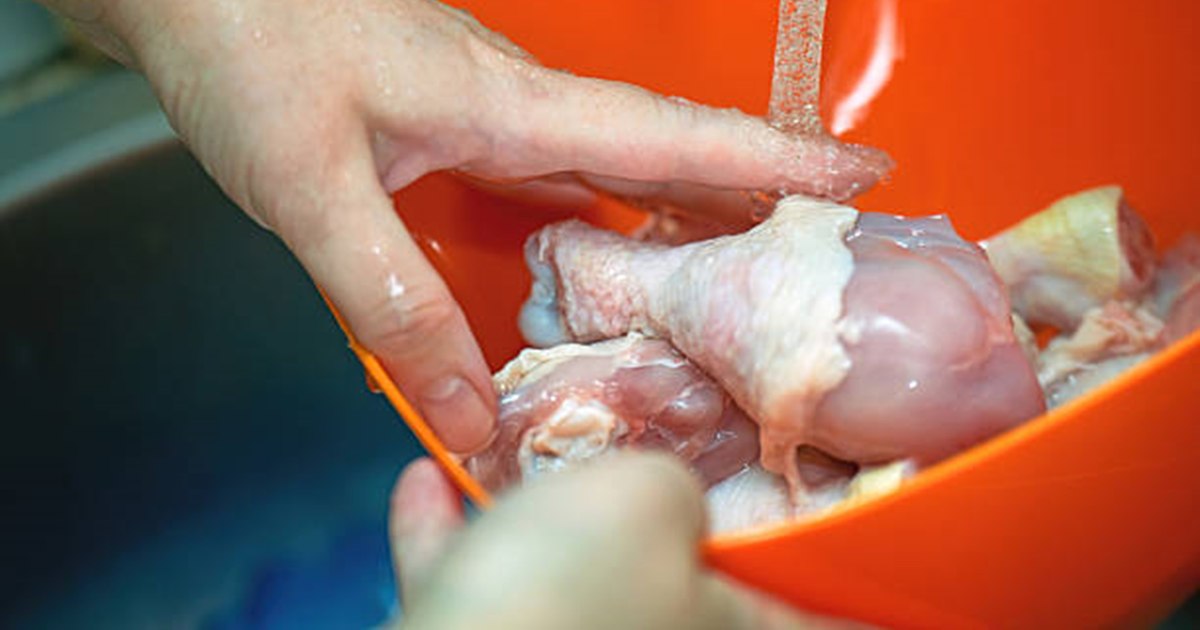
A mom’s post on a Facebook group started a useful debate: Should we wash meat before cooking it? European food safety standards contradict the Romanian custom of washing meat.
“Do we wash the meat before cooking it or not? Honestly, I usually rinse it in water a bit, I don’t feel like cooking it directly”. A mum’s post on a Facebook group was the starting point for a very useful debate.
Ioana Popescu, specialist in food security, explained to “Adevărul”: “Poultry meat in particular, but also other types of meat, are not washed to avoid contamination with the bacteria it contains. If contamination with physical agents is identified, it is recommended to remove it by cutting or swabbing.”
The specialist refers to the Guidelines of the European Food Safety Authority – EFSA – which recommends not washing meat before cooking.
Where did the habit of washing meat before cooking come from?
The habit of washing meat before cooking is extremely widespread, including in Romania, and it seems at first glance a basic hygiene gesture. In reality, however, modern food safety guidelines—including those of the European Food Safety Authority—show that this reflex is more of a cultural legacy than a useful practice, and may even increase health risks.
The explanation lies primarily in how people perceive “cleanliness”. Raw meat is instinctively associated with visible dirt: blood, liquids, possible impurities or smells. Naturally, many apply the same logic used for vegetables or fruit: if it looks dirty, it needs to be washed. The problem is that food safety has nothing to do with what we see with the naked eye. Dangerous bacteria, such as Salmonella or Campylobacter, are not visible and cannot be effectively removed by simply rinsing with water.
Another important factor is tradition. In many families in Eastern Europe, including Romania, washing meat is a gesture passed down from generation to generation. In the past, this sometimes made practical sense: the meat came from households or markets, where hygienic conditions were less controlled and mechanical cleaning could remove real impurities. Today, however, in the modern food chain, meat reaches the consumer after strict control and sanitation processes, which makes this step redundant.
There is also a certain mistrust in the food system. Many people feel the need to “re-clean” the product as a form of personal control over its safety. It is a psychological gesture, which gives the feeling of safety, even if from a scientific point of view it does not bring real benefits.
The difference between “clean” and “safe”
In fact, this is where the essential confusion arises: the difference between “clean” and “safe”. Clean means the absence of visible dirt, while safe means the absence of pathogens. Washing meat may improve the perception of cleanliness, but it does not make it safer. On the contrary, it can increase the risk of cross-contamination. The water jet doesn’t kill the bacteria, but can spread it over kitchen surfaces — the sink, countertop, utensils, or even other food. Thus, the bacteria reach places where they would not otherwise have reached.
The EFSA guidelines clearly emphasize that the effective method of eliminating bacteria is not washing, but proper cooking. High temperatures destroy dangerous microorganisms, making proper cooking key to food safety. In parallel, measures such as washing hands, cleaning surfaces and separating raw meat from other foods are essential.
In conclusion, meat washing is a classic example of an intuitively “logical” but scientifically flawed practice. It stems from tradition, visual perceptions and the desire for control, but it does not contribute to food safety and may even compromise it. What really matters is not whether you wash the meat, but how you cook it and how careful you are about kitchen hygiene.
