
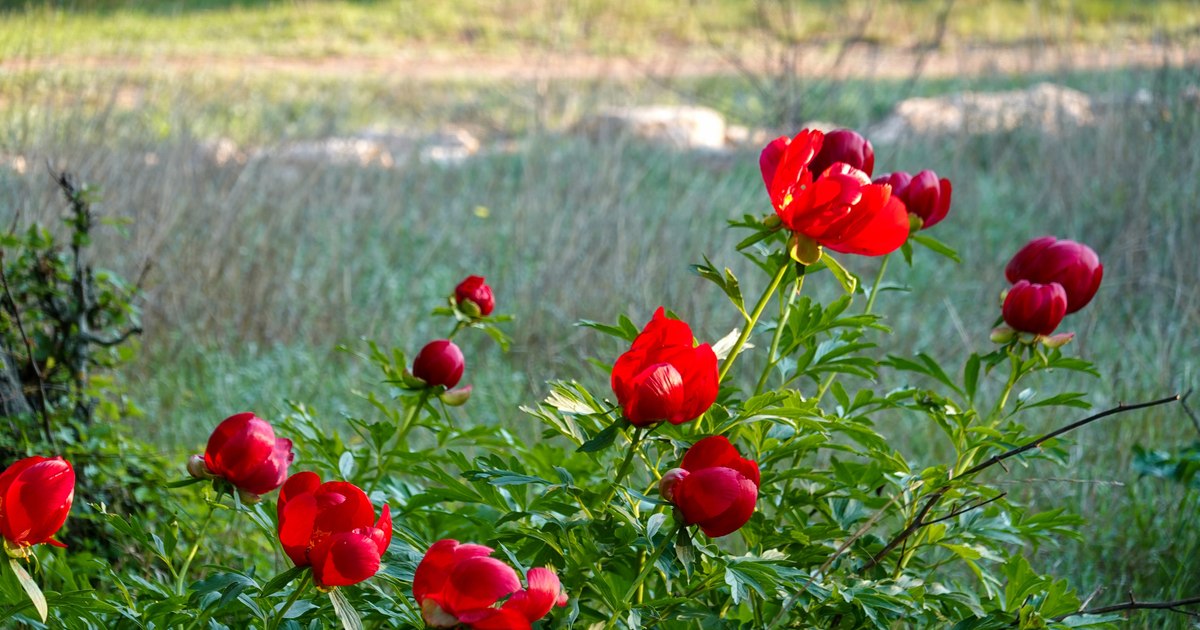
Peony fields or glades throughout the country offer real spectacles, but we can only enjoy them for ten days a year, usually in May. The largest reserves of Romanian peonies are found in Dobrogea, where the sun warms them more quickly.
The Romanian peony was declared the national flower of Romania in 2022
Color, smell, delight for the eyes and soul. In other words, the Romanian peony. Found in many areas of the country, the Romanian peony became the national flower of Romania in 2022, celebrated on May 15. Even the Royal House of Romania celebrates this flower that has become a symbol. On Royalty Day (May 10), the Royal House organized a garden party formally in the garden of the Elisabeta Palace in Bucharest, the rooms of the palace being decorated with red and white peonies, “and the 4,000 guests at the Garden Party each received a flower”, conveyed Her Majesty Margareta, Princess of Romania.
Settlers in the Macin Mountains
One of the areas where we find many peony reserves is Dobrogea. Here we find the reserve in the Măcinului Mountains, which in May offers a real spectacle in which the red of the peony flower lies on the dark green of the stem and the surrounding vegetation – a picture that is hard to forget. The meadows in this area are true oases of tranquility and color and can be reached starting from the village of Greci. If you want to enjoy the spectacle of nature as much as possible, you can walk the entire Cozluk route that starts from the village of Greci and takes you to the wonderful meadows with peonies.
The route is a circuit type, marked with a red dot, and is 16 kilometers long, so if you want to cover it entirely on foot, sports equipment and, of course, enough water are recommended. And those who want to do a little more sport are in luck, as the route can also be done by bike, including on the path guarded by oaks and lindens. At the same time, it is good to know that the first part of the route, the one up to the entrance to the path, can also be done by car. Those who want to know more about the wonders of the area (including the Dobrogean tortoise), but also the small dangers (such as the kennel dogs) can get information from the Visitor Center – Măcinului National Park, where the Cozluk trail begins.
In this area there are also different accommodation options if you want to spend several days here (as there are several routes in the area) or to see a sunset in the middle of nature – from spaces for pitching a tent or caravan to accommodation more traditional or more modern.
“Land of Blooming Peonies”
Also in Tulcea is the Peony Reserve from Enisala, also known as “Land of flowering peonies”. Located near the town of the same name, the area is an impressive tourist attraction at this time, when the peonies and the rest of the flora awaken your senses and make you look forward to summer even more. Although the road to the reserve is not marked, the locals are kind to those who want to see the peonies in bloom and offer them the necessary directions. Also, some places with peonies are also marked on Google Maps, so armed with a little patience, you will discover small or large oases where peonies dance in the wind.
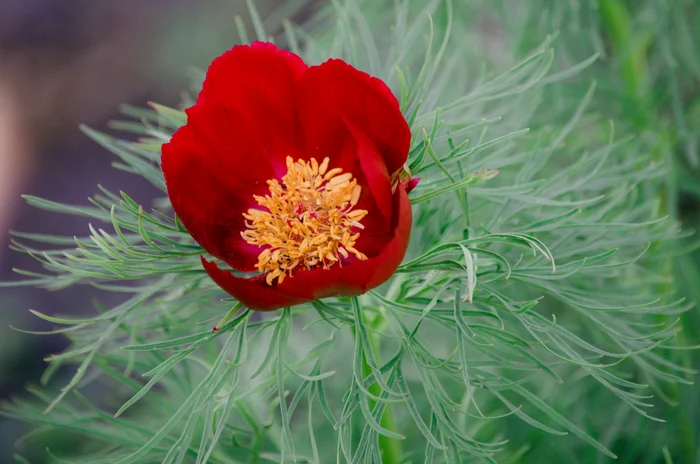
Steppe peony has dill-like leaves
Nearby you can also visit other tourist attractions such as the Enisala Citadel – the only medieval fortress left standing in Dobrogea -, the Cocoșu Monastery – built on the site of a place of worship dating from the end of the 19th century -, the Celic-Dere Monastery – within which there is a church built in modern classic style -, Geamia Mestan Aga, Memorial House “Panait Cerna” or the archaeological site “Cetatea Dinogetia” from Garvăn where ruins dating from different periods can be seen.
Hagieni Nature Reserve
Located in Constanța County, the Pădurea Hagieni Natural Reserve seems like a place out of a story – a story that not many Romanians know much about, especially since the road to get there is not marked. The road to the reserve is paved and more difficult to access, according to Discover Dobrogea. The entire forest, located approximately 10 kilometers from Mangalia, has an area of 586 hectares, the area of the reserve being 395 hectares. In the spring, especially in May, the forest fills you with more fragrant smells: from snowdrops to woodpeckers or, in May, peonies.
In the Hagieni Forest, the steppe peonies complement the color of nature with their bright and vivid red. With delicate leaves, similar to the dill plant, the steppe peony can be found on the two tourist trails in the Dobrogean forest, which gives you the feeling of being in the mountains. The first route takes you to the Pănoiu area, where the lake of the same name is also located, and the second one passes through the middle of the reserve and is called the Cazane area, where there are dogwood and oak forests. Those who want to visit this reserve should know that barbecues cannot be made in the forest, but they can enjoy a picnic in the open air. Became a protected area since 1970, the reserve is made up of over 840 species of plants, being also the habitat of numerous species of plants and animals – a paradise especially for botanists, but also for zoologists and tourists who do not have to pay any fee to he enjoyed the riches of nature.
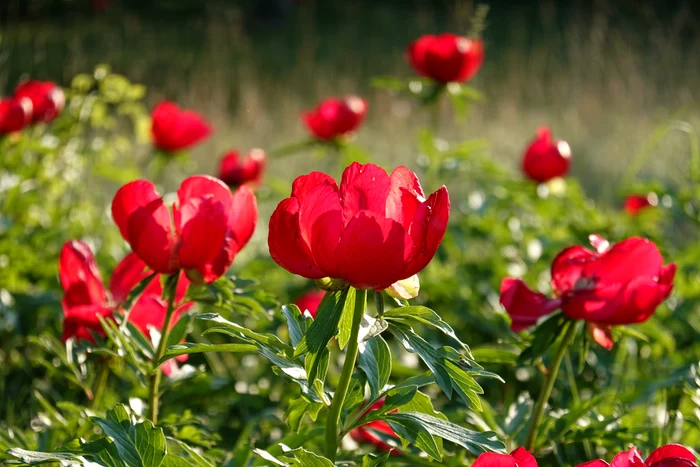
Romanian peonies are plants protected by law
Near the reserve you can also visit the Limanu Hagieni Monastery, the Limanu Lake, the Limanu Cave, as well as the ruins of the Albești Fortress, located in the west of the Hagieni Forest.
Up in Peony Hill
Another protected area of national interest is the Dealul Bujorului Natural Reserve, located in Tulcea county. The area is one with clearings, meadows and sallow forests, being located on the southern slope of Bujorului Hill. Here we meet the national plant of Romania – the Romanian peony. It is a species of wild peony that has been included in the “Red List of Higher Plants”. “The peonies here are found in areas of meadows semi-shaded by centuries-old oaks. There are so many peonies that you have the impression that you have arrived on a huge red carpet, beautifully smelling and elegant. You sometimes get the impression that everyone has been busy cultivating a wonderful, huge garden of peonies. What is the best month to see this whole show? May, but you can find equally beautiful peonies in June, in the heat”, it is stated on the Babadag City Hall website. The authorities also mention the fact that in the reserve there is a sub-Mediterranean type forest “which shelters a lot of species of birds and animals on the verge of extinction”, being declared a natural reserve not only because of this forest, but “especially because of the variety of wild peony that grows in freedom”.
“It's worth going there because it's so beautiful that you don't even know where to look, especially during the period when the peony blooms, hence the name Peony Forest. The surrounding area is typical of Dobrogea – slightly high hills and covered with equally low vegetation (usually), interrupted by portions of forests and “eyes” of meadows full of flowers and tall grasses. Many have compared the relief to the African savannas, and sometimes in the heat of summer, it really does seem that way”, the mentioned source also states. Nearby you can also visit the “Valea Oilor” bat reserve, and further, going towards Babadag, the Vârlan Cave. At the same time, the Babadag Oriental Art Museum is also located in the mentioned town, dedicated to the culture of the Muslim Turks and Tatars who lived in Dobrogea and whose descendants still live in this area.
Photo: Shutterstock
