
When does the Easter post start and how long in 2025? What significance does and what role the white week plays during this period? Find out from the following material the importance of food rules, traditions, customs, but also the most popular superstitions related to this period.
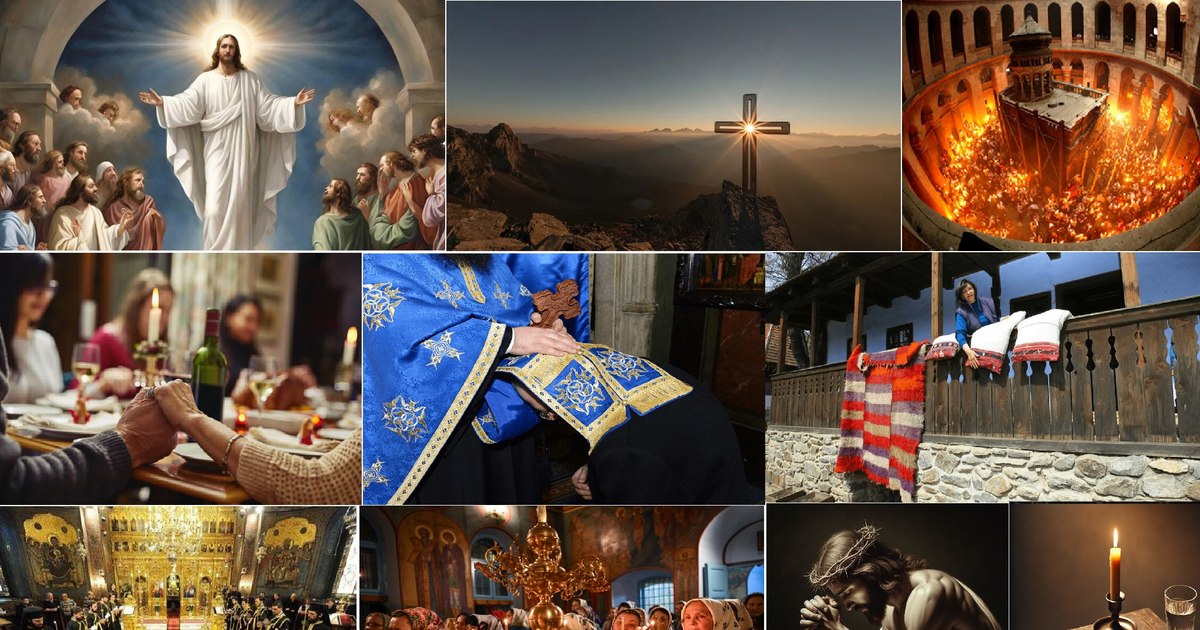
Easter post, period of spiritual training, reflection, prayer and good deeds DMS collage
The Easter post, also known as the Great Post, is the longest and most harshest post in the Orthodox calendar. In 2025, this period begins on March 3 and ends on April 19, with a duration of 40 days, to which the Passover Week is added, thus totaling 48 days.
However, the preparation for the post begins earlier, with the White Week, which takes place between February 24 and March 2.
What is the white week and what has special
The White Week, also known as the Brânzei Week, is the last week before the Great Lent. During this period, believers give up meat, but can consume dairy, eggs and fish. It is a transitional stage, both in a diet and spiritual point of view, meant to prepare the body and soul for the rigor of the fast.
This week also has a strong symbolic dimension, marking the left of the Sec – the moment when the believers give up foods of animal origin and are preparing for the purification of the soul.
The White Week culminates with the Sunday of the dry cheese (March 2, 2025), the day when the believers apologize to each other, to enter the posts reconciled with the fellows, as well as with God.
The structure of the Easter post
The Great Post is divided into two big periods:
The post itself (March 3 – April 12, 2025) – the 40 days reminiscent of the post held by the Savior Jesus Christ in the wilderness.
Passion Week (April 13 – 19, 2025) – the last week before the resurrection, dedicated to recall the Savior’s sufferings.
During this period, the believers are called to a harsh fast, prayer and good deeds.
Food rules in Easter post
Easter post is considered the most severe of the posts over the year. During its duration:
- It completely gives up meat, eggs, milk and other products of animal origin.
- It is eaten without oil and without wine on certain days, especially the moon, Wednesday and Friday.
- The consumption of fish is allowed only by the Good News (March 25) and Flowers (April 13).
- The week of passions is the strictest, and some believers choose the black post in Great Friday, the day of the Savior’s crucifixion.
Post, more than food restriction
The post is not just about giving up certain foods, but also represents a time of spiritual purification. During this period, it is recommended:
- The most common prayer and participation in religious services.
- Confession and communion, as forms of strengthening the connection with God.
- Removing negative thoughts, avoiding conflicts and judgment of others.
- Committing good deeds and supporting those in need.
The significance of the Easter post
The Great Post is a period of reflection, repentance and soul training for the Resurrection of the Lord. This spiritual journey gives us the opportunity to cleanse our soul and to get closer to God.
In the Christian tradition, the Great Lent evokes the 40 days spent by Jesus in the wilderness, as well as his sufferings before the crucifixion. Through fasting and prayer, the believers symbolically restore this path of purification, preparing for the most important holiday of Christianity: Easter.
Traditions and customs specific to Easter Page
Over time, the Great Lent has become a rich period in traditions and customs, each having a special meaning:
“The Land of the Secului” It marks the passage to the post through a rich meal, gathering the whole family, for a moment of communion.
Spring cleanliness, Practiced in many regions, it symbolizes not only the outer order, but also the purification of the soul before the Easter.
Passion Week It is a moment of profound spiritual experience, marked by special services, such as the denia of the 12 Gospels and the Lord’s Prohod.
The black post From Friday Mare is an act of profound humility, many believers choosing to respect and pass under the Holy Epitaph, in godliness.
Superstitions from Easter post-beliefs kept along the generations
Easter post is not only a period of bodily and soul purification, but also a time loaded with traditions and superstitions transmitted from ancients. Over the centuries, people have created and respected many beliefs meant to bring them health, plenty and divine protection.
The beginning of the post – the signs of a good year or full of attempts
It is said that who begins the post must keep it to the end, otherwise it risks attracting the misfortune on it. In some areas, people avoid brushing clothes on the first day of fasting, believing that they so “Dirty” the soul instead of cleaning it. If it rains on the first day, it is a sign that the year will be fruitful and full of blessings.
What and how you eat – traditions that influence luck
The first day of fasting is considered crucial. Many believe that it is good to eat nothing until sunset, to have divine protection. Others say that honey and nuts consumed on this day assure you a sweet and carefree year.
The days of the post – what to do and what to avoid to attract luck
In the people, it is believed that the nail cutting or the hair trimming can bring disease or weakening of vital energy. Also, the holidays in the position are considered sacred, and physical work is seen as an affront brought to the Divinity. On the Great Thursday, igniting the fire before the sunrise is considered a bad sign, which is said to attract misfortunes on the house.
Big Week – Tests, prohibitions and divine signs
As the post approaches the end, superstitions become more and more numerous. Good Friday is one of the most sacred days, and tradition says that whoever looks in the mirror on this day risks seeing the devil’s face. The tears shed on the Great Friday are considered a bad sign, and those who cry may have trouble all year. In contrast, bathing in cold water on this day is regarded as a ritual of purification, meant to bring health and vitality.
This period is not, therefore, only a time of food restrictions, but also of deeply rooted traditions, where popular beliefs are harmoniously interwoven with spirituality. Whether you choose to follow them or look at them as fascinating elements of popular culture, these habits contribute to the charm and mystery of a stage of soul reflection and training.
Conclusion
Therefore, Easter post represents more than just a renunciation of certain foods; It is a period of introspection, prayer and closeness to God. In 2025, it begins on March 3 and ends on April 19, being preceded by the White Week – a transitional stage for purification and gradual renunciation.
Through the post, the believers are preparing not only bodily, but also for the great feast of the Resurrection of the Lord, a moment of hope and light in the Christian faith.
