
“What are we doing today?” is the question that parents obsessively hear at the end of the week. Many respond with a sigh and an emergency plan: mall, tablet or visiting relatives. But the truth is, a child doesn’t need Disneyland to enjoy an adventure. It needs a story.
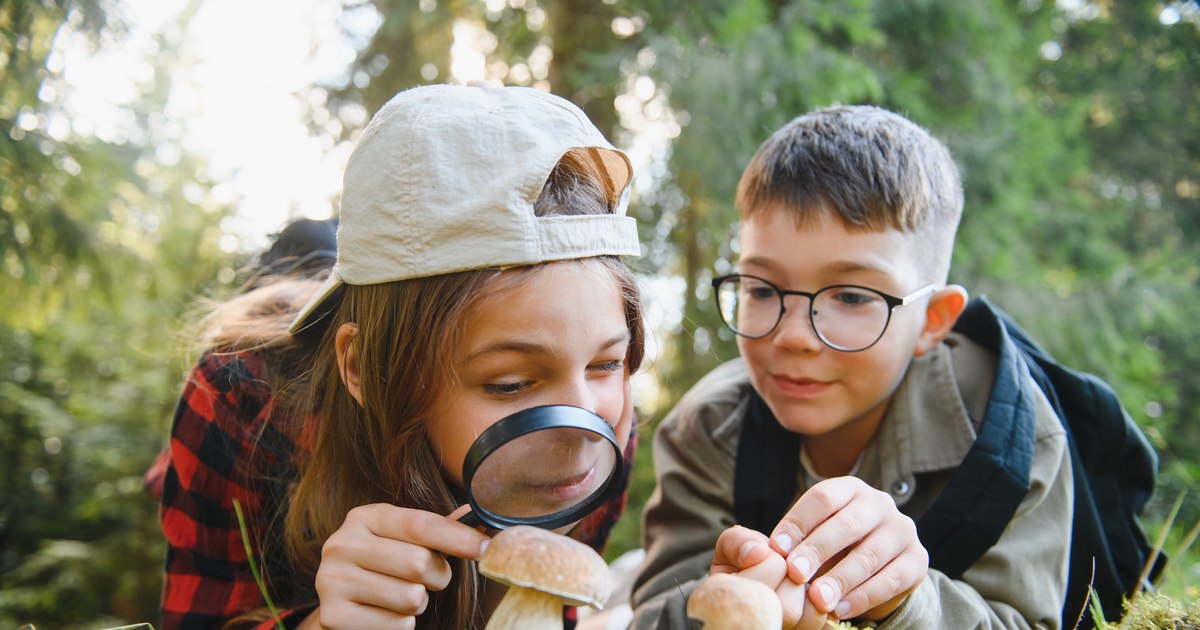
It turns a walk into a real botanical experience. PHOTO: Shutterstock
Educational experts say that role-playing and storytelling are the most effective ways to spark curiosity and cement memories. “Children learn through stories and whole-body experiences. If you invite them into a story, they no longer feel like they’re participating in an imposed activity, but like they’re the main characters”explains the American psychologist Alison Gopnik in the book “The Scientist in the Crib”. Romania has spectacular places – museums, fortresses, nature trails – but the key is the way they are “packaged” for the little ones. A mundane visit can become an adventure with dragons, knights or science explorers.
The transformation does not require complicated scenographies. A simple narrative thread, told with conviction, is enough. The British psychologist Jerome Bruner, who studied the connection between story and learning, emphasized that people, regardless of age, make sense of the world through narratives. “A dry fact becomes memorable when integrated into a story”he wrote in the book “Acts of Meaning”. Thus, a walk through the park becomes a “hunt”: three types of leaves, an insect and a tree with scabies must be found. A short hike to the mountain can be a “rescue mission”: you have to reach the cabin to deliver the “secret message”. Even teenagers, hard to get out of their digital zone, can be caught up with more sophisticated stories: escape room-type urban routes, geocaching or digital treasure hunt.
Why is this approach likely to succeed? The story gives meaning and involvement. The children do not feel that they are being “walked around”, but that they are participating in a mission where they have an active role. The result? More energy, less complaining and lingering memories. Psychologist Daniel Siegel, author of the volume “The Whole-Brain Child”, shows that experiences involving emotions, imagination and movement are those that are permanently fixed in the memory of children. The adventure built through the story ticks all these criteria. Basically, the parent doesn’t need big budgets or complicated technology, but creativity and a willingness to get into the game. When adults rediscover their imaginations, the whole world becomes a playground. A mundane walk does not exist unless we let it be mundane. With a story, a role and a mission, even the drive to the supermarket can be a “journey through the urban jungle”. Children demand adventures, and parents can be the best directors.
DESTINATIONS THAT COME TO LIFE
How do you give children the feeling that they are in the middle of the story
Museums are considered by many to be the first victims of children’s boredom. The long halls, hard-to-read storefronts and solemn tone seem made for adults, not children. And yet, the “Grigore Antipa” National Museum of Natural History in Bucharest can become a real theme park if parents present it differently. “Today we are explorers who have to find three animals with superpowers: one that flies at night, one that has huge teeth, and one that lives in water but breathes air” can be the challenge. The children start searching, and the museum becomes a playground.
Abroad, large museums have begun to officially apply this recipe. The British Museum has themed trails for children, where you don’t have to see everything, just a few objects presented as pieces in a story. The model works because it leaves room for the imagination and doesn’t suffocate visitors with information.
Fortresses and castles with secret missions
Romania abounds in medieval fortresses that seem straight out of movies, but for children, simply walking on the walls is not enough. Transformation begins when parents invent a mission. For example, at Râșnov Fortress, each tower can be a level to conquer. Children have to discover the “secret door” or “spies window”. In Alba Carolina, bastions can become checkpoints in an exploration race. Thus, history is no longer about rulers and years, but about puzzles solved on the spot.
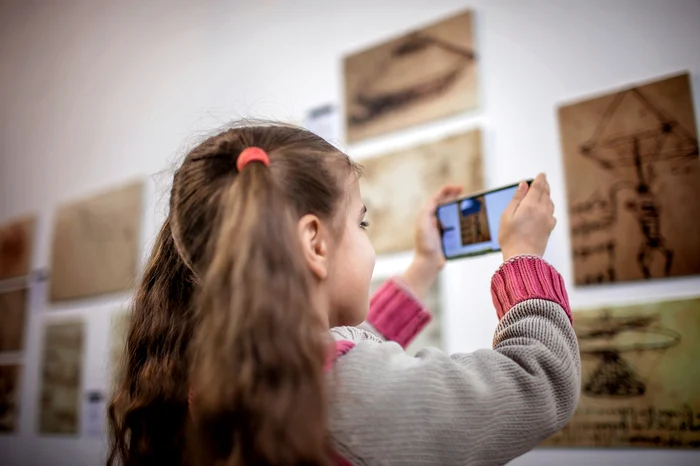
A museum visit can always become interactive with a little imagination. PHOTO: Shutterstock
Education through role play also has cognitive benefits. Since the beginning of the 20th century, the studies of the pedagogue Lev Vygotsky show that when children play roles, they develop abstract thinking and the ability to plan. Therefore, the “conquer the fortress” mission is not only fun, but also an exercise in strategy.
Nature, a setting for explorers
In Romania, nature offers a spectacular scenario for stories. The Mud Volcanoes of Buzău can be presented as an “alien planet where the Earth breathes”. Children feel they are stepping into a sci-fi world, and the geological explanations can be reduced to simple images: “Gases rise from deep within the Earth and push mud to the surface, like a boiling pot.” At Cheile Turzii, the steep walls can be described as the walls of a gigantic fortress. The children become “scouts” who have to go through the “mountain tunnel”. In the Danube Delta, the boat is no longer just a boat, but “the ship of explorers looking for rare birds”.
In Finland or Norway, tour guides often use this technique. Family trips are billed as “hunting trolls in the forest” or “hunting for gold in the mountains”. In France, Puy du Fou is a historical theme park where actors recreate medieval battles and tales of knights. In Germany, science museums include play areas and hands-on experiments. Romania does not yet have the same infrastructure, but parents can make up for it with imagination. Any destination comes alive when staged like a theater. Kids get into the story, parents get into the game, and boredom fades away.
EXPERIMENTS AND GAMES ON THE PLACE
Nature as a laboratory, the city as a playground
Education is not only done in schools. Sometimes the most valuable lessons come on seemingly mundane walks, when parents get kids to observe, compare, and create. A herbarium is a classic example: you collect leaves, press them, stick them in a notebook. But in the digital age, the game becomes more attractive with apps like iNaturalist, which identify species on the spot. The child feels that he is making real discoveries, not just collecting “dead leaves”.
Hikes can become cartography workshops. Children draw maps, mark “magical” places and invent legends: “here lived the forest dragon”, “here was the enchanted bridge”. Thus, the orientation exercise also becomes an exercise in imagination. Even in the city, the games can be simple and educational: who can find the most symbols on the buildings, who can identify three types of birds, who can make it back home without help. Educational psychologists say these micro-experiments develop critical thinking and attention to detail.
In Finland, schools include similar activities in the curriculum: science lessons are held in the forest, with practical exercises. Romania does not yet have a strong tradition, but parents can bring the school into nature every time they go outside. No need for sophisticated laboratories. Nature, the city and imagination are enough to create small experiments that stay with the child for life.
TECHNOLOGY AS PREPARATION
From virtual tours to digital treasure hunt
Technology is often seen as an enemy of childhood. But used creatively, it can be the best ally of discovery. A simple example: virtual museum tours. Before going to the Antipa Museum, children can explore the collections on the official website. Thus, during the actual visit, they recognize the exhibits and feel like detectives coming across “treasures” already seen online.
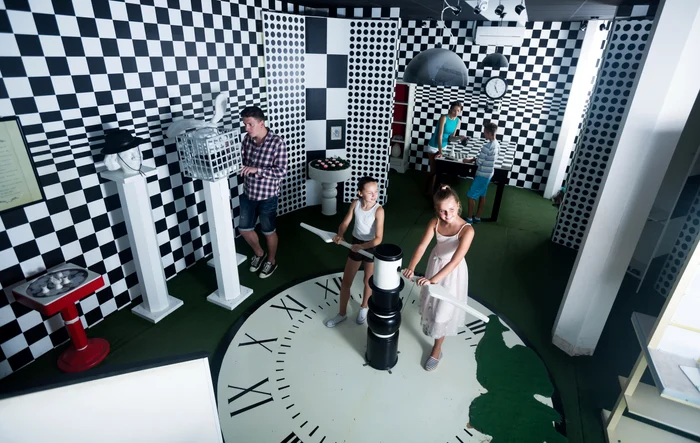
The experience of an escape room is one of the most sought after by teenagers PHOTO:Shutterstock
Questo apps turn the city into an escape room game. In Bucharest there are trails with historical stories: children receive clues on the phone, discover buildings and solve puzzles. In Cluj and Brașov, digital treasure hunts turn a walk through the center into an urban adventure. Geocaching, a global GPS-based game, takes things even further: people hide “treasures” (boxes of notes or small objects) that others must find. There are already active communities in Romania, and children love the feeling of being part of a secret club of explorers.
In the Netherlands, many schools use these apps on field trips. Teachers say technology doesn’t distract, it focuses: Kids pay attention to details because they know every clue counts. We don’t have to run away from screens, just learn to use them as gateways to reality. When the phone becomes a compass in an adventure, the child discovers that the offline world is much more spectacular.
THE TROPHY. Small souvenirs, big experiences
The adventure does not end when the child says “I’m bored”. It ends when he holds an object that reminds him of her—the trophy, however small, turns the experience into a memory. It can be a stone collected from the trail and painted at home. It can be a dry leaf turned into a bookmark. Or an improvised diploma: “Today, Miruna became an explorer of the Turzii Gorges”.
Even psychologists talk about the “souvenir effect”: tangible objects fix emotions and turn fleeting experiences into lasting landmarks. “A child remembers a trip more easily when he has an object that reminds him of it. The souvenir becomes an emotional anchor“, writes Daniel Siegel in “The Whole-Brain Child”.
In Germany, many children’s museums offer “explorer kits”: a small book, sticker or badge that children receive at the end. In Romania, parents can invent their own rituals. The explorer diploma, the family photo at the end of the trail, the weekend journal—all are ways that the adventure gains closure and value. Children do not need expensive toys. They need stories that end with symbolic trophies. Thus, weekends become not only time spent, but stories lived and preserved.
