
The presence of texts written by women in the Baccalaureate curriculum is non-existent, and the one in school textbooks is still shy. And to get out of the vicious circle of the canons of great writers, a dialogue between the competent parties is necessary to understand the importance of women in our literature.
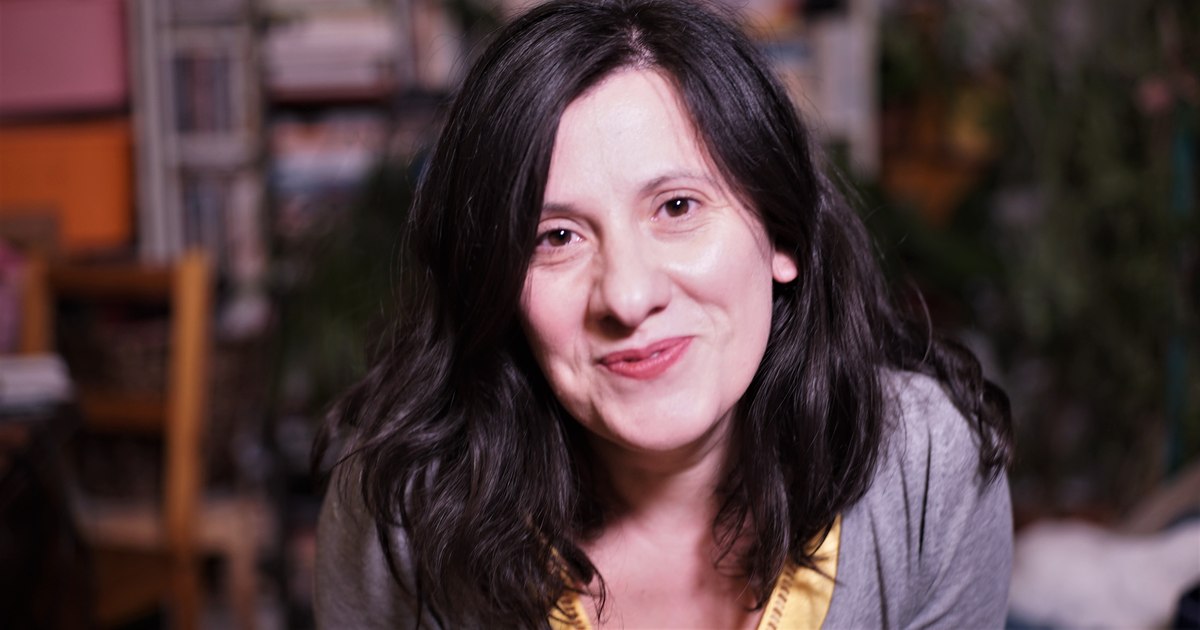
Elena Vladareanu Photo by Andreea Lăcătuș
In an interview for “Weekend Truth”Elena Vlădăreanu, one of the most acclaimed writers in Romania, spoke about her career and about misogyny in Romanian literature, including in the Baccalaureate curriculum, where no female writer is present.
“Weekend Adevărul”: The library and implicitly reading were two key elements of your adolescence. How was this passion for a lot of reading born and what books entered your heart during that time?
Elena Vlădăreanu: In 1989 I was in the second grade. I caught this whole transitional period during high school and adolescence, and literature was the only accessible artistic part – we were in Medgidia, there was no theater, the cinema was about to be closed. The passion for reading started when I was in the 7th grade. Things got even more serious from 9th grade. In the 1990s, the first Romanian translations of Kafka's books appeared, “The trial” and “The Castle”. There were those very beautiful editions published by the RAO Publishing House. I really wanted to escape from that everyday gray of Medgidia and for me literature represented an accessible gateway. It was handy to read. I obviously had a certain sensitivity, like any teenage girl. Mimetic, I began to write. The first book I really liked was a volume of poems by Bacovia, which I still have. I took it with me around the house, I read it to my colleagues. I probably somehow resonated with Bacovia's sadness. Before Bacovia, I was captivated by a volume of Chinese stories, I bought it one day when I was in Bucharest, from a bookstore on Calea Victoriei. It was a different world from the stories I knew. I liked it too “Great Recreation” of Mircea Sîntimbreanu.
What was the most complicated book you've read?
I was at the end of the 11th grade, I was preparing to go to the 12th grade. And that summer I read “The Castle” of Kafka and “Ulysses” by Joyce. And how long I read “Ulysses”, I had a migraine, although I had never had one before. I think it was the hardest book and I loved it at the same time. But if I hadn't read it then, I don't think I would have read it later, because I wouldn't have had time for it.
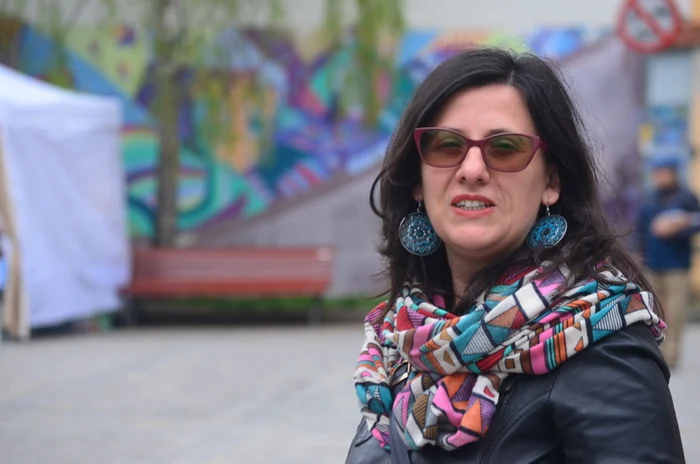
Elena Vladareanu Photo Maria Orban
Courage from the cenacle
When did you first feel that you could be a writer?
Quite late, after I came to Bucharest and I started reading literature written by some authors whom I had already seen in various places. I used to go to the cenacle or to various book evenings. Very soon, after I entered the cultural press, I also started doing interviews, and this helped me a lot because it forced me to read the books of the people I was going to talk to. They were writers that I might have had a harder time reaching if I didn't have this professional status as a journalist. Going to the cenacles and listening to others, and from a feeling that I could also write, that's how I started to do it. Around 2001 I asked myself if I could publish a book.
Which female writers from outside Romania inspire you the most?
I really liked Doris Lessing. Among the writers I also liked a lot I would mention Chimamanda Ngozi Adichie and Zadie Smith. Now I'm reading Bernardine Evaristo. I admit that in recent years I've read less fiction, I've read a lot of theory. But even there, in all the theory I've read, it seems to me that I find myself rather in the academic discourses written by female researchers.
Why is it infinitely more difficult in Romania for a woman who makes art than for a man?
It's hard for me to speak in general. I will talk about myself. why is it hard Because there are a lot of them. This whole work mechanism is a gear that involves not only office work. All this gear also involves all that invisible work that falls on the woman's shoulders – housework, all that means raising and educating children. As a rule, women are the ones who take care of taking the children to school, preparing for the holidays, going to the doctor with the children, and so on. I started my doctorate at 38, a very good age to do it, because at this age somehow things become connected. You know very well why you want to do a PhD and why you want to research that field, it is assumed that you know it. But at this age it's clear that you have a job that you can't give up, you have a family, you have other projects that help you live. And things are hard because there is really no support in such situations.
A step forward
In December 2018, you initiated the “Sofia Nădejde Days” project, under the auspices of which the “Sofia Nădejde” Awards Gala for Literature Written by Women was held. How much did feminism in Romanian literature change this project?
If there were many negative criticisms in the first edition, in 2019 this did not happen again. Everyone agreed that such a project was needed. I think that in recent years, the easy access to a feminist literature has led to a change in our literature, but also to a change in the topics that are written about. In recent years we have seen more and more hot topics addressed in volumes of literature. I'm thinking of Medea Iancu or Răzvan Andrei. There are people who build a discourse about topics that were not in the mainstream.
The Romanian literature curriculum for the Baccalaureate is male only. How can the female percentage increase in this program and in our textbooks?
Yes it is. There are only men in the BAC curriculum. But textbooks began to change. I look at my daughter, who is in 6th grade, and she has a very good literature textbook, where they also have contemporary literature written by women. And that's important. Teachers are also very important in this literary act. We should probably have some meetings between the associations and those from the Ministry of Education to increase the percentage of female writers in the BAC curriculum and textbooks. There should be a lobby from the associations, to somehow put pressure on the Ministry of Education to change things. And at these meetings, people should understand why the literature written by women is important in the whole of Romanian literature. Because if we remove it and it is not important for the Baccalaureate, then it is as if it does not exist. But it's difficult, because the syllabus for the exam was made according to a canon, according to the big names of literary history criticism in Romania. It's a circle from which we can only get out through dialogue and pressure.
Who is Elena Vlădăreanu?
Elena Vlădăreanu (43 years old) debuted with poetry in the early 2000s; since then, he has published several volumes of poetry, including “private space. a handbook” (Romanian book, with drawings by Dan Perjovschi), “Non Stress Test” (Literary Betting House), “Money. The work. Free time” (Anxiety), “wonderful world of disney” (Nemira, 2019).
Texts of different genres – poetry, prose, dramaturgy – appeared in several anthologies, in Romania and abroad. Also, in the theater, he collaborated with Robert Bălan on several projects.
Published by Nemira Publishing House in 2021, “August” is his debut solo volume of prose and has been widely acclaimed. In December 2018, he initiated the project days Sofia Nădejde, under whose aegis the Awards Gala was held annually “Sofia Nadejde” for Literature Written by Women.
