
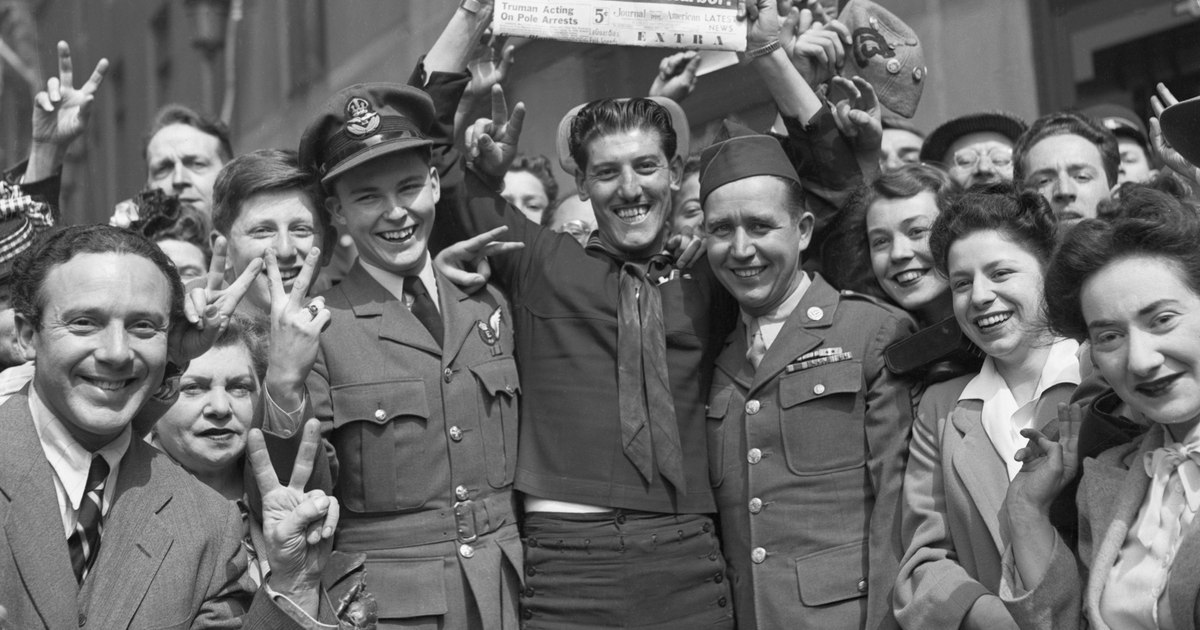
United under the same flag, the countries of the European Union, but not only, celebrate unity and peace in May, although the war continues on the old continent.
Victory Day is celebrated on May 8. Photo: Getty Images
Europe Day – a day when peace and unity are celebrated in an attempt not to repeat the catastrophes of the 20th century and to build a better present and future. But above all this, the echo of Russian propaganda and war still hovers.
Two different institutions
The first day of celebration of Europe was declared in 1964, on May 5, but not by the European Union (EU), but by another distinct institution – the Council of Europe (EC). The two institutions are not one and the same, but different. However, they generally pursue the same goals: peace, unity and European and even international cooperation. The confusion arose, among other things, due to the fact that the European Union adopted, towards the end of the 20th century, the European flag created in 1955 for the Council of Europe, as well as the European anthem. Established in 1949, four years after the end of the Second World War, the Council of Europe is an international organization whose aim is to support human rights, democracy and the rule of law in Europe. Today, the organization is based in Strasbourg, France, alongside that of the European Court of Human Rights – a body established by the EC that operates on the principles of the 1953 European Convention on Human Rights.
Since the interwar period, the great politicians of Europe promoted the idea of an organization that would bring together the European countries in the form of a “federal union” aimed at solving the common problems of the member states. Europe had been devastated by a war only ten years earlier and was still trying to recover, economically and more. The suggestion of the creation of the Council of Europe was made public in 1943 by British Prime Minister Winston Churchill in a speech broadcast on BBC radio. At that time, Europe was again ravaged by a new world conflagration that would decide its fate for (at least) the next five decades. A few months after the end of World War II, Churchill promoted this idea again in a famous speech given at the University of Zurich. Of course, he was not the only one promoting the creation of this council meant to make Europe stronger and maintain peace on the continent.
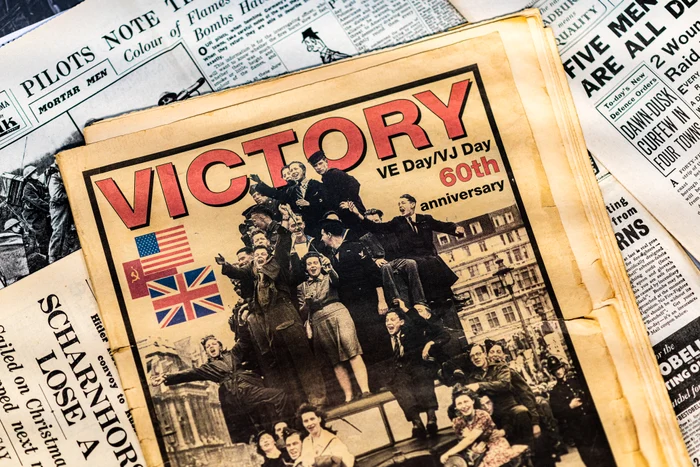
The Allied victory came after 6 long years of war that decimated Europe. Photo: Shutterstock
While some hoped that this body would be a guarantee that the horrors of the just-ended war would not be repeated, including the human rights violations committed by the Nazi regime, others hoped that this would make the democratic regimes of Europe stronger together and make common front against the totalitarian regimes of the Soviet-dominated Eastern Bloc. Finally, on May 5, 1949, the international organization called the Council of Europe was established following the signing of the Treaty of London, which stipulated the basic values for the functioning of the new European institution: democracy, human rights and the rule of law.
Russia and the Council of Europe
Today, the Council of Europe cannot make laws, but the activity of politicians in the first years after the establishment of the council led to the creation of the European Union, of which Romania has been a part since 2004. In fact, the Council of Europe is a kind of anteroom of the European Union – no country did not accede to the EU without having previously been a member of the EC.
Russia was a member of the Council of Europe from 1996 until 2022, when the institution decided to exclude it from the EC amid the military invasion of Ukraine. In fact, Russia had violated the organization's statutes as well as the European Convention on Human Rights. In 2014, it was suspended following the annexation of Crimea, but five years later the right to vote was restored.
The European Union and the Schuman Declaration
European integration and cooperation have been the goals of Europe's great politicians since the end of the 19th century, but the fulfillment of these goals gradually became an emergency with the two world wars that decimated the continent on several levels, including social and economic. With the end of the second world conflagration, the need to conclude treaties and agreements becomes one of the most important priorities of European countries, initially of those in the West, as the East was predominantly under Soviet domination. Even if the danger represented by Nazism had been eliminated, that of communism spread over almost half the continent remained. Just as the Eastern Bloc countries had an economy of self-help and self-sufficiency, the rest of Europe needed closer ties and understanding, peace and collaboration, so that both the economy and social cohesion would recover.
The European Union celebrates Europe Day on May 9. Photo: Shutterstock
One of the first important steps that led to the creation of the European Union as we know it today is the Schuman Declaration (also known as the Schuman Plan). This statement made by French Minister Robert Schuman on May 9, 1950 (celebrated by the European Union as Europe Day) actually represented the proposal that coal and steel production in France and West Germany be organized by a single authority, which later became European Coal and Steel Community. “The gathering of the countries of Europe requires the elimination of the old rivalry between France and Germany… having such solidarity in production it becomes clear that any war between France and Germany is not only inconceivable but materially impossible”was argued in the Schuman Declaration written by Robert Schuman and Jean Monnet, founders of the European Union.
Both the Federal Republic of Germany (West Germany) and other states in Europe responded positively to the proposal in Schuman's statement, so that a year later, on April 18, 1951, the Treaty of Paris was signed – the act through which the European Coal and Steel Community is born, which lays the foundations of the European Economic Community, the predecessor of today's European Union.
At the level of the European Union, Europe Day was introduced in 1985, being established on May 9, actually commemorating the day of the Schuman Declaration. On the occasion of this day, all the institutions of the European Union in Brussels and Strasbourg open their doors to the general public: the European Parliament, the Council of the European Union, the European Commission, the European Economic and Social Committee (EESC), as well as the European Committee of the Regions (CoR). Europe Day is a public holiday for all employees of the EU institutions, having this status also in Luxembourg and Kosovo. In Romania, this holiday is also celebrated on May 9, the same day as our country's State Independence. “On May 9, 1950, 74 years ago, the French Foreign Minister and future President of the European Parliament, Robert Schuman, proposed the creation of a European Coal and Steel Community, for countries to share the production of coal and steel to make the war “not only unthinkable, but also impossible from a material point of view”. Robert Schuman's declaration led to the creation of a common market in coal and steel, but it also led to an economic community that would gradually become a political union. By taking this historic step, the founding members (Belgium, Federal Republic of Germany, France, Italy, Luxembourg and the Netherlands) laid the foundations for a lasting peace and a united Europe”, it is mentioned on the official website of the European Council. In Strasbourg, home to some of the institutions of the European Union, the entire month of May is dedicated to celebrating Europe and more than 50 free events are organized in the tenth edition that marks the celebration of European solidarity and unity.
Victory Day, hijacked by Russian propaganda
Just one day before Europe Day, Victory Day is celebrated – May 8, marking the end of the Second World War by the definitive capitulation of Nazi Germany. The event, which was broadcast on radio around the world, led to celebrations especially in the United Kingdom of Great Britain and Northern Ireland and North America, where people took to the streets, waved flags, hugged and congratulated tears in their eyes and felt the taste of peace after years of war, famine, pain and death. “God bless you all. This is your victory. In our long history, we have never seen a day greater than this. Everyone, male or female, did their best”argued Winston Churchill in one of his speeches on May 8, 1945.
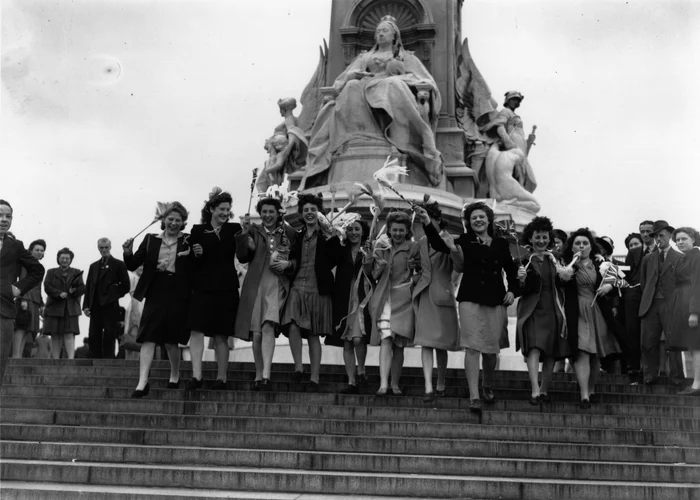
Victory Day marks the capitulation of Nazi Germany to the Allies. Photo: Getty Images
After six years of war, an entire continent breathes a sigh of relief, leaving behind the days of terror and fear, allowing itself to hope for a bright future, for peace and tranquility. Germany had capitulated to the Allies, including the Soviet Union. “Tomorrow our great Russian allies will celebrate victory and after that we must begin the task of rebuilding (…)”the British Prime Minister also claimed in his speech on May 8, 1945.
Putin's propaganda
The act of capitulation of Germany to the Allies was signed in the evening of May 8, 1945, but due to the time zone difference, at the level of the Soviet Union this day was celebrated on May 9, and later it was taken over by the Russian Federation, since 1991, being celebrated with pomp especially under the leadership of Vladimir Putin. In fact, during the Soviet Union, Victory Day was celebrated throughout the Eastern Bloc, and in Ukraine and Soviet Russia it was declared a public holiday in 1963 and 1965, respectively.
In Romania, May 9, marking Victory Day and Romania's State Independence Day (achieved in 1877), was a double celebration during the communist regime and a propaganda occasion, especially under the leadership of Nicolae Ceaușescu, who wanted to support the importance of the communist regime in the country's struggle for independence. However, with the fall of the regime, Romania celebrates Victory Day on May 8, and Europe Day on May 9.
Currently, in Russia, Victory Day is one of the most important public holidays, especially since about 27 million people in the Soviet Union lost their lives during the Second World War, which the Russians call the “Great Patriotic War”. During the Soviet Union, this day was celebrated both in 1945, 1965 and 1985 with large military parades in Red Square, a tradition also taken over under the leadership of Vladimir Putin as an opportunity to reiterate Russia's strength. In fact, the largest public demonstrations since the dissolution of the Soviet Union took place in 2005 and 2015 on the occasion of the Victory Day celebration, being in fact a powerful means of propaganda used by Putin. Even in 2024, when Russia continues its war against Ukraine, the Red Square parade has taken place, an opportunity for Putin to try to raise the nation's morale and show the importance of military action.
