
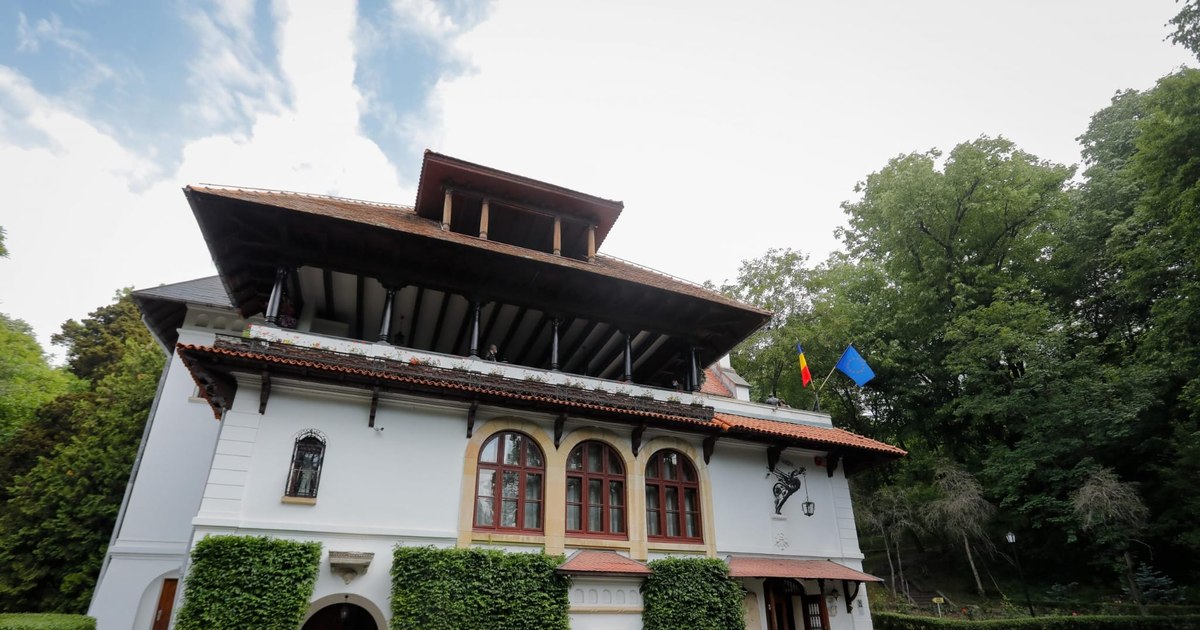
Villa Florica from Ştefăneşti-Argeş, the place where the Brătian family was born and lived and where the “Brătianu” National Museum has been operating for over four years, will be rehabilitated from the ground up as part of a major project.
Villa Florica, a place full of history PHOTO Denis Grigorescu
The rehabilitation will be carried out thanks to a loan from the Development Bank of the Council of Europe, with the help of which a total of eight major cultural buildings will be rehabilitated and modernized. The framework loan agreement was signed more than two years ago, on June 9, 2022, and work must be completed by 2029 at the latest.
The total net cost of the project amounts to 270 million euros, of which 216 million euros from the Council of Europe Development Bank loan and 54 million euros, a contribution from the state budget.
The project is divided into two sections. The first section aims at the in-depth restoration of six historical buildings: the National Museum of Romanian History in Bucharest; The Romanian National Theater and Opera – Cluj-Napoca; Villa “Florica” from Ștefănești – Argeș; “Vârnav Liteanu” mansion from Liteni – Suceava; Villa “Ion IC Brătianu” in Bucharest and the National Museum of the Anti-Communist Revolution of December 1989 in Timișoara.
The second section concerns the rehabilitation of the building of the “Marin Sorescu” National Theater Craiova and the construction of a new concert hall in Iași, intended for the Romanian National Opera Iași.
Quarantine room for deworming museum objects
At the Museum there are several dozen objects that belonged to the Brătiens family, some of them coming from the Goleşti Museum. A special exhibit is the holster used by Ion C. Brătianu at the Peace Congress in Berlin in 1878. It is the holster with which he signed the act confirming Romania’s independence. Ion C. Brătianu’s cane can also be seen at the “Brătianu” National Museum.
Mihai Alexandrescu, director of the “Brătianu” National Museum at Vila Florica, exclusively detailed for “Adevărul” some of the elements of the extensive restoration project.
“The approval documentation for the Intervention Works is very close to the end. The studies are very complex, very elaborate, including both the part of the total rehabilitation of the electrical, water, heating, air-conditioning and security installations, as well as the finesse part, so to speak, of restoring the wood and stone, the mansion having very a lot of wood on the inside and Albești stone on the outside, all original elements. The basements and cellars of the house will be carefully rehabilitated. Special attention was paid to the roof, the attic and the strength of the actual structure of the house, the drainage and the water supply. Now we are supplied with water from our own well, but we want a connection to the city network. I would also say that the Museum will, at the end, have a proper storage for the heritage elements, a quarantine room for deworming the museum objects received as a donation or recently purchased and a room for the institution’s archive, these spaces complying with all the regulations in force” , says Mihai Alexandrescu.
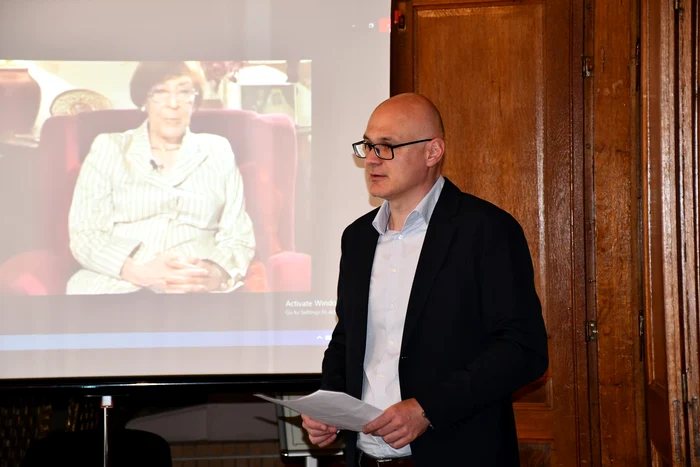
Mihai Alexandrescu, director of the Brătianu National Museum PHOTO Facebook
The rehabilitation of Villa Florica will also include the consolidation of the building with a special architecture. Architects with experience in the rehabilitation of historic buildings will also be co-opted into the project.
Raluca Turcan: “Vila Florica must regain its luster worthy of the history it witnessed”
“Adevărul” spoke about the rehabilitation of Villa Florica and its importance in Romanian history and with Raluca Turcan, Minister of Culture.

Raluca Turcan, Minister of Culture PHOTO Facebook
“As soon as we have all the approvals on the project, we will start the tender for the award of the technical project contract plus execution of works. We estimate that the works will start during the next year. The estimated duration of the works is two years from the moment of completion of the project. Being the place where the Brătiens, the most important political family of Romania, lived, Villa “Florica” is a space of particular importance for the national historical and cultural space. Through the Brătianu National Museum, which it hosts, Vila Florica must regain its luster worthy of the history it has witnessed”said Raluca Turcan for “Adevărul”.
The history of the house from Florica
The construction of the house in Florica began in 1858, after Ion C. Brătianu married Pia Pleşoianu, the new family establishing their home in the countryside.
The mansion in Ştefăneşti is named Florica in memory of the first daughter of Ion C Brătianu, Florica, who died at only 3 years old in 1865.
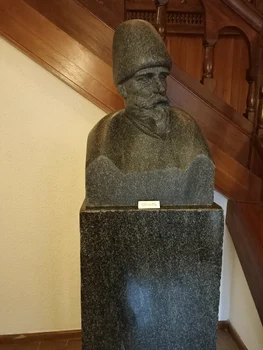
Image 1/10:
Bust Ion IC Bratianu Vila Florica photo Denis Grigorescu jpg
While Ionel Brătianu lived, no one touched the monumental library from Florica; after 1927, 5,000 volumes were moved from the library to the “Ion IC Brătianu” Foundation Library; after 1948, the Florica library was scattered and destroyed, only a very small part of the books being donated to the Romanian Academy and other libraries. Thousands of volumes were burned by the communists in the manor park for several weeks. In addition to books, the library and the mansion in Florica also had a special collection: the photos of the Brătianu family. And these were burned.
Villa Florica was retroceded in 2013 to the heirs of the Brătiens. On November 13, 2017, the villa was purchased for 1.82 million euros by the Ministry of Culture from the heirs of the Brătiens. On November 14, 2017, the building entered the administration of CJ Argeş, following the conclusion of a loan agreement between the Ministry and the County Council. Vila Florica returned to the administration of the Ministry of Culture in January 2020.
