

Oncologist Radu Serescu spoke openly about his own diagnosis. “Cancer is most often incidentally discovered”he says. It was diagnosed in 2024 with renal cancer, at just 38 years old. Without a genetic history, without classic symptoms, the disease was identified during the meal break, during an ultrasound performed by a colleague.
Dr. Radu Serescu, oncologist doctor became a photo archive patient
Renal cancer: when the disease does not discriminate
Radu Serescu is an oncologist. A young professional, with a career built in important centers, such as the Fundeni Institute, involved in international conferences, but also in a rigorous medical routine. The more surprising it was the moment when he passed from the role of doctor to that of an oncological patient.
“Being a medical professional, I do my analyzes annually and ultrasound, on average at six months. I stayed with this habit, seeing all the time and younger patients.he told us.
But the pandemia broke this rhythm. Fatigue, professional pressure and accumulated stress also disturbed the monitoring program.
“In Pandemic I worked as an oncologist in the County Hospital in Buzau. At that time, the patients did not have access to different investigations, they were scheduled and only the medical emergencies were made. The fatigue and the emotions then took me to the area of severe Burnout. That was the time when I did not do my ultrasound,”the doctor continued.
The diagnosis came in a lunch break, in 2024, at the clinic where he works:
“I had the conference that is June 1, every year, in America, in 2024, and when I returned, in the lunch break, a colleague offered to do my ultrasound. I was asymptomatic, I only knew that I had a cysts, and the biggest had a centimeter and a half. Being the lunch break, then I had a resident, CT scan ”
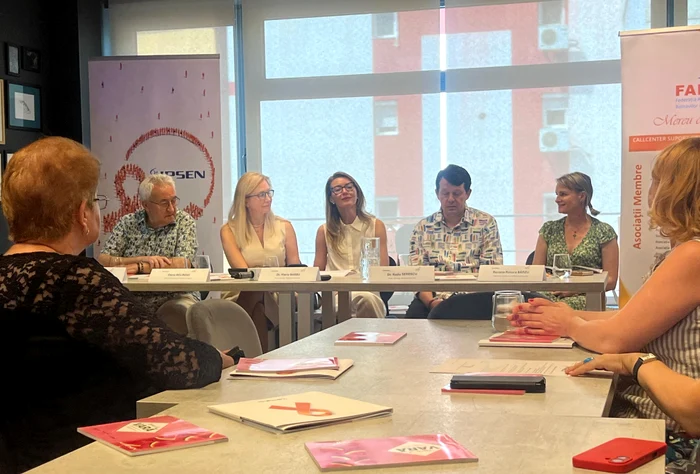
Dr. Radu Serescu (middle) in a medical conference Photo Adevărul
From the White Royal to the hospital bed
What followed? Diagnosis, operation, immunotherapy.
“The clinic in which I discovered with the disease was the one who prepared me as a resident of internal medicine, after which I did the residency of oncologist at Fundeni. My colleagues, I did the CT, I saw with my eyes. I calmed down that there were no metastases, but the stage was 2-3, I did not go, I did not go. immunotherapy ”,
Radu Serescu remembers.
The psychological impact on it and the family
For a doctor, maybe the diagnosis is easier to understand. But the real impact felt in the family.
“The emotional impact was not during the period when I was operated on or had cancer. At one point, my mother, in a moment of anger, shouted to the children and said: You do not see that your father has cancer? Then I have realized stress. Mom I do not think he slept during that period, June-July.”
His wife and daughter were deeply affected.
“Unfortunately, my seven -year -old girl, being at school, happened to have a delicate situation and then, she, finding out something about chemotherapy, went with me to the clinic and the doctor I did helped me with the girl, that she was very worried,” The oncologist confessed to us.
Burnout – an unseen enemy
Before the diagnosis, Radu Serescu already felt an exhausting Burnout. He went to the psychologist, a decision he considers saving.
“In June, before I find out about this disease, I went to the psychologist, knowing that I had chronic fatigue, Burnout, I was trying to lead a good life, with movement, to take a meal break. I am a workaholic as a person, I worked 8 hours and, if I could, I would stay on the road.”
“With psychological help I managed to recover, but when you come back, you get to have fears, anxieties. I explained these things to my wife.”
Nutrition – an essential ally in the fight with cancer
Dr. Serescu is currently following a strict nutritional plan, adapted by nephrologists and dietitians. The consumption of salt, proteins, carbohydrates and fats is carefully monitored. Avoid processed meat, inflammatory foods, sugar and excess salt.
“Sometimes I had the pleasure of eating small, but the nutritionist must be asked if the association of several types of meats is hurting the body and how hard it is digested. If we eat meat, we must think about how much water we consume.”
“As a doctor, I know that we have to consume 30 ml of water/ pound in a day. My colleagues from nephrology recommended me to turn around a gram of protein/ pound, so about 90 grams a day.”
“They told me to take care of mineral water and carbonated drinks, not to force the body. Great attention to salt, because the bread has salt, the cheese is salty and then they can exceed the caloric norm. As with the sugars.”
“The recommendation was if I can, on Wednesday, on Friday, at least avoid meat. The post can take you to the Keto diet, which has a role in the stimulation of immunotherapy.”
As a patient, the oncologist has understood in depth and the role of nutrition, one of whom, says that it is not sufficiently discussed in the system, and is often almost ignored.
Malnutrition – the hidden enemy of treatment
Roxana Raluca Bârzu, oncological dietitian:
“Malnutrition is, most of the times, undiagnosed. We are talking about losing muscle mass, losses of minerals and vitamins, all of which are in deficit. The response to treatment is not the one expected and the quality of life decreases.”
This form of metabolic exhaustion is not always evident in usual analyzes. The patient may lose physical strength, resistance to effort and regeneration capacity, without the oncological disease – and the causes can be purely nutritional.
“It is very important for oncologists to know that they can call dietitians. It is true that we are few who practice oncological nutrition, we are 7 in the whole country and we try to help as many patients as possible.”, says the specialist.
Reduced access to specialized nutritional counseling is an acute problem. Although the role of nutrition is recognized as an integral part of the treatment, many patients never reach a dietitian.
“From my experience, nutrition was left at the end. Here it must be personalized, especially when we talk about immunotherapy, microbiome. In Romania we are only at the beginning, we are not very advanced at European level.”, she pointed out.
Cezar Irimia, the president of the Federation of Cancer Patients’ Associations, spoke about the need for continuous medical education, but adapted to the general public, but also the project that directly supports oncological patients.
“Nutrition is a strength in the life of the patient with cancer. Personalized nutrition, in diagnosis, causes the treatment to be effective, the patient has an extra chance of life, survival, healing, regardless of the form of cancer. New-diagnostic and not only, we will also deal with their counseling. ”
Especially in cases treated with immunotherapy – more and more frequent in renal cancer – the microbiome balance directly influences the treatment response. Without proper nutrition, therapeutic chances decrease, and complications increase.
