
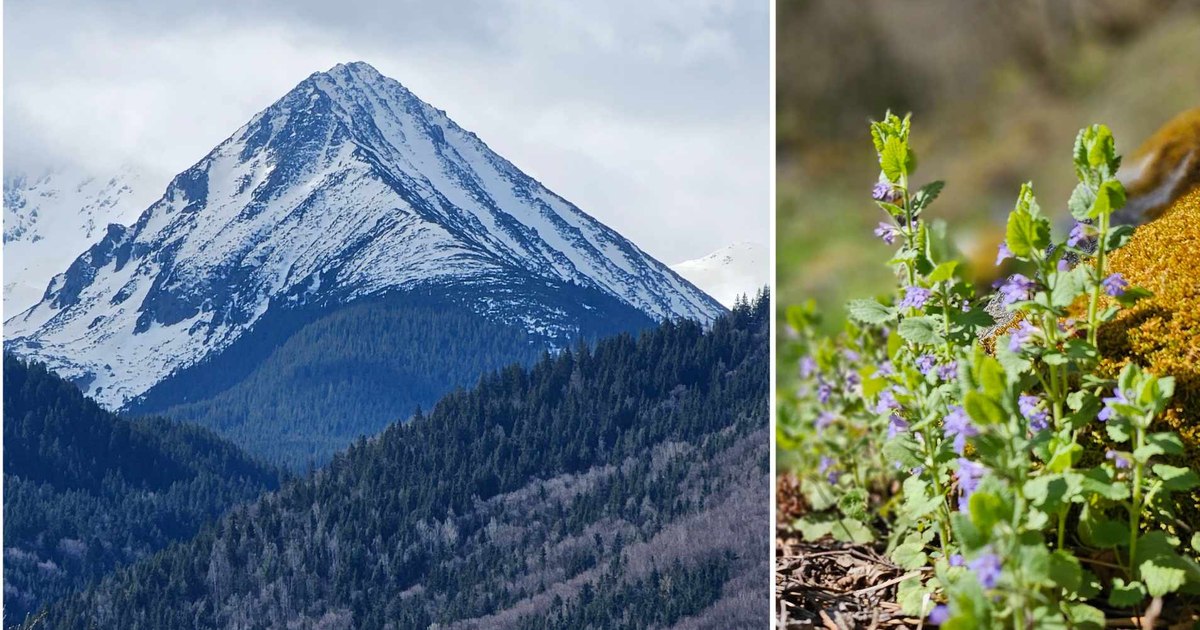
A little-known place at the foot of the Retezat turns into a land of wild flowers in spring. The valley in which it is located is spectacular, and the road that goes around it goes up to the popular places in the Retezat National Park.
Flowers from the Nutmeg valley. Photo: Daniel Guță. TRUTH
Valea Nucșoara (Pietrele) at the foot of Retezatu offers spectacular views in any season, but in spring it acquires an enriched color (video).
The clear waters that trickle between huge rocks and boulders, remnants of former glaciers, have made the stream famous, which, starting from its sources in Retezat and ending in the Strei river, bears several names (Stânișoara, Pietrele, Nucșoara, Sibișel) .
A mysterious place, full of flowers, at the foot of Retezatu
At the beginning of spring, the land at the foot of the Retezat was decorated with flowers. The valley of the Nucșoara stream is crossed by travelers going up from the Streiului valley towards the Retezat National Park, through the picturesque village of Nucșoara, from Hunedoara.
From the edge of the village, the road that goes up the Nucșoara valley (Pietrele) towards the Lolaia Waterfall and the Pietrele and Gențiana cabins, follows the increasingly steep valley of the mountain river.
However, several paths descend near the river, and tourists who use them discover in the valley an area rarely trodden by people, where countless species of wild flowers give color to the forest. Flowers attract butterflies and various insects, and wild birds also make their presence felt.
Above, once you enter the Retezat National Park, travelers discover during this period other meadows and forests adorned with rare flowers and plants.
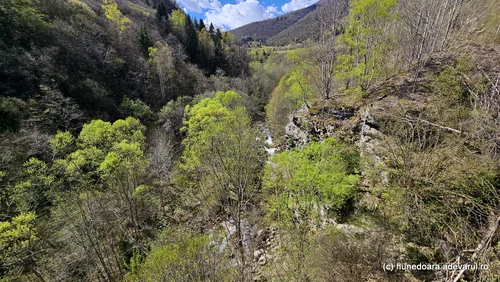
Image 1/14:
Nucșoara stream valley, Pietrele din Retezat Photo Daniel Guță THE TRUTH (31) jpg
Retezatu was considered since the beginning of the 20th century, before it was declared a reserve, one of the few regions in Romania where the vegetation remained in its natural state, preserving a biological balance of wild fauna and flora.
“The vegetation of the Retezat, particularly abundant, is still very little modified by man, it is almost virgin”pointed out the scientist Alexandru Borza.
Wild flowers in Retezat
The reserve includes over 20,000 hectares of forests, some secular and virgin, and is famous for its floristic diversity, housing almost 1,200 species of higher plants, out of the more than 3,450 known in Romania.
The existence of more than a third of Romania's flora in Retezat is one of the reasons why it was declared a national park, informs Romsilva.
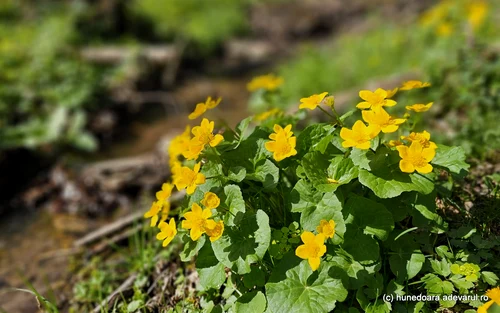
Image 1/17:
Nucșoara Stream Valley, The Stones of Retezat Photo Daniel Guță THE TRUTH (13) jpg
“The flowering cutlet bears around 1,200 different flowers. Some appear only isolated on the cliffs, like the cornflower, the mountain wormwood, the mountain carnation, the slange voiniculius, etc., and others like the smirdar (near Tăul Negru) with its bright red flowers, the juniper with its dark green cypress, grow in mass and covers the mountain with abundant vegetation. in the meadows of the subalpine-alpine gap we can also meet some brightly colored flowers, such as the intense blue cups (Gentiana acaulis) or the straight, light yellow and brown-spotted corollas of the gentian (Gentiana punctata), which intersperse the green clothing of the mountain. The typical landscape of the Retezat also includes the bison (Pinus cembra), like towering trees, isolated in the expanse of juniper forests, which bear the memory of the glacial period“, informs the biologist Fedinand Tauber.
One of the rarities of the Retezat is a species of orchid, called the lady's slipper or the lady's pipe (Cypripedium calceolus), declared a monument of nature”.
Lolaia waterfall from Retezat
Valea Nucșoara from Retezat, also called Pietrele, is the most popular trail in the Retezat National Park.
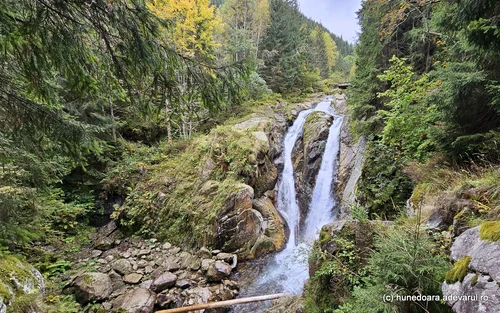
Image 1/27:
Lolaia Waterfall and Nucsoarei Valley Stones from Retezat Photo Daniel Guță THE TRUTH (6) jpg
The road to the mountains starts from the Streiului valley, crosses the villages of Ohaba sub Piatră, Sălașu de Jos, Sălașu de Sus and Nucșoara, and at the edge of the latter a viaduct raised over 20 meters marks the entrance to the wild land of Retezatu.
The county road continues for another five kilometers to the Cârnic stop, the place on the border of the Retezat National Park, where travelers arriving with cars must leave them in the parking lot and can continue the trip on foot, on a forest road, towards the Pietrele and Gențiana cabins.
About 15 minutes from Cârnic, there is the Lolaia waterfall in Retezat (video), one of the attractions of the Retezat National Park, and after about an hour and a half of walking, on the same forest road, tourists arrive at Pietrele.
The Pietrele Stream, which forms the Lolaia Waterfall in Retezat, collects the springs of four large former glaciers: Stânișoara, Pietrele, Valea Rea and Galeșul.
“Their water, collected in the red bed of stone, cuts a finished gorge at about 1,000 meters altitude, with a threshold of 15 meters above which the water breaks into two strips with a thunderous noise. 200-300 meters below the waterfall, the Pietrelor water joins the Chiagul water, also descending from the waterfall, thus giving rise to the Nucșoara river“, informs the geographer Nae Popescu, in the volume “Retezat Mountains” (1973).
An hour's walk from the Lolaia waterfall in Retezat, Pietrele is among the oldest tourist stops in Retezat.
The old cabin, destroyed in a fire, was built at the end of the 1930s in Retezat, at an altitude of 1,480 meters.
The Pietrele Hut was connected through the valleys of Stânişoara, Pietrele, Valea Rea, the valley of Vârfului Mare and the summit of Lolaii, with the Gențiana Huts, Buta, Cheile Butii, Baleia, the Râuşor area, Poiana Pelegii.
