
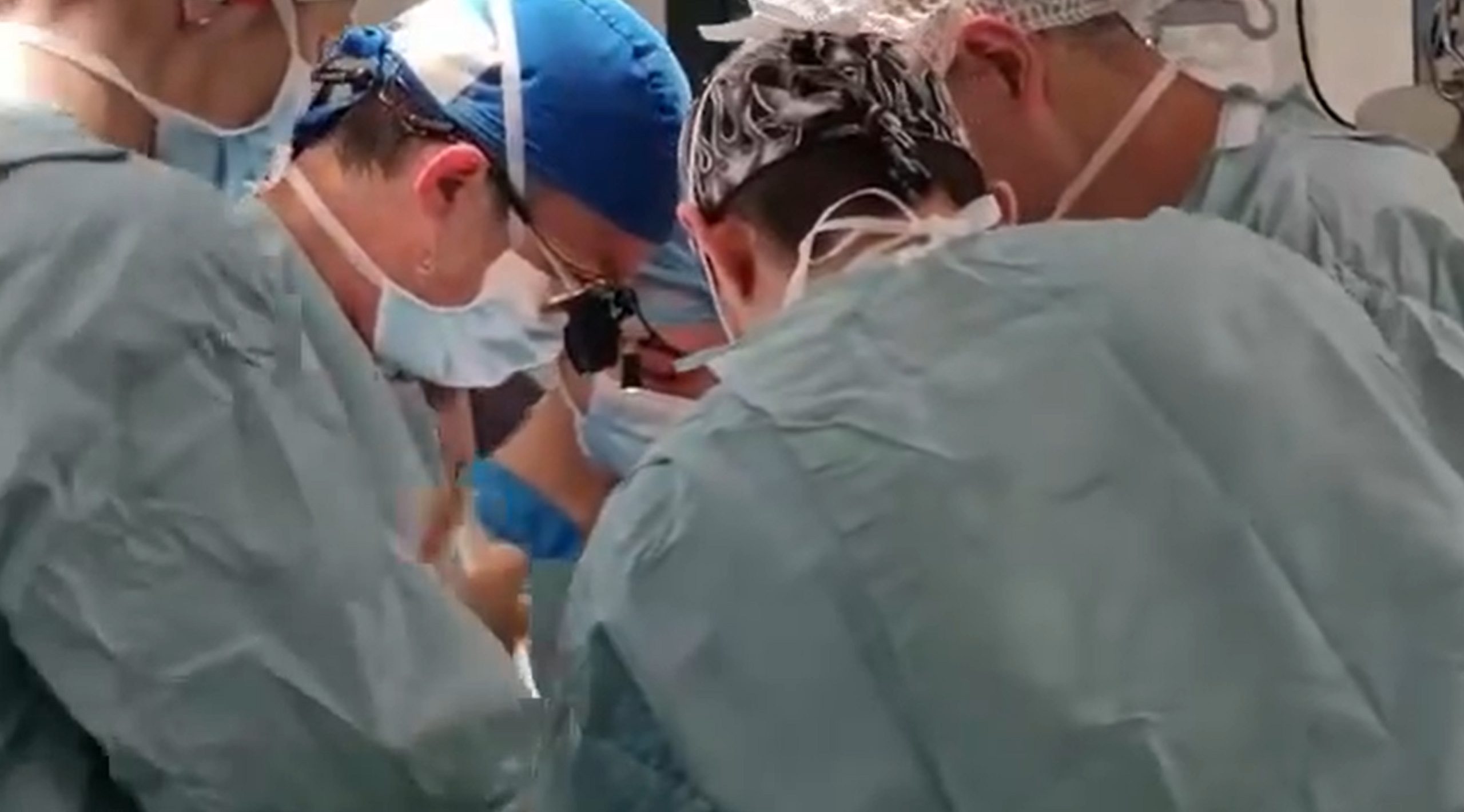
A 58-year-old American is the first person in the world to have his heart replaced with a temporary blood pump. It is, more precisely, about a metal “artificial heart”, made of titanium that managed to completely replace the function of his heart.
In the laboratory, the heart has been working for four years. And it’s still beating. Photo source: archive
The total artificial heart designed by an American medical device company is not designed to beat like a real heart. But even so, without flexible chambers or pumping diaphragms, the device, says the manufacturing company, is strong enough to support a man during physical exercises and small enough to fit even women’s bodies.
What the artificial heart looks like
The device is about the size of a fist, resists corrosion and mechanical wear. Its only moving part is hidden inside. It is a rotor with magnetic levitation that pumps blood to the lungs and the rest of the body. Since the rotor does not come into contact with any other surface, there is no so-called friction phenomenon that would lead to wear and damage over time. The entire device is powered by a small, external, portable controller that comes out through the stomach. The person who received the device can truly be called lucky because the titanium heart practically saved his life. The man, who was suffering from end-stage heart failure, was thus given the chance to survive for eight days until a real donor heart became available. It took ten years, several projects and dozens of animal studies, but the artificial heart finally arrived in the chest of a living patient with end-stage heart failure. The device was implanted without complications at Baylor St. Luke’s from the Heart Institute of Texas, United States, announced the medical team in a statement. “I am incredibly proud to witness the success of the first human implant of our TAH,” the company’s founder, Daniel Timms, said in a statement.
Metal heart, designed for long-term performance
Currently, the best treatment option for people with severe heart failure is a real donor heart, but these are not always available in a timely manner. As such, artificial hearts are a vital way to prolong and improve the quality of life of transplant-eligible patients who are at imminent risk of death. However, in the past two decades, only one artificial heart has received commercial approval from the US Food and Drug Administration (FDA). It’s called the SynCardia Total Artificial Heart, and its flexible membranes and valves are quite large and not particularly durable for longer periods of time in the body.
The metal heart is considered by its manufacturers to be a “paradigm shift” in the design of artificial hearts, and is made to work for the long term. No one really knows how long the device works in humans, but in the lab, the titanium model has continued to work for four years and counting. Even SynCardia’s artificial heart, which is designed only for the short term, has lasted years in some patients waiting for a transplant.
Other transplants are to come
Last November, the California-based medical technology manufacturer received FDA approval to implant TAHs in up to five end-stage heart failure patients in 2024. Given the success of the first implant, additional transplants are expected in the near future.”The global impact of a long-term, commercially viable mechanical replacement for the failing human heart will be enormous.” it is shown in the summary of the ongoing clinical trial.
For patients in urgent need of a heart transplant, the waiting period will go from years to potentially immediate availability, quickly providing a greatly improved quality of life, says the company that produced the artificial metal heart.
Each year, fewer than 6,000 heart transplants take place worldwide.
