
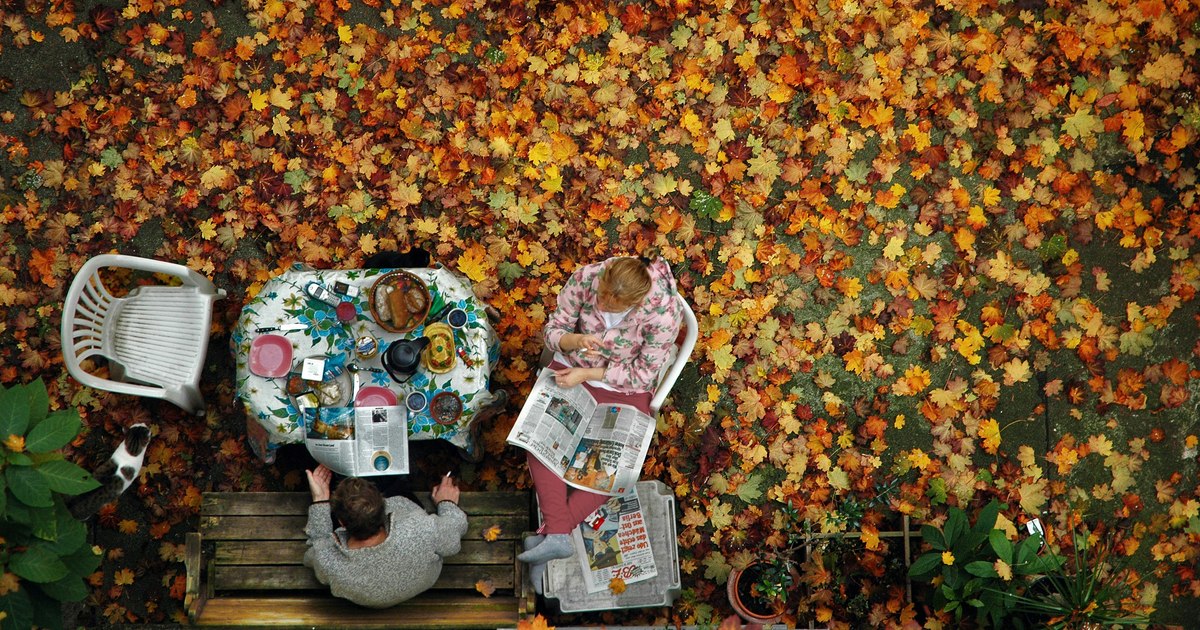
October has just begun, and warm days alternate with cold and rainy ones, so we offer you an escape from the everyday, whatever it may be. At the beginning of each month, in the pages of “Weekend Adevărul”, you can read about some of the cultural milestones that you can tick on your calendar – be it a book, a film, a festival or a music album.
We wish you a cultural autumn. PHOTO: Unsplash
FESTIVAL: The history behind the house
In Sibiu, as every autumn, the Astra Film Festival brings us face to face with close stories – internal or shared in silence with others -, the ones that often slip through our fingers or we pretend not to (anymore) we see For seven days, over a hundred documentaries, for all ages, will fill Sibiu with discussions and introspection, analysis and memories. The selection for the section dedicated to Romania is clear and painful, and has as its common denominator vulnerability – to be young and to be old (“Death of Iosif Zagor”), to have a different sexual orientation (“Forbidden”) and to having a child before being a child (“Alice On & Off”), shouldering the big story of survival (“As the Clock Strikes”), and being part of a new and totally different generation ( “Dream. Life”).
The list is completed by the documentaries that bring the shared histories, which we still live or still forget, a list like a binder that unites the countries of the former communist bloc. The daily struggle to survive – either the daily life or the war – is seen as through a kaleidoscope, and transforms: the freedom and safety of the press into a dictatorial regime (“The dogs bark, the caravan passes”), the people who have passed the still visible Curtain de Fier, in search of a better life (“Mirage of the West”, “Dad”), the places and sounds that united generations (“The Shipyard”, “Leo Records: Only for our friends”). Under the umbrella of the Emerging Voices section of the documentary, stories from around the world are collected, small pieces of civilizations with which we are more or less familiar – from the Old Continent to Asia and Africa and beyond the Ocean, from everywhere a little, like let’s not forget how good it is to be different and that no matter how small you are, your story is just as big as anyone else’s.
Astra Film does not forget the little moviegoers either, for them the largest and most complex documentary film education project for children in Romania, carefully curated for three age categories, has been designed for them. What’s more, the films are followed by all sorts of activities, such as debates, a comic book competition and creative workshops, creative writing and film.
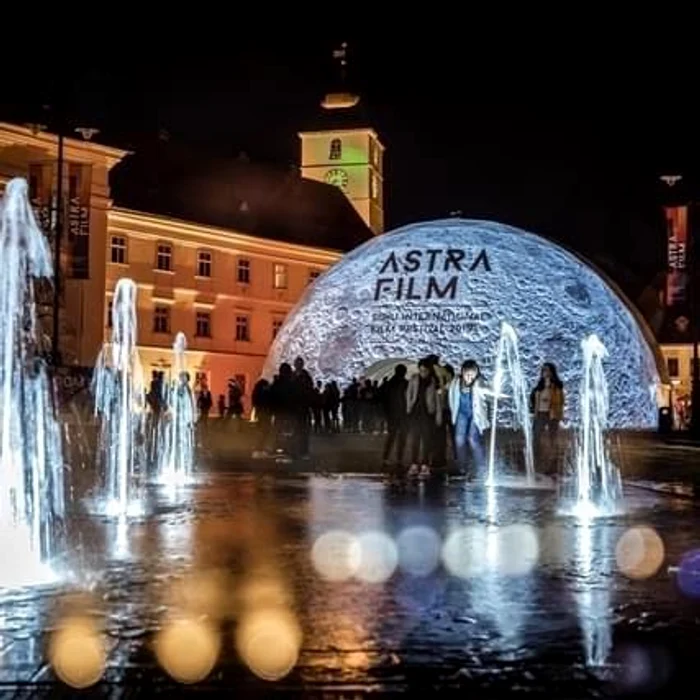
So, reserve your seats for the documentaries in the cinemas, but also for the special screenings in the New Media Full Dome, that huge balloon, stationed in Piața Mare. In Sibiu, autumn is wonderful, but accessorized with documentaries, it is magical.
ASTRA FILM FESTIVAL, October 20-27, Sibiu, astrafilm.ro
The absolute superlative
As every October, the names of the best people on the planet are sent to us from Stockholm. Awarded for the first time in 1901, the Nobel Prize is the supreme recognition of the qualities and contribution of some people in the field in which they work, but also of their relationship and their work to the whole of humanity. This year, the prizes will be awarded over the course of a week and can be watched live on nobelprize.org:
• Medicine: October 7
• Physics: October 8
• Chemistry: October 9
• Literature: October 10
• Peace: October 11
• Economic Sciences: October 14
FILM: Circle (never) closed
“Why is there a need for another film about the Revolution?” is the question emphasized by many bored and irritated voices when a production that takes place in December 1989 appears. The answer is simple: for some – to find out, for others – to don’t forget “The New Year that Wasn’t” is, however, more than a film about December 1989. It is a film that, without seeming like a repetition of the same scenes already seen, already lived, makes you feel that you know everything about what was before of Kilometer 0 of democracy. The details of the lives are so naturally woven together that the film seems the perfect synthesis of the long journey of almost half a century. There are main and secondary terminals, information said between teeth, subtly slipped through the settings – a perfect Finding Waldo to show all the students in history class. It is a film for young and old, as it is only a surface mosaic of the society that erupted in December 1989, a starting point to find out further, beyond life and death.
“Anul Nou care na bost”, director Bogdan Mureșanu’s feature film debut, won four awards at the Venice International Film Festival. And there was no other way. Subtle humor is intertwined with dark humor, and the drama of the period is perfectly complemented by the music. The close-up frames accelerate the feelings even more, and the attention that the microexpressions demand of you does not tire. “Anul Nou care na bost” doesn’t even seem to have secondary characters – Adrian Văncică, Nicoleta Hâncu, Emilia Dobrin, Iulian Postelnicu, Mihai Călin, Andrei Miercure, Marian Râlea don’t fool and tell their stories beyond lines.
We would say that we already know, that we have already seen and heard them all. Lines like “In Timișoara, they shoot people for a “hoo!”” or “How do you know if they didn’t die of hunger?” sound different. And, where do we find out that Moș Guerilă really existed and fulfilled the wish of a child: “Dear Moș Guerilă… for dad, let Nicu die, that’s what he wants”.
“The New Year that wasn’t” is like the only orange received as a gift, placed under the tree. It’s a movie to watch alone, then with someone, and then with someone else, and so on, until we’ve all seen it several times. And even if we know the ending, it’s a necessary film: for some, to find out, for others, to not forget.
“THE NEW YEAR THAT WASN’T”. In cinemas across the country.
THEATER: Half a century for eternity
Silviu Purcărete must be written in a whisper. In the 50 years since he has been a director and in acts, he seems to have covered the whole map of the world – layer after layer, every show, regardless of the edge of the world where it was applauded, covered country after country. From England to Russia, from Portugal to Japan, and everything in between, he enjoyed his creations, becoming part of his scene: piece by piece, the world became a scene, and Purcărete, an Atlas. An artist of the world, but from Bucharest, the director says that he feels more comfortable in the province: “I go to smaller workshops, in sheds”, the director said in an interview. Like Pygmalion or Geppetto, Purcărete created plays from imaginary realities and brought them to life through performances that make you honored to be contemporary with them.
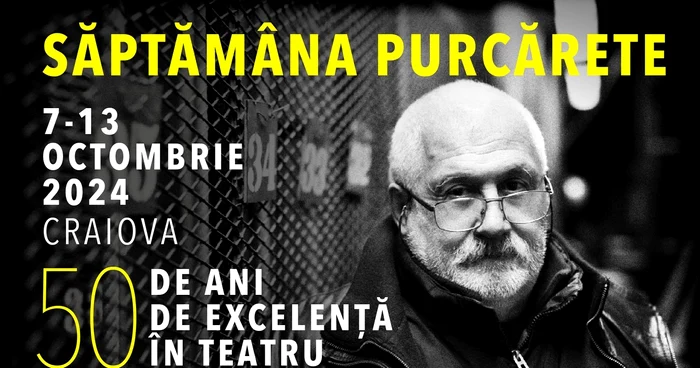
This month, Silviu Purcărete returns for a week to Craiova, where the National celebrates his 50 years of activity. There will be seven full days: newer performances (such as “The Bitter Lexicon”, which premiered this summer at the “Odeon” Theater in Bucharest) and older ones (such as “The Story of the One-Eyed Princess”, which premiered in Sibiu in 2018 ), the screening of the film “Somewhere at Palilula”, meetings with personalities from the cultural world with whom the celebrant worked, making-of documentaries, debates.
And when all will have finished applauding, people will return, polite and impatient, facing Sibiu, waiting for a new performance of “Faust”, this axis mundi of the Romanian theater, without which we would be so poor.
National Theater “Marin Sorescu”, Craiova, October 7-13
EVENT: The Long Road to Green
The warnings to take care of the environment come from the times when it was said that “the forest is brother to the Romanian”. People are learning more and more – and the hard way – that to ignore nature is to ignore their own future. People who have practical advice and solutions for the future, within everyone’s reach, will meet for three days in Bucharest, at the biggest event in Central and Eastern Europe: Climate Change Summit.
For the third year, specialists, entrepreneurs and people who simply love nature, both from Romania and abroad, will tell, explain and answer all questions, all with the hope that the alarming red we see more and more often on the weather map we can gradually change it to green. The large milestones will be represented by conservation and regeneration, sustainability and recycling. It will discuss, among other things, the cities of today and tomorrow (for example, Julia Okatz specializes in creating resilient urban environments for people as well. Her work focuses on the efficient use of space and financing solutions for the sustainable development of city), about our great mountains and how we can protect their ecosystem (the founders of the Conservation Carpathia Foundation will talk about conserving the Southern Carpathians and turning them into a world-class park), about hygiene (for example, Pauline Grumel, the founder of UNISOAP, transforms the hygiene sector with its pioneering soap recycling initiative) or, more clearly: restoring the Arctic ice.
Even simpler: at the Climate Change Summit, people will offer you solutions so that you can go sledding in winter and carting in summer – to have snow and normal temperatures for every season.
CLIMATE CHANGE SUMMIT. October 15-17, climatechangesummit.org
The National Opera in Bucharest and in other places in the capital and in the country
BOOK: The second spring
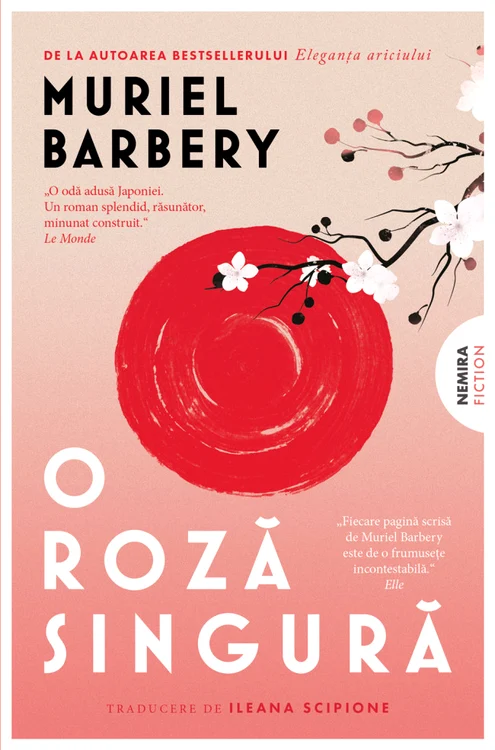
Muriel Barbery’s latest book is written with the flair and detail of the ancient Chinese art of painting inside bottles. Soft and delicate as a cherry blossom, “A lonely rose” is the story of Rose, a French girl who has just reached her second youth, who received the news of the death of her father whom she never knew. The woman had to cross half the world for knowledge: of the father, of a new civilization, of herself. Arriving in Kyoto, the old capital of imperial Japan, Rose follows the itinerary proposed by her father. Stone by stone, garden by garden, temple by temple, the bitterness in his soul disappears and is replaced by the form of the unknown father. The intimate, interior details of Rose blend perfectly with those of Japan – how much can a tatami tell you about a person and a country? Enough to make you want more. Each of the 12 chapters begins with a little history, a legend torn from the time of samurai and geisha, just so the reader knows that the following words are guarded by the spirits that still guard the Land of the Rising Sun – or at least by a tennin, the name that gives them it was given there to the angels. “There is only love. Love and then death” – this is how Barbery, the author of the bestseller “The Elegance of the Hedgehog” concludes her novel.
“A lonely rose”, Muriel Barbery. Nemira Publishing House, nemira.ro
EXHIBITION: Personal
Arsmonitor, the first art gallery opened in the Casa Presei Libere, turns one year old and celebrates with an exhibition of Gili Mocanu, one of the most important contemporary painters in Romania. The 17 works, all oils on canvas, overwhelm and challenge the viewer at the same time – placed face to face with the paintings, you have to discover for yourself the meaning of the shapes and colors, dimensions and shades. Curated under the name “Don’t cry, Gili”, the exhibition also represents a change in the painter’s technique, therefore, for those who already know his art it is a new event, and for novices it is a starting point in knowing his work, but also of the art of the last 30 years.
“Stop crying, Gili.” Arsmonitor, Casa Presei Libere, Bucharest
Until November 7
