
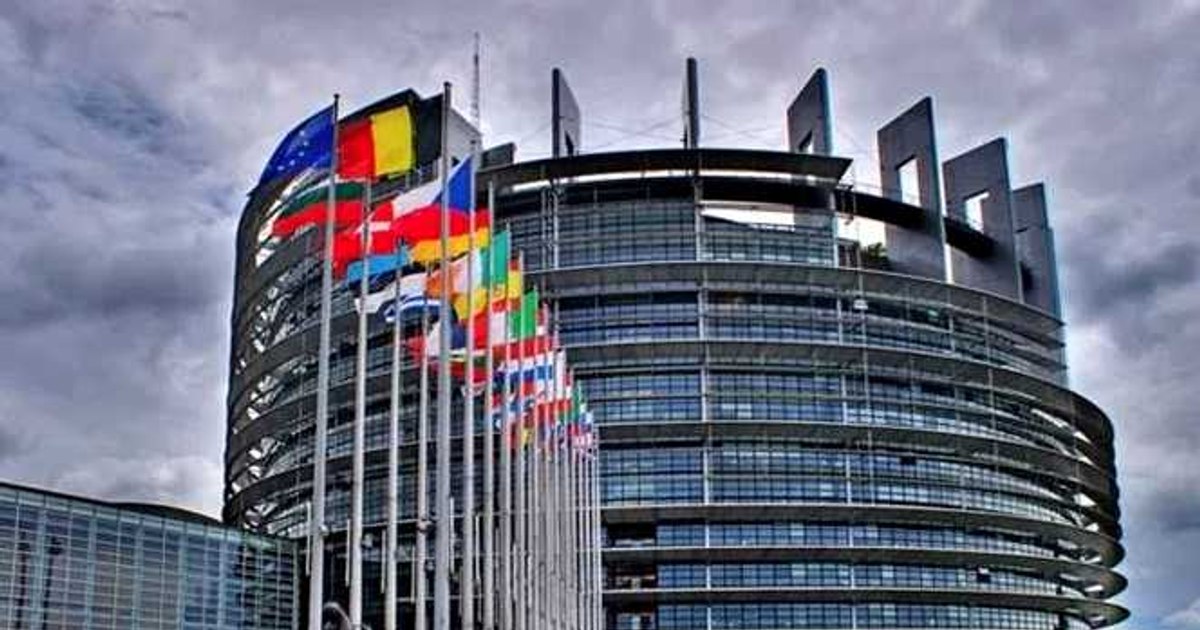
The right-wing nationalist-conservative group will reach the top three political groups in the European Parliament, and in Romania, the anti-system parties will grow, but they will not succeed in changing the strategic direction of the country – these are some of the specialists' forecasts regarding the election results.
The European Parliament elections take place between June 6 and 9. PHOTO: European Parliament
The think-tank ICDE (Initiative for European Democratic Culture), whose president is professor and specialist in international relations Valentin Naumescu (UBB), published, at the beginning of the year, a synthesis entitled “2024 – Forecasts, trends and perspectives”.
One of the topics addressed was the European Parliament elections that have already started in some EU countries.
We reproduce here some of the forecasts made.
“The elections for the European Parliament, from June 6-9, will bring the significant growth of right-wing anti-immigration parties. The anti-migration theme will become dominant in European politics in 2024 and in the years to come, including in upcoming national elections, for example in Austria and Belgium“, said Professor Valentin Naumescu.
“Right-wing nationalist-conservative group in top three”
The right-wing nationalist-conservative ECR group will have a substantial gain in the European elections from June 6-9 and, being “on the podium”, in the first three political groups, will try to become part of the new parliamentary majority, he also says Naumescu.
Effects of this scenario: “We could witness a first in the history of the EU – a parliamentary majority ensured by 4 parliamentary groups, which will complicate the negotiation of the new EU leadership formula.”
Naumescu also claims that the pro-EU parties in the European Parliament will hardly manage to form a new pro-European majority, and the negotiations between the EPP, PSE, Renew Europe and the Greens will be long and difficult, throughout the summer.
“Against the background of the war in Ukraine, the increase in inflation, the high price of energy, the decrease in purchasing power in many European states, the increase in public insecurity, combined with the recent conflict in the Middle East and the prospect of an increase in the risk of terrorist attacks in the states of the Union European countries where there is a significant Muslim community, there is the worrying prospect of the rise of the far-right“, another ICDE expert – Andrei Ștefan Enghiș, doctoral student at Babeș-Boylai University Cluj-Napoca, expert of the European Commission, also claimed.
The situation in Romania
As for Romania, Naumescu claims that “nationalists, Europhobes and Russophiles (AUR and SOS), although they will present themselves as “new people”, will not succeed in forming a critical mass for changing Romania's strategic direction. The anti-Western option in Romania does not exceed 30-35% of the total population. The post-election political orientation from Bucharest will remain pro-EU, pro-USA and pro-NATO“.
However, the professor predicts that anti-system parties will grow. These “benefits from grobianism (attractive to Romanians), disillusioned populism, aberrations on social networks and the drop in the educational and cultural level of society, respectively from absenteeism or self-cancellation of the vote of the disappointed.“
Naumescu believes that there will be a disappointment for the main (mainstream) parties (PSD, PNL, UDMR, USR), both by the modest results and by the low turnout.
He believes that the government will be ensured by an unstable coalition of 3 parties, most likely consisting of PSD, PNL and one of UDMR or USR, depending on the percentages obtained by the 4 formations in the parliamentary elections.
Naumescu's conclusion is that it is obvious “the need for a new political project in Romania, in the area of centrist, moderate and pro-Western orientation.”
Green Deal and supporting Ukraine
The specialist Andrei Ștefan Enghis claims that the designation of the future president of the European Commission will not depend on the result of the European elections, but will remain a prerogative of the heads of state and government.
“There are very few signs that this procedure will be abandoned in 2024 and the current President of the European Commission, Ursula Von der Leynen, will be confirmed for a second term”thinks Enghis.
The expert believes that a possible second term for the current EC president would mean the continuation of the Green Deal policy, but perhaps with a greater willingness to listen to industry concerns.
Trump's return to the White House puts the European Union in a difficult position:
“Without a military (priority), economic and political involvement of the United States, the European Union is looking for you to identify an elegant (for it), but damaging (for Ukraine) solution to flatten/reduce to the stage of freezing, but not capitulation of Ukraine, of the conflict between Ukraine and Russia”.
Thus, the European Union is looking for you to launch a format of discussions/negotiations between the two parties that will result in a compromise formula acceptable to both parties.
