
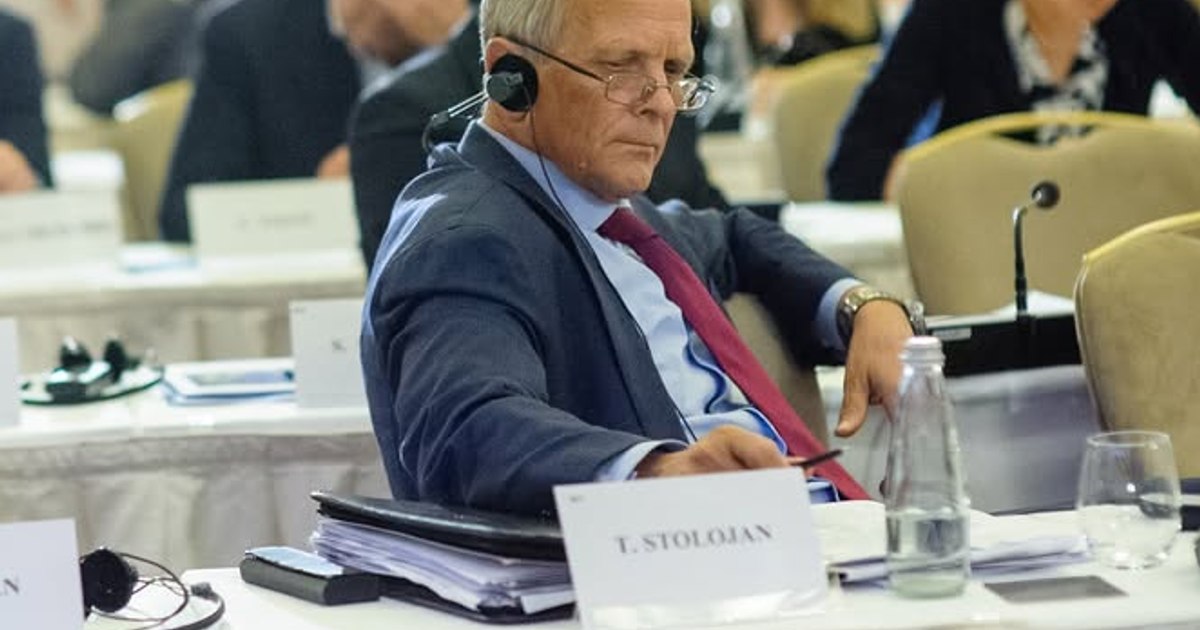
Theodor Stolojan warns that the reduction of fuel excises, in the context of accelerated price increases, would be a wrong and risky measure for Romania’s financial stability. The former prime minister explained to Digi 24 that the state must focus its resources on supporting vulnerable categories, not on generalized interventions.
Stolojan emphasized that Romania is in a difficult budgetary situation, in which the deficit must be reduced, not expanded. In his opinion, the state would have had more flexibility if the deficit had been kept within the limits of 3%, not at the current levels
The former prime minister of Romania compared the current situation with the great oil shocks of the 70s, when the price of crude oil rose suddenly and massively, drawing attention to the fact that it is not known whether the current price increases are temporary or mark a new global reality in terms of energy. In this context, reducing taxes would be premature and potentially dangerous, believes Ilie Bolojan
“Ceaușescu did not let the economy adapt”
Theodor Stolojan recalled that Romania paid dearly for the wrong decisions taken during the communist period, when the regime refused to adjust the economy to international energy prices:
“Ceaușescu didn’t want to let the economy adapt then, and we continued to develop energy-intensive industry, and as a result of the second oil shock, we became insolvent in 1981-1982, with subsequent severe consequences.”
Continued investment in energy-intensive industries eventually led to the 1981-1982 default.
The politician warned that a similar approach – ignoring the reality of the market – could still have serious consequences today.
Criticism regarding the delay of energy projects
The former prime minister criticized the major delays in the development of energy production capacities, giving the example of the Iernut plant, which was started in 2016 and still not completed in 2026. Stolojan emphasized that the expansion of solar panels had to be accompanied by similar investments in storage capacities.
The former official, however, rejected the idea of a generalized reduction in excise taxes, arguing that not all Romanians are affected to the same extent by price increases. He noted that there are tens of thousands of citizens with savings of more than 100,000 euros, which shows that part of the population has the resources to cope with price increases.
“They cannot protect the entire population, endangering Romania’s budget and ability to finance itself at reasonable interest rateshe said.
However, Stolojan supports supporting the really affected sectors, such as transporters, who have already received aid, but also farmers, for whom additional measures are being prepared.
