
Starting from 2026, in order to be marketed and used in the European Union, any product must have a digital passport, proving the fulfillment of minimum ecological design requirements.
According to these requirements, it is mandatory that each new product be designed and assembled in such a way that it can be repaired, reused or recycled easily, according to Regulation (EU) 2024/1781 adopted by the European Parliament and the Council of the European Union and recently published in Official Journal of the EU. In this way, the lifespan and use of the products will be extended, on average, by 5 years, show the representatives of the Environ Association, involved in the management of electrical and electronic equipment waste in Romania.
Products currently on the market have the disadvantage that they have not been designed to be sustainable throughout their entire life cycle. Therefore, they must be replaced frequently, leading to significant consumption of energy and resources to produce and distribute new products and dispose of old ones.
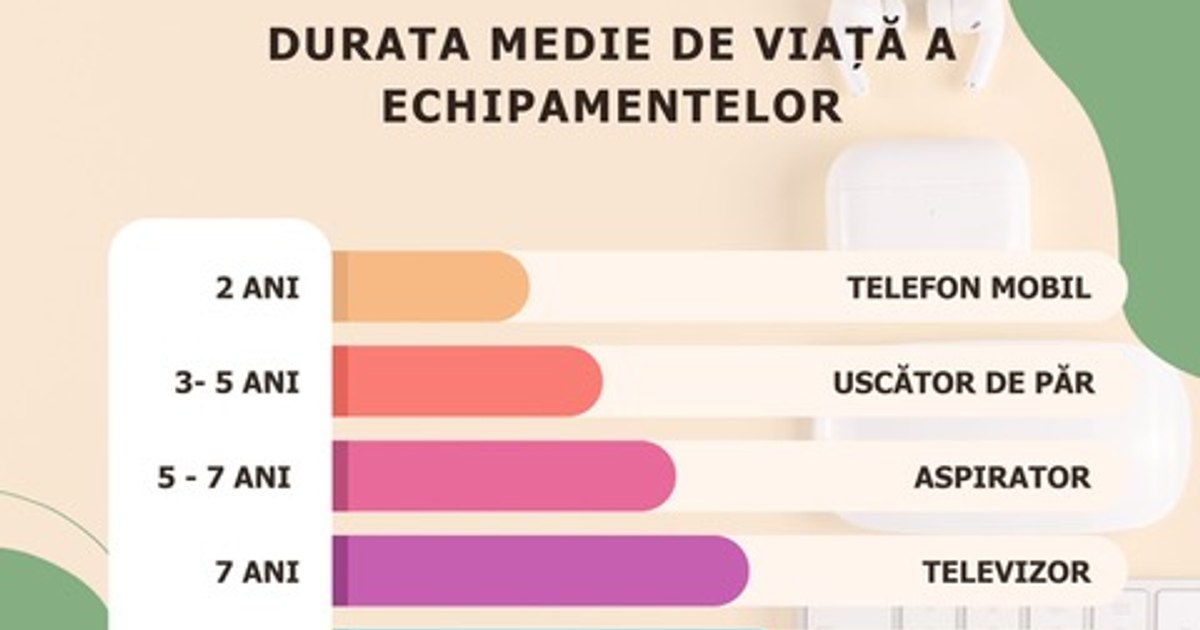
In the case of electrical equipment, for example, the lifespan depends on the complexity and quality of the components. Average life span a COLD (10-12 years) is affected by the failure of components such as the compressor, condenser or control board. Washing machines they have an average lifespan of 7 to 10 years, and the most common failure is the water pump or the drive belt. TELEVISIONwhose average lifespan is 7 years, are replaced most often due to the display panel, backlight or other internal electronic components. If we talk about DUSTtheir lifetime (5-6 years) is influenced especially by components such as the motor, fan or control panel, while hair dryerswhich “live” on average between 3 and 5 years, most often break down due to overheating (temperature sensor failure), air filters or fan.
According to Roxana Puia, Marketing Director of the ENVIRON Association, the generation of huge amounts of waste is “a behavior stimulated by producers through what we call programmed obsolescence”. Furthermore, it is too difficult for citizens and economic operators to make sustainable product choices in the absence of relevant product information and available options.

“In a world that throws away tens and tens of millions of tonnes of e-waste every year, we welcome the adoption of the Ecodesign Regulation and the Right to Repair Directive with great hope and see them as absolutely necessary measures. Holding producers accountable is the first step, and educating and raising awareness among end consumers is the second step to a planet with less waste“, says Roxana Puia.
New types of labeling
Given that around 80% of the environmental impact of a product’s life cycle is determined at the design stage, the new regulations would improve the durability and reliability of products on the EU market. It will also increase the possibility of reuse, maintenance, reconditioning and pre-fabrication of products, respectively the potential of their modernization, repair and recycling. A significant impact is also expected on energy efficiency, content of recycled materials and efficient use of resources and water.
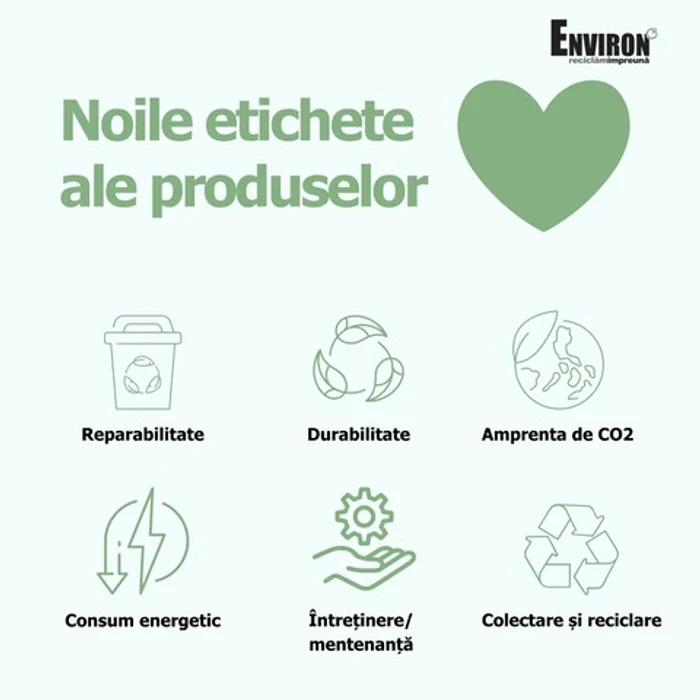
The new regulation also introduces specific information requirements, which include repairability, durability, carbon footprint or environmental footprint classes, as well as information on how to install, use, maintain and repair the product. Information will also be made public regarding collection for the purpose of reconditioning or remanufacturing, respectively how to return or treat the product at the end of its life cycle. A relevant example in this case are mobile phones for which the collection rate in the EU states does not exceed 5%; the new rules would help improve collection rates, thanks to collection information, financial incentives and collateral return systems.
Product labels are also regulated, both in terms of format and required content. All with the aim of minimizing the product’s impact on the environment and ensuring optimal durability.
Tax advantages for SMEs
The new regulations also show how SMEs are helped to integrate environmental sustainability into their value chain, including energy efficiency, comply with eco-design requirements; among these methods are specified investments in physical and digital infrastructure, access to financing and the granting of fiscal advantages.
European officials aim for the European Union to become, by 2050, “the first climate-neutral continent”, an objective that will be reached by transforming the EU into a society “fair etcand prosperuh, with a modern economyUmcompetitiveUmneutralfrom the point of view of impact on the climate and circular and with an environment without SUBSTANCEÞit’s toxic”, it is stated in Regulation (EU) 2024/1781.
