
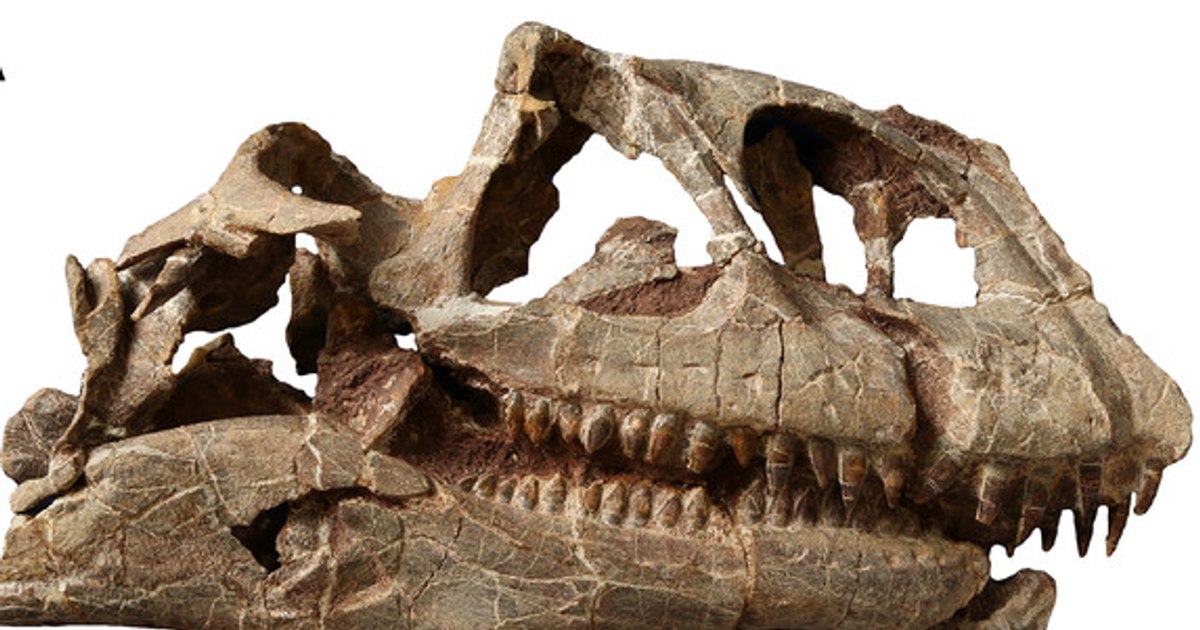
The sediments in which the dinosaur skull was found date back to the Early Jurassic of the Hettangian Era (201.3 million -199.3 million years ago), according to the study published on December 12, 2024 in the journal PeerJ.
Dinosaur skull PHOTO: PeerJ magazine
The species, called Lishulong wangi, belongs to the group known as sauropodomorphs, which includes sauropods—such as Brontosaurus and Diplodocus—and their ancestors.
“Fine-grained sediments in the region helped preserve the animal remains“, the study’s lead author, Qian-Nan Zhang, a paleontologist at the Institute of Vertebrate Paleontology and Paleoanthropology of the Chinese Academy of Sciences, told Live Science.
The clay, sand and silt deposited by lakes and rivers, which shaped the landscape, protected the remains of the dinosaurs from erosion. Minerals from the sediments then seeped into the bone structure, contributing to fossilization.
These conditions probably contributed to the exquisite preservation of the skull, which is rare in sauropodomorphs. Although it was crushed by the overlying sediments, only a handful of skull bones were lost
Sauropodomorphs were the most widespread medium- and large-sized herbivorous dinosaurs until the Middle Jurassic (174.1 million – 163.5 million years ago).
The new discovery includes a skull and neck vertebrae.
“Due to the lack of preservation of the scapular girdle, pelvic girdle and limb bones in this specimen, it is not possible to determine whether it was bipedal or quadrupedal”Zhang said.
The species was probably herbivorous. “Their main sources of food were probably gymnosperms and other types of primitive plants. These probably included ferns, cycads, ginkgo and conifers,” Zhang stated.
