
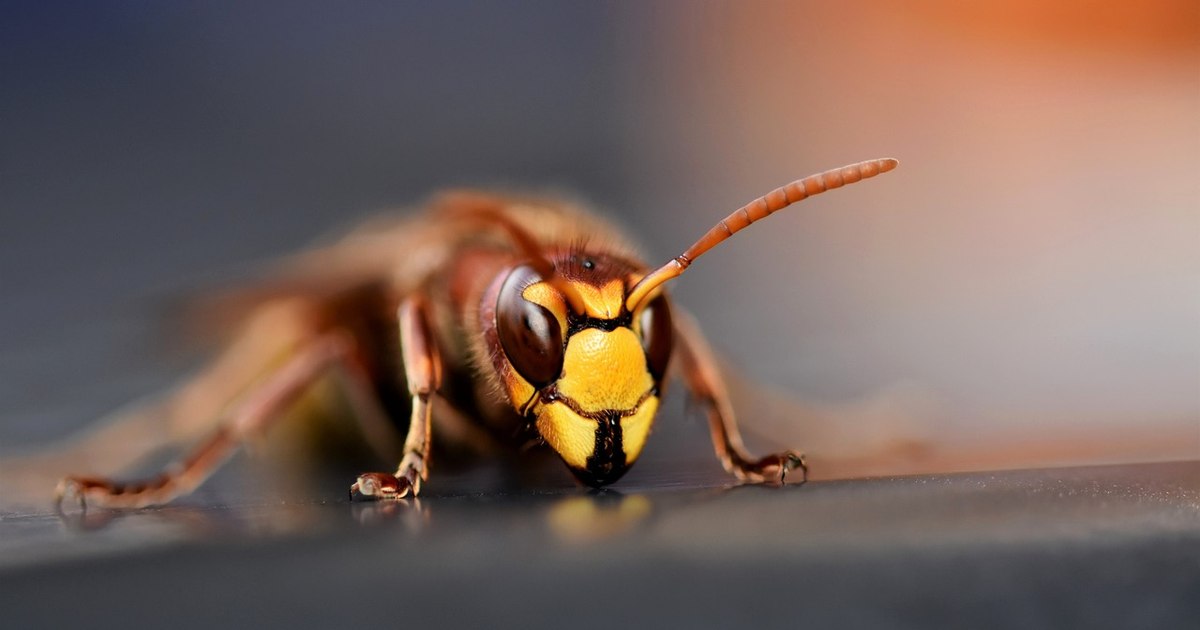
A species of giant wasps, the size of a battery, has also arrived in Europe for the first time. Specialists warn that they are extremely aggressive and pose a danger even to humans, as their sting causes great pain.
Giant wasps PHOTO: sciencenews
Vespa soror (Vespa soror) is native to a wide area of tropical Asia, but four of these huge insects have recently been discovered in Spain, researchers report, according to sciencenews.
If this alien species succeeds in establishing populations on the European continent, it could threaten not only bees and other animals, but even humans.
The finding is “a bit concerning,” says Phil Lester, an entomologist at Victoria University of Wellington in New Zealand. V. soror is “a known aggressive bee eater. It will attack a lot of things”says Lester, including other wasps, insects and even small vertebrates like geckos. “Ptherefore, if it sets up and becomes abundant, it could be a real problem.”
According to the cited publication, in early 2022, beekeepers in northern Spain informed zoologist Omar Sánchez of the University of Oviedo and his colleagues about the unusual yellow-headed wasps they were observing.
Believing the insects might be a rare color variant of either the invasive yellow-legged wasp or another native species, the researchers set up traps to capture them.
In March 2022 and October 2023 they caught four of the wasps. The team examined the dead wasps, comparing their DNA and physical characteristics to those of known species.
The wasps’ genes and unmistakable alternating black, brown and yellow coloration suggested they were southern giant wasps. A ferocious predator, V. soror is one of the largest known wasps, with specimens measuring over 3 centimeters long, about the length of a battery. So far, they have only been identified outside of their native Asia – in Canada in 2019.
Sánchez and his team suspect that the wasps were introduced as hibernating stowaways in shipments to the region, a method believed to have previously led to the introduction of yellow-legged and northern giant wasps far from their native habitats.
It is not clear whether V. soror has already established a habitat in Spain. But the fact that the wasps were caught a second time in 2023 may mean that at least one young queen raised in 2022 survived to found a new colony, the researchers suggest.
Like its northern cousins, V. soror is notorious for killing hive bees, making it a threat to the beekeeping industry in Europe. Even for humans, since “this is an insect whose sting can be very painful and long-lasting”, says Sánchez.
